High-Stakes Summit: Trump Urges Xi to Open China's Markets Amid Global Tensions
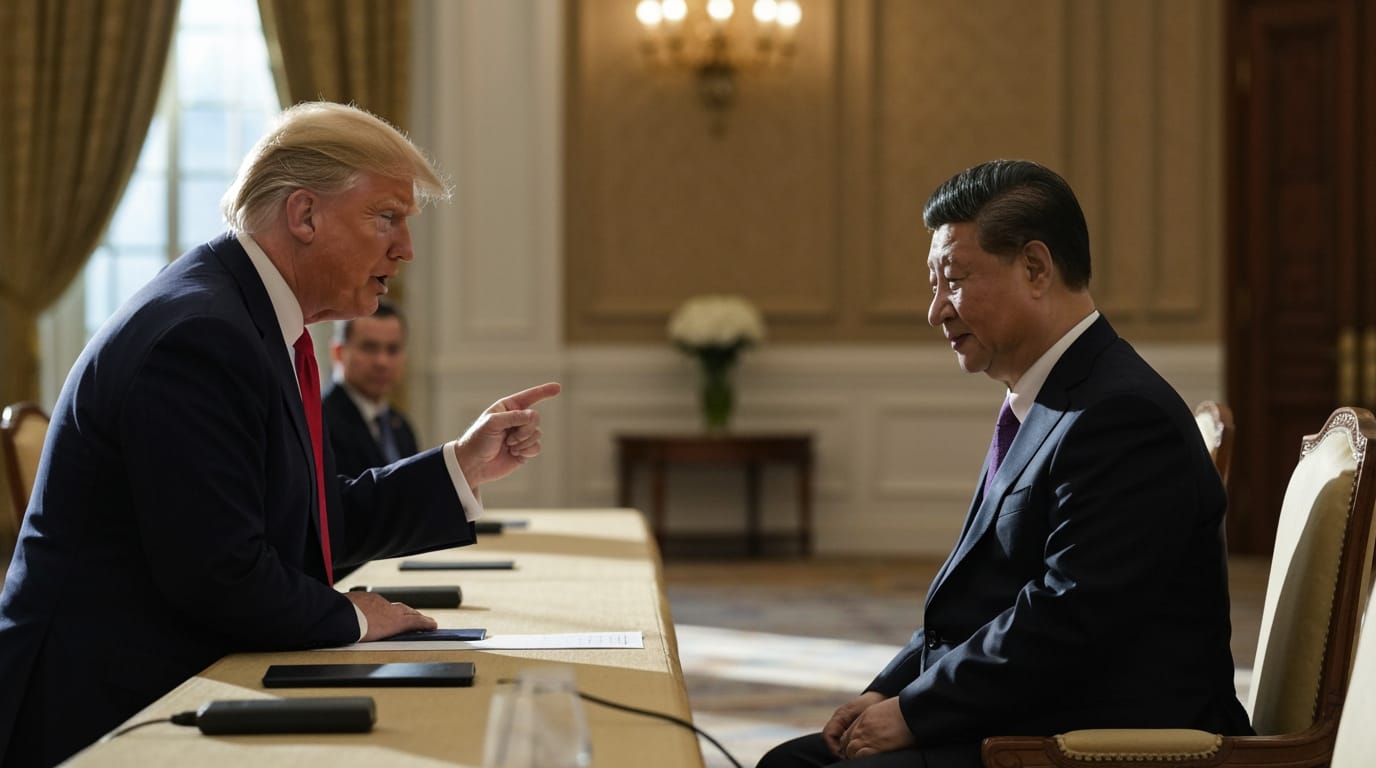
BEIJING – President Donald Trump arrived in Beijing this week for a pivotal summit with Chinese President Xi Jinping, a meeting anticipated to be dominated by the United States' persistent demands for greater market access and a rebalancing of trade relations. The two-day discussions, scheduled for May 14-15, aim to address deep-seated economic grievances and navigate an increasingly complex geopolitical landscape, including ongoing conflicts and technological rivalries. The U.S. delegation, which includes prominent American CEOs, underscores the administration's intent to press for concrete concessions from Beijing to "open up" its economy.
The summit marks President Trump's first visit to China in nine years and his seventh face-to-face encounter with President Xi, highlighting the enduring significance of the U.S.-China relationship. While the tone from Washington has expressed hope for improving ties, the underlying tensions surrounding trade imbalances, intellectual property concerns, and China's economic practices remain at the forefront of the agenda.
The Push for Market Access and Economic Rebalancing
A primary objective for the Trump administration in these talks is to secure tangible commitments from China to further open its vast markets to American goods and services. This includes expanding Chinese purchases of U.S. agricultural products, such as soybeans, and other key exports like aircraft. These demands are part of a broader effort to reduce the significant U.S. trade deficit with China, a long-standing point of contention for President Trump.
To facilitate ongoing dialogue and oversight, proposals for a "Board of Trade" and a separate "Board of Investment" are expected to be on the table. These mechanisms would involve senior officials from both countries overseeing the implementation of trade agreements and addressing discrete investment issues. The U.S. side aims for these boards to provide greater predictability and stability in commercial exchanges, particularly in non-sensitive sectors.
Observers note a subtle shift in the U.S. approach compared to Trump's initial term. While the first administration aggressively pushed for fundamental changes to China's state-led economic model, the current strategy appears to also focus on erecting higher barriers against Chinese goods in certain sectors. This reflects a pragmatic adaptation to China's demonstrated willingness to push back against U.S. tariffs and its continued efforts to gain global manufacturing market share.
A Labyrinth of Tariffs, Tech Rivalry, and Geopolitical Undercurrents
The Beijing summit unfolds against a backdrop of persistent trade disputes and technological competition. The two nations implemented significant tariffs on each other's goods throughout Trump's previous term, leading to a "trade war" that impacted global economies. While a fragile "trade truce" was established in October 2025 at the APEC summit in Busan, South Korea, this temporary reprieve did not fully resolve underlying friction.
Beyond tariffs, the conversation is heavily influenced by the escalating rivalry in critical technologies, particularly artificial intelligence (AI). The U.S. has expressed concerns about the sale of advanced AI chips to China, viewing export controls as national security measures. Beijing, conversely, seeks broader access to U.S. advanced technologies, including semiconductor chips and aircraft engines, and may try to leverage commitments to purchase American goods in exchange for easing these restrictions.
Adding another layer of complexity is the ongoing conflict in Iran, which has significantly impacted global energy markets and supply chains. The Strait of Hormuz blockade has elevated oil and gas prices, and China's substantial imports of Iranian oil give Beijing a degree of leverage in diplomatic discussions. The U.S. is reportedly seeking China's support in efforts to end the conflict and reopen the Strait, placing President Trump in a potentially weaker negotiating position than in previous encounters.
Taiwan's security also looms large over the discussions. Beijing consistently reiterates its position on Taiwan as an integral part of China, while Washington's long-standing policy remains a delicate balance. Observers anticipate that Taiwan could emerge as a bargaining chip, with potential U.S. arms sales to the island being part of the broader negotiation.
China's Confident Stance and Strategic Patience
President Xi Jinping enters the summit with a notable degree of confidence, a posture shaped by China's resilience during previous trade confrontations. Beijing views its ability to withstand and respond to U.S. tariff escalations, in part by wielding its influence over critical resources like rare earth minerals, as a strategic success. Chinese officials are keen to project stability in the relationship and reduce tariff volatility, and they see a dedicated bilateral channel as a way to negotiate with the U.S. on a more equal footing.
While in 2017, China rolled out a "state visit-plus" reception for Trump, indicating high expectations for a trade deal, current expectations in Beijing are more tempered. Analysts suggest that China believes it can manage friction with the U.S. at an acceptable cost, having diversified its trade and become less dependent on U.S. agriculture, for instance. Tactical gains, rather than a major political reset, are likely to be the focus for both sides.
Navigating an Unpredictable Path Forward
The summit underscores the inherent difficulties in managing the world's most critical bilateral relationship. Despite the cordial rhetoric, profound disagreements persist, and the outcome of these negotiations will carry significant implications for global markets and geopolitical stability. While the U.S. presses for China to "open up," the discussions are a delicate dance of give-and-take, influenced by each nation's domestic priorities and global strategic interests.
Expectations are modest for groundbreaking breakthroughs, with both leaders likely prioritizing tactical achievements that can be presented as successes to their respective domestic audiences. The creation of new consultative bodies like the Board of Trade may signal a desire for structured engagement, yet the specter of renewed U.S. tariffs later this year, and China's readiness to retaliate, suggests that the path to a truly "open" and balanced trade relationship remains fraught with uncertainty. The summit, therefore, is less about a definitive resolution and more about a continued, high-stakes effort to manage and mitigate an often-contentious rivalry.


