Arundhati Roy Withdraws from Berlinale Amidst Gaza Controversy, Sparking Debate on Art and Politics
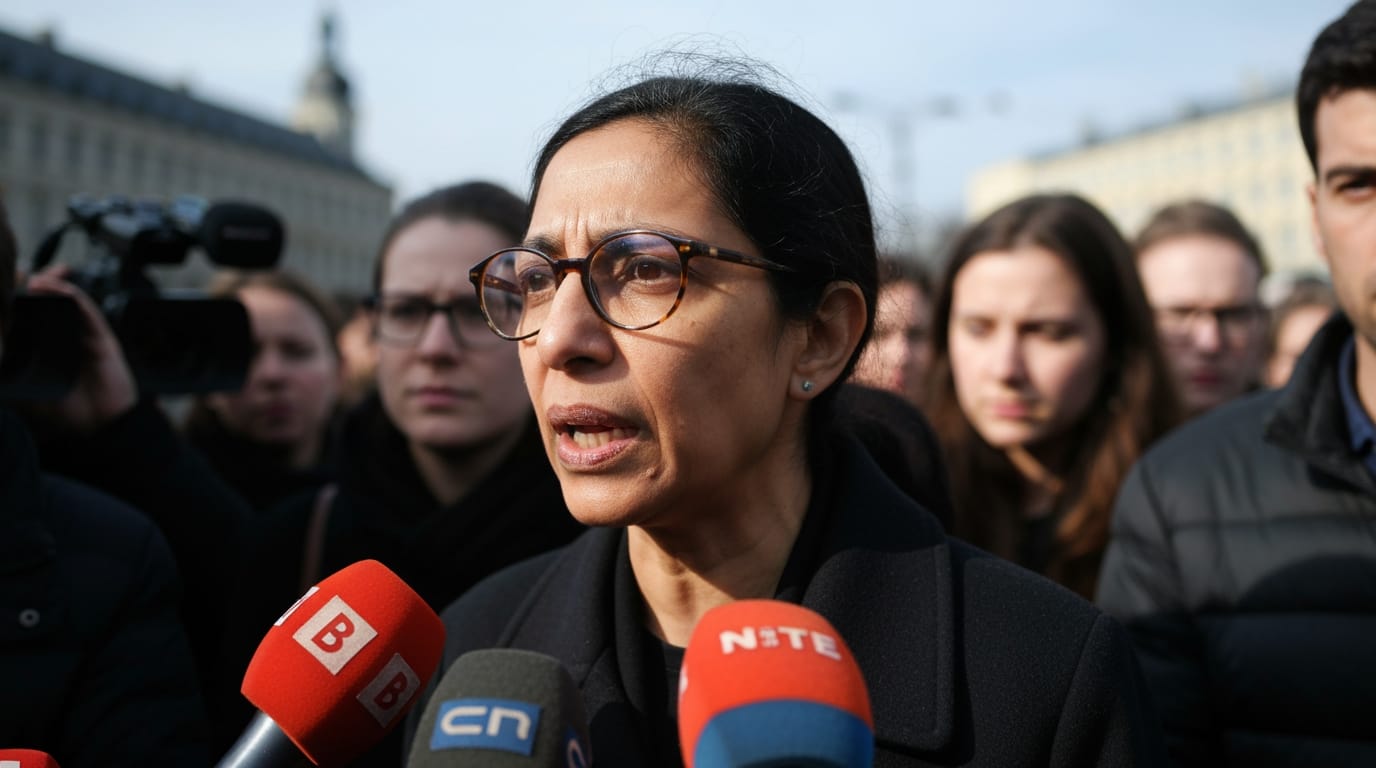
Berlin, Germany – Award-winning Indian author Arundhati Roy has announced her withdrawal from the Berlin International Film Festival (Berlinale), citing "unconscionable statements" made by jury members regarding the ongoing conflict in Gaza. Her decision has ignited a fresh wave of debate within the international cultural community about the role of art in political discourse and the responsibilities of institutions in addressing global crises.
Roy, renowned for her Booker Prize-winning novel "The God of Small Things" and her vocal political activism, stated she was "shocked and disgusted" by remarks from Berlinale jury president Wim Wenders, who suggested that filmmaking should "stay out of politics." This stance, echoed by other jury members, was interpreted by Roy as an attempt to stifle conversation about what she describes as a "crime against humanity" unfolding in real-time in Gaza. Her withdrawal underscores growing tensions between artistic expression, institutional neutrality, and Germany's broader stance on the Israel-Palestine conflict.
Roy's Stinging Rebuke: "Art Should Not Be Apolitical"
Arundhati Roy was slated to attend the Berlinale for a screening of a restored version of her 1989 film, "In Which Annie Gives It Those Ones," which she wrote and starred in. However, in a statement widely circulated by Indian and international media, she declared her decision to withdraw with "deep regret." Roy directly challenged the notion that art can or should be apolitical, particularly in the face of what she characterizes as a "genocide of the Palestinian people by the State of Israel."
The controversy stems from a press conference where jury head Wim Wenders, a celebrated German filmmaker, asserted that "we have to stay out of politics because if we make movies that are dedicatedly political, we enter the field of politics." He added, "But we are the counterweight of politics, we are the opposite of politics. We have to do the work of people, not the work of politicians." Fellow jury member Ewa Puszczynska reportedly described a question about Germany's support for Israel as "a little bit unfair." Roy found these comments "jaw-dropping," arguing they served to shut down critical dialogue at a time when artists should actively engage with such urgent issues.
Berlinale's Precarious Position: A History of Political Engagement and Recent Controversies
The Berlinale has historically been recognized as one of the more politically engaged major film festivals, a characteristic that Wenders himself acknowledged in 2024, stating he liked the festival "because it always speaks up and says something." This recent emphasis on apoliticism marks a notable shift and has drawn criticism, with some pointing to Wenders' seemingly contradictory past statements.
This is not the first instance of the festival grappling with political sensitivities surrounding the Gaza conflict. The 2024 Berlinale faced significant backlash when Palestinian filmmaker Basel Adra and Israeli filmmaker Yuval Abraham, co-directors of the documentary "No Other Land," used their award acceptance speech to criticize Israel's actions in the West Bank and Gaza, and call on Germany to cease sending weapons to Israel. These remarks, which drew applause from the audience, were later condemned by German politicians, including Berlin Mayor Kai Wegner, who labelled them "anti-Semitic" and called for future management to prevent "such incidents." German Federal Government Commissioner for Culture and the Media, Claudia Roth, also criticized filmmakers for not mentioning Hamas's October 7 attack. The festival organizers, while condemning Hamas's October 7 attack and calling for the release of hostages, also stated that the "one-sided and activist statements" by award winners did not reflect the festival's position. These past events illustrate a pattern of increasing pressure on German cultural institutions to align with the government's stance on Israel, often leading to accusations of suppressing pro-Palestinian voices.
Arundhati Roy: A Consistent Voice for Justice
Arundhati Roy's withdrawal from the Berlinale is consistent with her long-standing reputation as an outspoken critic of state power and injustice. Since her debut novel's success in 1997, she has largely dedicated her public life to political activism and non-fiction writing, focusing on human rights, environmental issues, and social justice. She has been a prominent voice against nuclear weapons, corporate globalization, and has consistently challenged the Indian government on various issues, facing legal challenges and criticism in the process. Her activism includes protests against the Narmada Dam project, speaking out on Kashmir, and critiquing the Citizenship Amendment Act. Roy's unwavering support for the Palestinian cause and her willingness to challenge powerful narratives align directly with her decision to boycott the Berlinale over its perceived stance on Gaza.
Her essay, "The End of Imagination," a fiery response to India's nuclear tests in 1998, solidified her role as a public intellectual unwilling to shy away from controversial topics. She has received numerous awards for her advocacy, including the Lannan Cultural Freedom Prize in 2002 and the Sydney Peace Prize in 2004. Roy's activism is deeply intertwined with her artistic practice, as she sees it as a moral obligation for artists to confront global injustices.
Broader Implications: The "Culture War" in Germany and Beyond
Roy's withdrawal highlights a larger "culture war" unfolding in Germany, where the debate around antisemitism and criticism of Israel has intensified. Over 500 global artists, filmmakers, writers, and cultural workers initiated a "Strike Germany" campaign, urging creatives to distance themselves from German state-funded institutions due to what they describe as a crackdown on pro-Palestinian advocacy. The campaign cites Germany's 2019 parliamentary resolution that condemned the Boycott, Divestment, Sanctions (BDS) movement as antisemitic, leading to a climate where critical perspectives on Israel are allegedly suppressed within the arts. Cultural institutions are reportedly facing pressure to conform to governmental positions, with events being canceled and artists disinvited over perceived solidarity with Palestine.
The Berlinale's attempts to navigate this complex political landscape, balancing its traditional progressive image with governmental pressures, demonstrate the precarious position of cultural institutions in an increasingly polarized world. The festival stated it respects the decisions of artists to withdraw, acknowledging that their presence would have enriched the discourse. However, the incident serves as a potent reminder of the challenges faced by artists and institutions alike when geopolitical conflicts intersect with cultural expression.
Conclusion
Arundhati Roy's withdrawal from the Berlinale sends a powerful message about the responsibility of artists and cultural institutions to engage with pressing global issues. Her action reinforces the belief held by many that art and politics are inextricably linked, particularly in times of conflict and humanitarian crisis. While the Berlinale seeks to maintain a delicate balance, the incident underscores the intense scrutiny cultural events face when addressing sensitive geopolitical matters. The ongoing debate surrounding her decision and the festival's stance will likely reverberate throughout the art world, prompting further reflection on artistic freedom, institutional independence, and the ethical obligations of cultural engagement in a world shaped by profound political divisions.


