Austrian Court Delivers Landmark Torture Conviction Against Former Syrian Officials
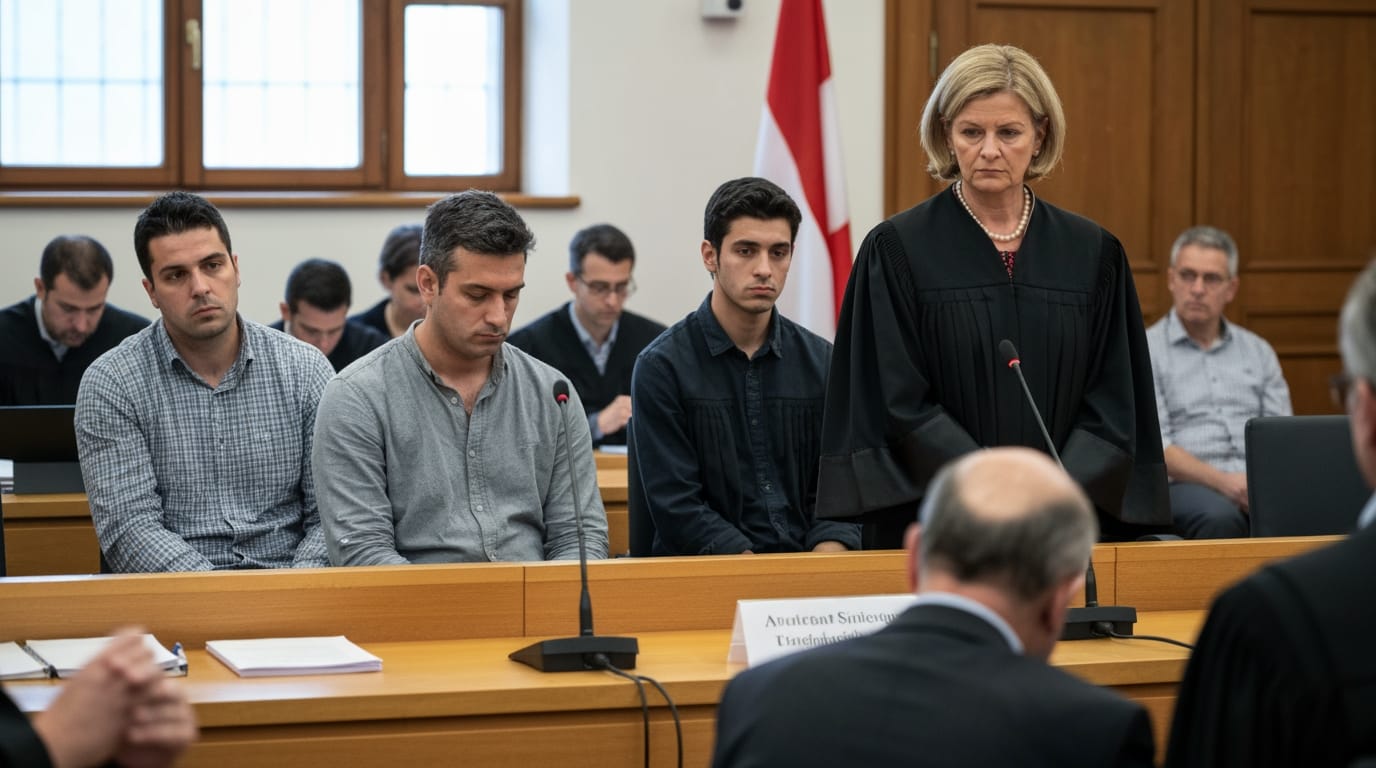
Vienna, Austria — In a significant stride toward international justice, an Austrian court has convicted two former Syrian government officials of torture and other grievous crimes committed during the early years of the Syrian civil war. The verdict, handed down on Monday, marks a pivotal moment in the global effort to hold perpetrators of atrocities accountable, especially for crimes committed in a conflict where domestic avenues for justice remain largely inaccessible. This case, prosecuted under the principle of universal jurisdiction, underscores Europe's growing commitment to addressing grave human rights violations, irrespective of where they occurred.
The Historic Verdict and Sentences
The Regional Criminal Court in Vienna sentenced Khaled al-Halabi, 63, and Musab Abu Rakba, 54, to eight years in prison each following their conviction on charges including torture, sexual coercion, and causing serious bodily harm. Al-Halabi, identified as a former brigadier general in Syria's General Intelligence Directorate in Raqqa, and Abu Rakba, a former lieutenant colonel and head of a local criminal investigation office in Raqqa, were found responsible for abuses against detainees between 2011 and 2013. Prosecutors accused the two men of either ordering or failing to prevent the systematic mistreatment of individuals held in detention centers under their authority. Both defendants had pleaded not guilty to the charges. The trial, which commenced on June 1, included compelling testimonies from over a dozen victims who recounted harrowing experiences of abuse suffered a decade ago. These testimonies were crucial in establishing the pervasive nature of the crimes committed.
The Reach of Universal Jurisdiction
The prosecution of these former officials in Austria highlights the critical role of universal jurisdiction, a legal principle that allows national courts to prosecute certain international crimes, such as torture, regardless of where they were committed or the nationality of the perpetrator or victim. Austrian law, specifically Section 64 of its Penal Code, provides jurisdiction for crimes like torture, even if committed outside Austria, particularly if the alleged perpetrator is present on Austrian territory and cannot be extradited. This legal framework is increasingly being utilized by European nations to address the impunity often enjoyed by those complicit in atrocities committed in distant conflicts. This case follows a series of similar proceedings in other European countries, including Germany, France, and Sweden, against former members of the Syrian state apparatus. These trials have become indispensable tools for combating impunity for international crimes when justice within the territorial state is non-existent or inaccessible. The Austrian Public Prosecutor's Office maintained that the defendants ordered, facilitated, or failed to prevent physical and psychological violence in detention centers under their command.
Echoes of Syria's Systematic Torture Apparatus
The conviction provides a stark reminder of the widespread and systematic use of torture by the Syrian government against its own population, particularly since the uprising began in 2011. Numerous reports from human rights organizations have consistently documented a vast network of detention facilities across Syria where torture was, and reportedly continues to be, routinely practiced. Methods of torture described in various reports include prolonged beatings, often with cables and batons, maintaining detainees in painful stress positions, sexual violence, burning with acid, electric shocks, and mock executions. The Syrian Network for Human Rights (SNHR) has documented at least 72 forms of torture and estimated that thousands have died under torture in government custody. These abuses were not isolated incidents but rather an integral part of a deliberate policy of repression aimed at suppressing dissent and intimidating the civilian population. The scale of these crimes has led human rights groups to classify them as crimes against humanity and war crimes.
The Human Cost: Victim Testimonies Drive Justice
At the heart of the Austrian trial were the courageous testimonies of survivors who, after enduring unspeakable horrors, sought refuge in Europe and then bravely stepped forward to demand justice. These individuals, some of whom were minors when they were subjected to torture, provided firsthand accounts that painted a grim picture of the conditions inside Syrian detention facilities in Raqqa. Their willingness to relive traumatic experiences in court was instrumental in securing the convictions. The pursuit of justice for Syrian torture survivors has also been supported by various human rights organizations, which have meticulously collected evidence, testimonies, and photographic documentation, such as the "Caesar" photos, to build cases against high-ranking officials. These collective efforts underscore the profound human cost of the Syrian conflict and the enduring quest for accountability by those most affected.
A Broader Pursuit of Accountability
The verdict in Vienna represents another significant step in a broader, albeit slow, international campaign to ensure accountability for the atrocities committed during the Syrian civil war. It sends a clear message that individuals responsible for such crimes cannot escape justice simply by fleeing their home country. While challenges remain, particularly in bringing higher-ranking officials to justice, these universal jurisdiction cases offer a vital pathway for victims who have been denied justice in Syria. The precedent set by cases like the conviction of Anwar Raslan in Germany in 2022, where a former Syrian intelligence officer received a life sentence for crimes against humanity, demonstrates the potential for these trials to hold senior figures responsible. Such convictions contribute not only to individual justice for victims but also to the gradual strengthening of international criminal law and the principle that egregious human rights violations will not go unpunished.


