Balochistan Gripped by Escalating Violence as Security Deteriorates
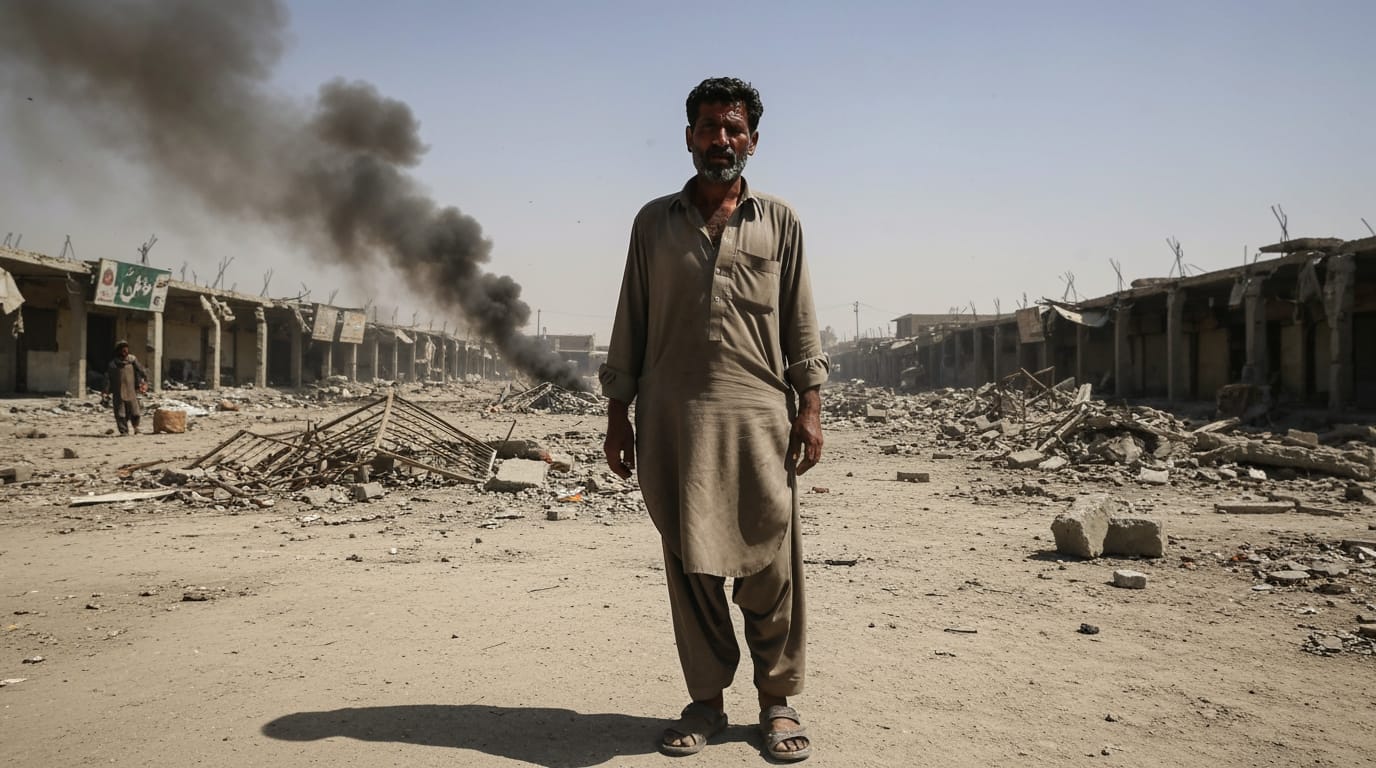
Balochistan, Pakistan's largest and resource-rich province, is experiencing a severe downturn in its security landscape, marked by a recent surge in coordinated attacks that underscore the persistent and complex challenges facing the region. A series of near-simultaneous assaults on January 31, 2026, across multiple districts by the Baloch Liberation Army (BLA) has highlighted critical weaknesses in the state's counter-insurgency mechanisms and intensified concerns over the stability of this strategically vital area. The sophisticated nature and widespread execution of these attacks have signaled an unprecedented phase of conflict, drawing urgent attention to the province's long-standing grievances and the escalating human cost of the protracted insurgency.
Coordinated Assaults Reveal Deepening Instability
The dawn of January 31, 2026, witnessed a meticulously planned offensive as armed groups, primarily affiliated with the Baloch Liberation Army, launched coordinated gun and bomb attacks in at least twelve towns and cities across Balochistan. Targets included police stations, paramilitary outposts, correctional facilities, and governmental structures, demonstrating the insurgents' capacity for complex operations. The BLA claimed responsibility for these assaults, referring to them as the second phase of "Operation Heroof," or "Operation Hero," and publicly declared its intention to continue such operations.
Pakistani authorities reported significant casualties from the wide-ranging offensive. According to provincial officials, at least 31 civilians and 17 security personnel were killed, while security forces eliminated a minimum of 145 assailants during counter-operations that lasted for nearly 40 hours. The Chief Minister of Balochistan indicated that some of the militants killed were identified as Afghan nationals. The violence caused widespread disruption, with hospitals initiating emergency protocols, administrative centers sealed, roads closed, and mobile phone connectivity restricted in affected areas such as Quetta. This recent wave of violence follows a prior major incident in March 2025, when the BLA hijacked the Jaffar Khan Express, a testament to the group's evolving capabilities and reach.
Root Causes: A Legacy of Grievances and Underdevelopment
The renewed intensity of the insurgency in Balochistan is deeply rooted in historical, political, and socio-economic factors that have fueled discontent for decades. Since Balochistan's accession to Pakistan in 1948, the province has experienced intermittent insurgencies driven by a pervasive sense of political marginalization and economic exploitation. Despite being rich in natural resources such as minerals and energy, Balochistan remains one of Pakistan's most underdeveloped regions, characterized by chronic poverty, inadequate service delivery, and limited political inclusion for its indigenous population.
Local leaders and analysts argue that the federal government has historically exploited the province's resources without adequately addressing the development needs or including the local populace in decision-making processes. Allegations of forced disappearances, extrajudicial killings, and severe security tactics by state forces, though denied by Islamabad, have further exacerbated resentment and mistrust among the Baloch population. These long-standing grievances provide fertile ground for militant groups to recruit and justify their armed struggle, portraying themselves as defenders against an "occupying state."
The China-Pakistan Economic Corridor (CPEC) Conundrum
A significant layer of complexity to Balochistan's instability is the China-Pakistan Economic Corridor (CPEC), a multi-billion-dollar development initiative designed to link Gwadar Port in Balochistan to China's Xinjiang province. While CPEC is envisioned as a transformative project for Pakistan's economy, it has paradoxically intensified local grievances in Balochistan. The project's implementation has been criticized for neglecting the needs and voices of local communities, leading to concerns about forced evictions, human rights violations, environmental degradation, and changes in the region's demographic composition.
The extensive militarization accompanying CPEC projects, aimed at protecting infrastructure and Chinese workers from insurgent attacks, has further alienated parts of the local population. Critics suggest that a security-centric approach, without addressing underlying socio-economic disparities and ensuring local ownership, cannot guarantee peace or stability. Investment protection mechanisms for CPEC projects necessitate the deployment of thousands of troops, indicating that the framework anticipates ongoing violence, making military protection a standard component of project implementation.
A Heavy Human Toll and the Quest for Stability
The deteriorating security situation in Balochistan exacts a profound human toll, disrupting daily life and fostering an environment of fear and uncertainty. The coordinated attacks in January 2026 led to emergency health responses, suspension of telecommunication services, and significant casualties among civilians and security forces alike. The year 2025 saw a 73 percent increase in combat-related deaths across Pakistan, with Balochistan consistently ranking as one of the most affected provinces.
In response to the escalating violence, Pakistan's National Assembly strongly condemned the recent terrorist incidents, with officials accusing external forces, particularly India, of supporting the BLA – an allegation New Delhi refutes. The government has reiterated its commitment to a "zero tolerance" policy against elements targeting civilians and has called for a coordinated national response involving political, diplomatic, military, and intelligence fronts. However, some provincial leaders advocate for a military solution over political dialogue, while analysts emphasize the need to address the deep-seated political marginalization and economic inequality that fuel the insurgency. The United States Department of State has issued a Level 4 "Do Not Travel" advisory for Balochistan Province due to the high risk of terrorism and kidnapping.
Conclusion: A Cycle of Violence and the Path Forward
Balochistan finds itself trapped in a complex and enduring cycle of violence, where historical grievances, economic disparities, and a perceived lack of political representation continue to fuel a potent insurgency. While the recent coordinated attacks by the BLA underscore the growing sophistication and reach of militant groups, the underlying drivers of the conflict remain largely unaddressed. The province's strategic importance, particularly amplified by CPEC, further complicates the security matrix, intertwining local discontent with regional geopolitical interests.
Achieving lasting peace and stability in Balochistan will require a comprehensive approach that extends beyond military operations. Sustainable solutions demand genuine efforts to address the legitimate socio-economic and political grievances of the Baloch people, foster inclusive governance, ensure equitable resource distribution, and build trust between the state and its citizens. Without such a multi-faceted strategy, the cycle of violence is likely to persist, perpetuating human suffering and hindering the development potential of this critical region.


