Vietnam Forges Deeper EU Ties in Strategic Balancing Act Between Global Powers
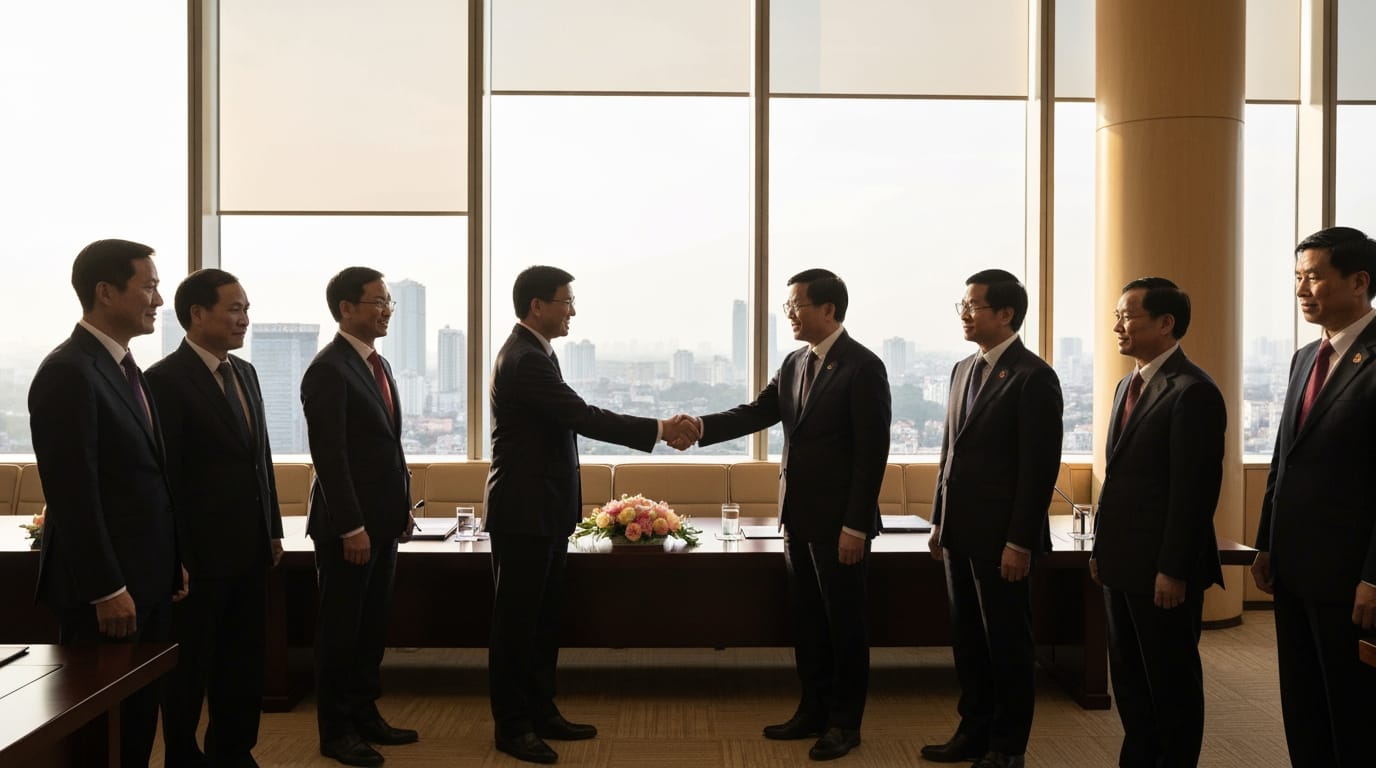
HANOI – Vietnam has significantly elevated its diplomatic relationship with the European Union, formalizing a Comprehensive Strategic Partnership that underscores the Southeast Asian nation's proactive efforts to diversify its international alliances and assert its growing influence on the global stage. This landmark agreement, reached on January 29, 2026, places the EU on the same top-tier diplomatic footing as Vietnam's existing strategic partners, including the United States, China, and Russia, marking a pivotal moment in Hanoi’s nuanced foreign policy approach. The move aims to recalibrate trade relations amid global economic shifts and deepen cooperation across a spectrum of critical sectors, illustrating Vietnam's adeptness at navigating a complex geopolitical landscape.
The Genesis of a Grand Strategy: "Bamboo Diplomacy" in Action
Vietnam's foreign policy has long been characterized by what its leaders term "bamboo diplomacy," a philosophy emphasizing flexibility, resilience, and the ability to bend with the wind without breaking. This strategic doctrine allows Hanoi to maintain its sovereignty and national interests by fostering robust relationships with various global powers, thereby avoiding over-reliance on any single nation or bloc. The upgrade of ties with the EU is a testament to this enduring approach, which seeks to expand market access, enhance technological capabilities, and ensure supply chain resilience for Vietnam's rapidly growing export-driven economy. In a world increasingly marked by geopolitical tensions and protectionist tendencies, Vietnam's decision to deepen its engagement with the EU serves as a strategic maneuver to broaden its economic and political horizons.
The necessity for such diversification has become particularly apparent with disruptions to global finance and the pressure of U.S. tariffs. Both Vietnam and the EU have experienced the impact of increased levies on their exports to the United States, prompting renewed impetus to explore alternative economic avenues and solidify existing partnerships. For the EU, this partnership reinforces its access to one of Asia's fastest-growing manufacturing hubs and supports its broader efforts to diversify supply chains and engage more deeply with the Indo-Pacific region. European Council President António Costa, during his visit to Hanoi for the announcement, highlighted the significance of standing "side by side as reliable and predictable partners" at a time when the international rules-based order faces multiple threats, emphasizing the partnership's role in "developing spheres of shared prosperity." Vietnamese President Luong Cuong hailed the upgrade as a "historic milestone," reflecting the progress made in bilateral relations.
Economic Pillars: The Enduring Impact of the EVFTA
A cornerstone of the burgeoning relationship between Vietnam and the EU is the EU-Vietnam Free Trade Agreement (EVFTA), which officially came into effect on August 1, 2020. This ambitious pact was designed to eliminate nearly 99% of customs duties between the two entities, creating substantial opportunities for increased trade and investment. The economic benefits have been tangible and far-reaching. Projections by Vietnam's Ministry of Planning and Investment (MPI) anticipated the EVFTA would boost Vietnam's Gross Domestic Product (GDP) by 4.6% and its exports to the EU by an impressive 42.7% by 2025.
Real-world figures largely support these optimistic forecasts. Between 2019 and 2024, the total trade volume between the EU and Vietnam surged from €45.6 billion to €67.1 billion, representing a significant 47% increase. Notably, Vietnamese exports to the EU experienced an even more pronounced rise of 58% during the same period. The EU has solidified its position as Vietnam's largest trading partner in goods within ASEAN and its 17th biggest trade-in-goods partner globally, with a total trade flow reaching €67 billion in 2024. Furthermore, the EVFTA has catalyzed foreign direct investment (FDI) into Vietnam, with EU FDI outflows slightly increasing to €1.4 billion in 2023, contributing to an outward stock of €10.8 billion. From August 2020 to May 2025, bilateral trade reached approximately $298 billion, with registered FDI from the EU exceeding $35 billion by mid-2025, showcasing the profound impact of the trade agreement on Vietnam's investment landscape. This robust economic integration has been critical for Vietnam, which has emerged as a key export hub for diverse goods, including electronics, garments, and consumer products.
Expanding Horizons: Beyond Trade and Investment
The newly established Comprehensive Strategic Partnership extends far beyond traditional trade agreements, encompassing a broad array of cooperation areas critical for Vietnam's sustainable development and global integration. These include a strong focus on science and technology, green transition initiatives, and digital transformation. Both parties have committed to promoting the marine economy, fostering clean energy solutions, and developing high-quality human resources. The partnership also targets strategic sectors such as critical minerals and technology, aiming to enhance resilience in global supply chains.
Security cooperation is another significant dimension, with discussions extending to maritime safety and security, cybersecurity, and crisis management. These areas are particularly pertinent given Vietnam's geographical location and its aspirations for regional stability. The heightened diplomatic engagement is expected to foster more frequent high-level exchanges and closer coordination, reinforcing Vietnam's proactive role in international affairs. The partnership serves as a testament to the EU's commitment to accompanying and supporting Vietnam's development process, recognizing Vietnam as an important partner in the Indo-Pacific region and within ASEAN.
Balancing Act: Navigating the Geopolitical Tightrope
Vietnam's strategic decision to elevate its relationship with the EU is a calculated move in its ongoing efforts to balance its foreign relations with major global powers. While China remains Vietnam's largest trade partner, with bilateral trade reaching $123 billion in the first half of 2024, and the United States stands as Vietnam's second-largest trade partner and primary export destination, the diversification afforded by a stronger EU partnership is invaluable. Vietnam's continuous pursuit of diverse partnerships through 17 free trade agreements positions it among the world's top 20 economies in terms of trade scale and investment attraction.
By enhancing ties with the EU, Vietnam lessens its economic and political vulnerability to potential disruptions or pressures from any single power. This strategy aligns with Vietnam's objective to maintain an open international environment for trade and to reinforce its position as a reliable global partner. The "bamboo diplomacy" has allowed Vietnam to achieve substantial economic growth, with its GDP ranking 32nd globally and exceeding 8.02% in 2025. This approach also reflects Vietnam's commitment to multilateralism, diversification, and continued integration into the international economy, utilizing strategic partnerships and free trade agreements to navigate global complexities.
Conclusion: A Path Towards Diversified Prosperity
The establishment of a Comprehensive Strategic Partnership between Vietnam and the European Union represents a significant evolution in Vietnam's foreign policy. It solidifies Hanoi's "bamboo diplomacy" as an effective strategy for navigating an increasingly complex global landscape, enabling the nation to pursue diversified prosperity and enhanced security. By placing the EU on par with its most significant international partners, Vietnam underscores its commitment to fostering robust, multi-faceted relationships that mitigate risks and maximize opportunities. This strategic move not only strengthens Vietnam's economic resilience and supply chain stability but also amplifies its voice and influence as a responsible and active member of the international community, capable of charting an independent course amidst competing global interests.


