Iran's Protests: A Cycle of Defiance and Deadly Repression as Witnesses Recount Chaos
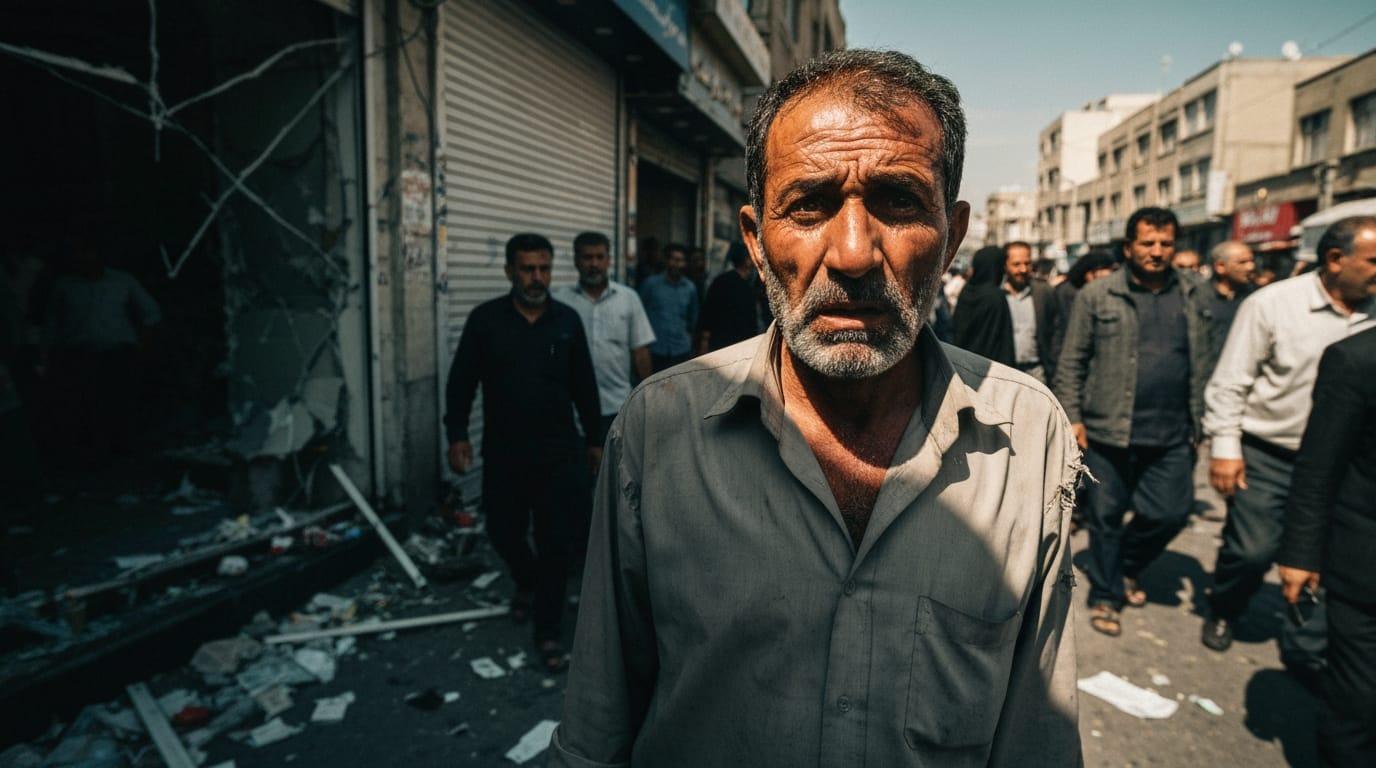
TEHRAN – A chilling narrative of violence and chaos has emerged from Iran as witnesses and human rights organizations detail the brutal crackdown on nationwide protests that have swept the country in recent years. From the "Woman, Life, Freedom" movement ignited by the death of Mahsa Amini in 2022 to the more recent unrest fueled by economic despair in late 2025 and early 2026, accounts consistently describe security forces employing lethal force, mass arrests, and systemic abuses in a determined effort to quell dissent. The scale of the repression, coupled with deliberate communication blackouts, paints a grim picture of a society grappling with profound internal strife and a government intent on maintaining control through overwhelming force.
The protests, which have seen a broad spectrum of Iranian society take to the streets, are a direct response to deep-seated grievances, ranging from stringent social controls to a crippling economic crisis. However, the government's response, as documented by numerous independent reports, has escalated far beyond conventional crowd control, evolving into what many describe as a campaign of terror that leaves thousands dead and many more traumatized or imprisoned.
The Spark of Dissent: From Amini to Economic Fury
The initial wave of protests that began in September 2022 was sparked by the death of 22-year-old Mahsa Amini in the custody of Iran's morality police. Her death, following her detention for allegedly improper hijab, ignited a furious outpouring of anger, particularly among women, who burned headscarves and chanted slogans demanding fundamental rights and an end to the existing political system. This movement, often referred to as "Woman, Life, Freedom," rapidly spread across the country, attracting support from diverse segments of the population.
More recently, in late December 2025, a new wave of protests erupted, this time primarily driven by severe economic hardship. A sharp devaluation of the Iranian rial, soaring inflation, and widespread state mismanagement plunged many Iranians into deeper poverty, prompting renewed calls for change. These economic grievances quickly converged with political discontent, leading to widespread demonstrations that observers have characterized as some of the largest and most challenging to the Islamic Republic since its founding in 1979.
A Reign of Terror: Witness Accounts of Brutality
Eyewitnesses from various Iranian cities have provided harrowing accounts of the violence unleashed by security forces, including the Islamic Revolutionary Guard Corps (IRGC), Basij paramilitary forces, and various divisions of the national police (FARAJA), often accompanied by plain-clothes agents. Reports indicate that these forces have repeatedly fired metal pellets and live ammunition directly at protesters, frequently targeting vital areas such as the head and torso. One witness described hearing gunshots and seeing "legs falling down" and "blood everywhere on the floor on the street" during a protest in Tehran.
Beyond the immediate clashes, the crackdown has extended into systematic abuses in detention. Amnesty International documented at least 45 cases of rape, gang rape, and other forms of sexual violence against individuals, including women, men, and even children as young as 12, detained during the Mahsa Amini protests. The organization fears these documented violations are part of a much "wider pattern." Detainees have also been subjected to horrific violence and ill-treatment in custody, with reports of "vaccine" injections leading to serious health complications upon release.
The level of force employed has been so extreme that doctors and medical staff have described scenes reminiscent of a "war zone." In cities like Arak, witnesses used the term "war" to characterize the widespread and intense clashes. Forensic medical staff have reported chaos in morgues, with authorities allegedly pushing for rapid, mass burials to obscure the true death toll. Some staff described encountering trucks filled with bodies, far exceeding storage capacity, and expressed suspicions of "mass burial" practices when bodies were diverted to unknown locations. One doctor in Tehran spoke of being on the "verge of a psychological collapse" after witnessing what they described as "mass murder."
The Human Toll: Casualties, Arrests, and Disappearances
The exact number of casualties remains a contentious issue, with official Iranian figures sharply contrasting with those reported by human rights organizations and independent media. The Iranian government's Supreme Council of National Security reported 3,117 deaths during the uprising as of January 21, 2026, classifying a majority as "martyrs" (security personnel and civilians killed by protestors) and the rest as "terrorists." However, independent assessments paint a far more dire picture.
Iran International has documented over 6,000 deaths and previously cited leaked official documents indicating a toll as high as 36,500. The Center for Human Rights in Iran (CHRI) confirmed 6,479 deaths, with an additional 17,091 under review, specifically for the January 2026 protests, categorizing the scale of killings as "crimes against humanity." Amnesty International also noted that January 2026 marked the deadliest period of repression in decades, with thousands killed. The UN Special Rapporteur on Iran estimated at least 5,000 deaths by mid-January 2026.
Beyond the fatalities, mass arrests have been a hallmark of the crackdown. Thousands, including children, have been arbitrarily detained across the country. Security forces have reportedly pursued injured individuals into hospitals, arresting them, and have also targeted lawyers, human rights defenders, and ordinary citizens. A newly formed grassroots network of Iranian medical professionals, the "People's Red Lion and Sun Groups of Iran," has raised alarms about security forces entering hospitals to detain injured people and review patient lists, forcing many wounded individuals into hiding to avoid arrest.
Information Control: The Cloak of Silence
A critical component of the Iranian government's strategy has been the imposition of severe internet and communication blackouts. These shutdowns are seen by human rights groups as a deliberate tactic to conceal crimes, impede the coordination of protests, slow the circulation of evidence, and limit external visibility precisely when repression is most intense. During the height of the January 2026 crackdowns, a near-total internet shutdown was implemented, making independent verification of events extraordinarily difficult.
This technological repression extends beyond simple blackouts. Iran has increasingly utilized advanced surveillance systems, network control architectures, biometric tools, and even small drones for crowd monitoring and tracking, some of which are linked to technology from China and Russia. This sophisticated infrastructure allows for faster identification and broader disruption, enabling the regime to isolate protest sites through granular filtering and suppress dissent more effectively.
International Condemnation and Unanswered Calls for Accountability
The international community has largely condemned the brutal crackdown, with numerous calls for urgent investigations into human rights violations. The UN Human Rights Council held a special session on the situation in Iran, highlighting concerns over the brutality and bloodshed.
In response to the reported abuses, both the European Union and the United States have imposed sanctions on Iranian officials and entities deemed responsible for human rights violations and the violent repression of peaceful demonstrators. The United Kingdom also announced sanctions against 10 individuals and one organization for their role in the brutality. However, Iranian officials, including their Permanent Representative to the UN, have dismissed these proceedings as politically motivated, asserting that Iran recognizes the right to peaceful protest but that demonstrations had transformed into "organized violence" and "terrorist attacks."
Despite international pressure, the cycle of protests and violent repression continues to unfold in Iran. The testimonies of witnesses and the comprehensive reports from human rights organizations paint a consistent picture of a state willing to employ extreme measures to maintain its authority, leaving a trail of death, injury, and profound human suffering in its wake. The calls for justice and accountability resonate globally, yet the immediate reality on the ground for many Iranians remains one of sustained fear and suppressed freedoms.


