Germany's Dual Diplomacy: Balancing Energy Imperatives and Arms Trade in the Gulf
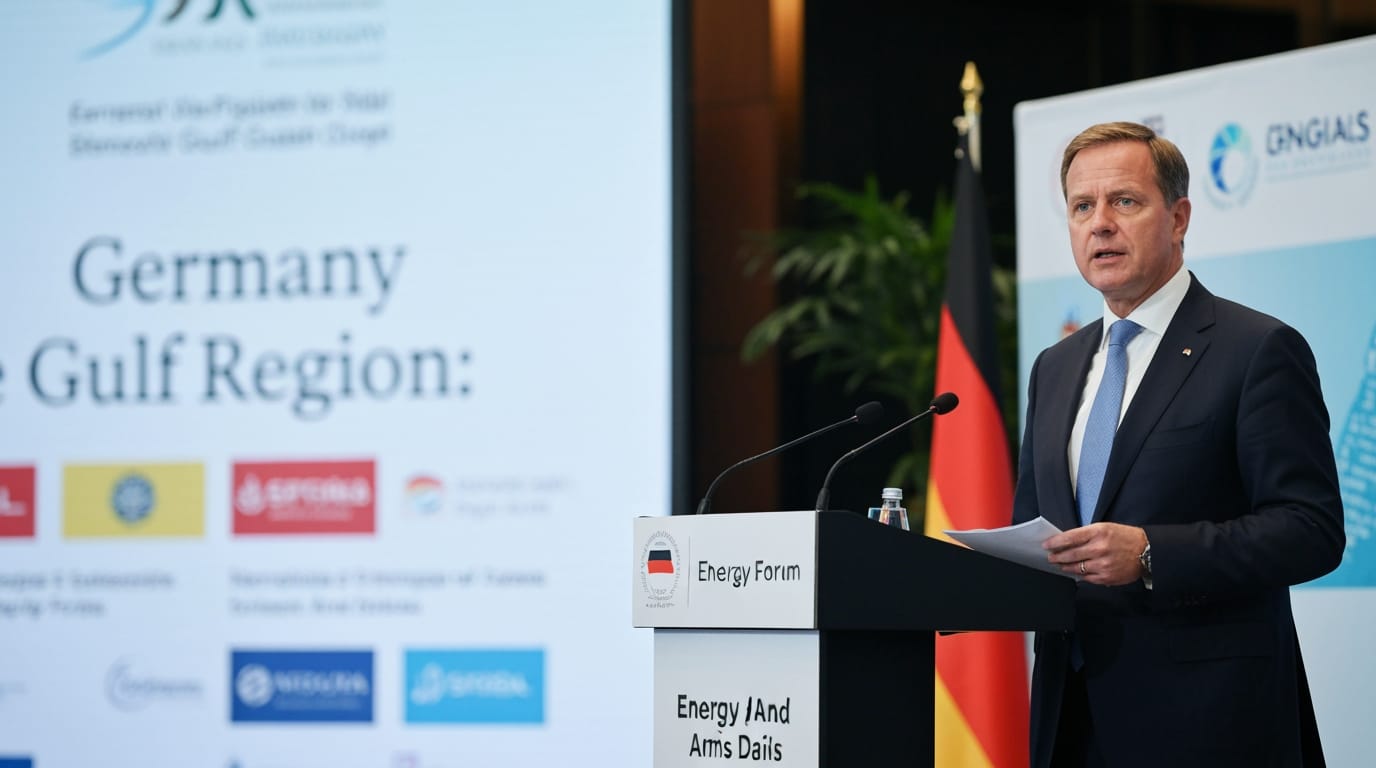
Germany is reshaping its strategic engagements with the Gulf region, driven by an urgent need to secure alternative energy sources following the cessation of Russian gas supplies and a complex, often contentious, history of arms exports. This evolving relationship sees Berlin navigating a delicate balance between economic interests, energy security, and persistent human rights concerns, marking a significant recalibration of its foreign policy.
The pivot towards the Gulf states intensified as Germany sought to decouple its energy supply from Russia after the 2022 invasion of Ukraine. Historically reliant on Russian oil and gas, Germany quickly moved to diversify its energy portfolio, identifying the resource-rich Gulf as a critical partner. This strategic shift has led to high-level diplomatic visits and the forging of new energy deals, particularly in liquefied natural gas (LNG), diesel, and the burgeoning green hydrogen sector. These agreements underscore Germany's pragmatic approach to securing its energy future, even as they draw scrutiny over the human rights records of some partner nations. Meanwhile, Germany's role as a major global arms exporter to the region has been characterized by fluctuating policies, punctuated by embargos and subsequent relaxations, reflecting a constant tension between commercial imperatives and ethical considerations.
The Energy Pivot: From Russian Dependency to Gulf Partnership
The abrupt halt of Russian gas supplies compelled Germany to accelerate its search for new energy partners. In this context, the Gulf states, with their ample reserves of natural gas and growing ambitions in renewable energy, emerged as crucial players. Germany, Europe's largest gas market, requires significant volumes to heat homes and fuel industrial production, making the diversification of supply a paramount national interest.
A cornerstone of this new energy strategy is the long-term liquid gas supply deal struck with Qatar. German firms have committed to purchasing two million tonnes of LNG annually from Qatar for at least 15 years, with deliveries slated to commence in 2026. This agreement, facilitated by Qatar Energy and ConocoPhillips, represents a substantial step towards bolstering Germany's long-term energy security.
Concurrently, Germany has deepened its energy ties with the United Arab Emirates (UAE) through the Energy Security and Industry Accelerator (ESIA) Agreement. This pact aims to expedite joint projects across various energy sectors, including renewables, LNG, and hydrogen. The UAE has already made its first direct diesel delivery to Germany and has pledged to supply up to 250,000 tonnes of diesel per month in 2023, alongside reserving additional LNG cargoes for German customers. These developments highlight the rapid expansion of energy cooperation, moving beyond traditional fossil fuels to encompass a broader spectrum of future energy solutions.
The Green Horizon: Hydrogen Partnerships
Beyond conventional energy, Germany has identified green hydrogen as a vital component of its future energy system and a key area for collaboration with Gulf nations. The German government's National Hydrogen Strategy anticipates a substantial demand for hydrogen, projected at 90 to 110 terawatt-hours by 2030, with a significant portion expected to be met through imports. To this end, Berlin has allocated €7 billion for domestic hydrogen market development and an additional €2 billion for international cooperation initiatives.
The Gulf region, with its vast solar resources and potential for low-cost green hydrogen production, is strategically positioned to become a major supplier. Germany has inked declarations of intent and memoranda of understanding with Saudi Arabia, the UAE, Oman, and Qatar to foster cooperation in this nascent industry. German companies, including EnBW, VNG, Uniper, Linde, Siemens Energy, Hydrogen Rise, and ThyssenKrupp, are actively involved in planned green hydrogen projects across the region. A significant milestone was the arrival of the first test shipment of ammonia derived from hydrogen from the UAE at the Port of Hamburg in October 2022, signaling the practical steps being taken to establish a comprehensive hydrogen value chain. This focus aligns with Germany's ambitious long-term energy goals, which aim for an 80% renewable electricity share by 2030 and nearly 100% by 2035.
Arms and Allegiances: A Shifting Export Policy
Germany stands as one of the world's leading arms exporters, with Arab states consistently among the primary recipients of its military equipment. However, Germany's arms export policy, particularly towards the Gulf, has been marked by pronounced shifts, often driven by geopolitical events and human rights considerations.
A notable example is the arms export ban imposed on Saudi Arabia in 2018 following the murder of journalist Jamal Khashoggi. While this ban, which also sought to prevent German weapons from being used in the Yemen conflict, marked a period of stricter control, it was not entirely absolute. Germany continued to approve some arms sales, including armored all-terrain vehicles, and components for European joint projects like the Eurofighter, even to countries involved in the Yemen war, such as the UAE.
More recently, a significant policy reversal occurred with Germany's approval of the sale of 150 Iris-T air-to-air missiles to Saudi Arabia. This decision effectively ended the direct arms export blockade in place since 2018. The German government justified this shift by acknowledging Saudi Arabia's "constructive approach" in regional security matters, including its role in intercepting Houthi missiles, and its efforts related to the Israel-Hamas conflict. Furthermore, discussions have resurfaced regarding the potential export of Eurofighter jets to Saudi Arabia, a deal previously vetoed by Germany. These developments suggest a less restrictive stance on arms exports, increasingly influenced by broader foreign, economic, and security policy interests, particularly in the wake of the war in Ukraine.
Human Rights and Realpolitik: The Ethical Dilemma
The increased engagement in both energy and arms sectors with Gulf states inevitably reignites debates surrounding human rights and Germany's ethical responsibilities. Despite official rhetoric emphasizing human rights criteria for arms exports, critics argue that political and economic interests often take precedence.
Evidence suggests that German weapons and parts have been used by the Saudi-led coalition in Yemen, contributing to a severe humanitarian crisis in the country. Human rights organizations have consistently raised concerns about Germany's potential complicity in violations of international humanitarian law.
Germany's arms sales to Israel also fall under intense scrutiny. As Israel's second-largest weapons supplier, Germany has faced increasing pressure amid the conflict in Gaza. While Chancellor Friedrich Merz announced a partial suspension of new arms exports to Israel that could be used in Gaza due to humanitarian concerns, the government reaffirms its foundational commitment to Israel's security. However, human rights organizations and legal bodies have filed lawsuits against the German government, alleging that its continued arms transfers violate international law and risk complicity in war crimes. These cases underscore the complex legal and ethical challenges Germany faces as it navigates its security partnerships in volatile regions.
Conclusion
Germany's intensified engagement with the Gulf region reflects a pragmatic adaptation to a shifting global landscape. The urgent imperative for energy security, particularly since the disruption of Russian supplies, has propelled Germany into deeper partnerships for both traditional hydrocarbons and future-oriented green hydrogen. Concurrently, its long-standing role as an arms exporter to the region continues, albeit with policy adjustments that balance economic and strategic interests against ethical considerations. This dual diplomacy, characterized by a pursuit of diverse energy sources and a complex arms trade, highlights the intricate web of geopolitical, economic, and ethical factors shaping Germany's relationships in the Gulf. The long-term implications for regional stability, global energy transitions, and Germany's own foreign policy identity remain subjects of ongoing debate and development.


