Bangladesh Navigates Tumultuous Political Waters Ahead of Critical 2026 Elections
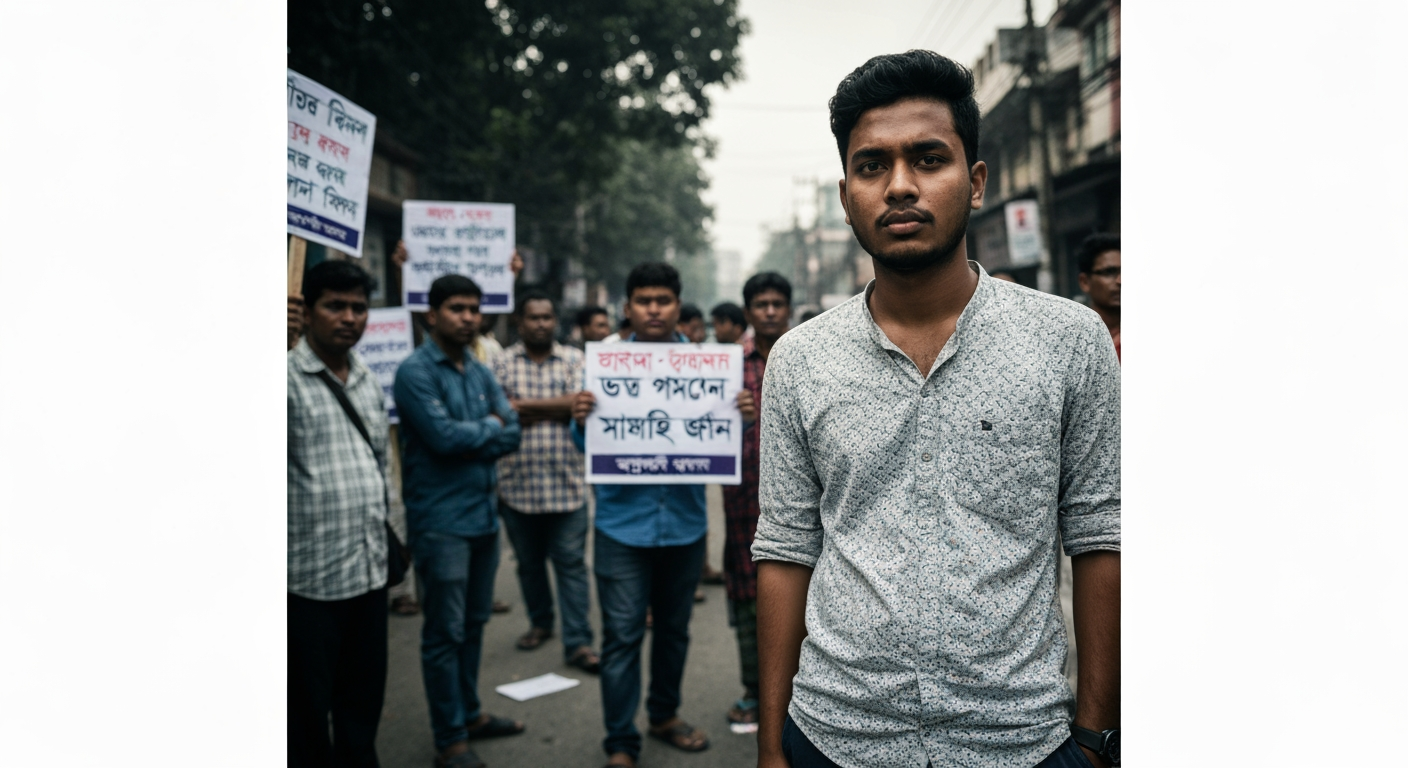
Bangladesh stands at a critical juncture, grappling with profound political instability and deep-seated divisions following a controversial general election in January 2024 and the subsequent ousting of Prime Minister Sheikh Hasina. The nation, now under an interim government, is gearing up for new elections anticipated by February 2026, against a backdrop of persistent unrest, economic strain, and heightened international scrutiny. The past two years have witnessed an escalation of political polarization, marked by widespread protests, allegations of human rights abuses, and a significant shift in governance, leaving the country's democratic future in precarious balance.
The Contentious January 2024 Election and Its Aftermath
The general election held on January 7, 2024, saw Prime Minister Sheikh Hasina's ruling Awami League (AL) secure a fourth consecutive term, a victory that was immediately mired in controversy. The primary opposition party, the Bangladesh Nationalist Party (BNP), along with its allies, boycotted the polls, citing a lack of faith in a free and fair electoral process under the incumbent government. Their central demand for a neutral caretaker government to oversee the elections was rejected by the Awami League, which maintained that such a system was unconstitutional.
Concerns over the integrity of the election were widespread. Reports emerged of voter suppression, intimidation, and allegations of fraud, casting a long shadow over the results. The Awami League was accused of fielding "dummy" candidates—ostensible independents—to create an illusion of competition. Official voter turnout was reported at approximately 40%, a figure disputed by the opposition, who attributed the low participation to their boycott and alleged irregularities. Human rights organizations highlighted a severe crackdown on dissent in the months leading up to the election, with thousands of opposition leaders and activists reportedly arrested, in what was perceived as an attempt to incapacitate political rivals.
International reactions to the election were notably split. While countries like China, India, and Russia extended congratulations to Prime Minister Hasina, Western nations, including the United States, the United Kingdom, Canada, and the European Union, expressed significant disappointment and concern. The U.S. State Department explicitly stated that the elections were "not free or fair" and lacked the essential preconditions for democracy.
A Summer of Uprising: The Fall of the Hasina Government
The political landscape in Bangladesh dramatically shifted just months after the January elections. What began in June 2024 as a student-led quota reform movement, protesting a quota system for public sector jobs, rapidly escalated into a nationwide mass uprising by July. This movement tapped into broader discontent over authoritarian governance, alleged human rights abuses, and a struggling economy.
The government's response to the protests was met with fierce criticism, with reports of a "July massacre" involving mass killings of demonstrators. The intensifying unrest culminated on August 5, 2024, when Prime Minister Sheikh Hasina resigned and departed the country for India, marking the end of her 15-year rule. Following her ouster, an interim government was formed, led by Nobel Peace Prize laureate Muhammad Yunus, tasked with steering the nation towards stability and preparing for fresh elections.
In a notable development reflecting the changed political climate, Bangladesh's International Crimes Tribunal sentenced Hasina to death in absentia in November 2024 for crimes against humanity related to the suppression of protests during the July-August uprising. Furthermore, the interim government in November 2024 labeled Hasina's Awami League a "fascist party" and restricted its ability to hold political protests.
Navigating the Interim Period: Challenges and New Elections
As of late 2025, the interim government under Muhammad Yunus continues to navigate a complex and volatile political environment. The administration has affirmed its commitment to holding national elections, now anticipated by February 2026, aiming to restore democratic rights perceived to have eroded under the previous regime.
However, the path to these elections remains fraught with challenges. Political tension persists, characterized by ongoing clashes and violence between various factions. International bodies and human rights advocates remain vigilant. In December 2025, U.S. lawmakers issued a stern warning to the interim administration, cautioning against measures such as suspending political parties or reactivating "flawed International Crimes Tribunals," emphasizing that such actions could undermine the credibility of the electoral process and disenfranchise significant portions of the electorate. They urged for an inclusive and credible democratic transition, ensuring all political parties can participate freely and fairly.
Amidst this political turbulence, an "India Out" campaign has gained traction, fueled by allegations of Indian interference in the 2024 elections and a domestic push for local products over imports. This highlights the intricate geopolitical dynamics at play and potential shifts in regional alignments.
Economic Fallout and Human Impact
The prolonged political instability has exacted a heavy toll on Bangladesh's economy. The country has been battling high inflation, which soared to 11.66% by July 2024, with food inflation reaching a staggering 14.10%. This economic strain has placed immense pressure on households, making essential commodities increasingly unaffordable.
Investor confidence, both domestic and foreign, has been significantly eroded by the uncertainty, leading to reduced investment. The vital ready-made garment (RMG) sector, which accounts for approximately 80% of Bangladesh's total exports, has been severely impacted by protests, strikes, and disruptions in supply chains. Worker protests over wages and inadequate benefits have further exacerbated the industry's woes, leading to factory closures and vandalism. The economic turmoil also risks impacting the country's GDP growth, with forecasts dropping below 6%.
Human rights groups continue to voice alarm over the targeting and imprisonment of activists and allegations of an unfair electoral process. The legacy of violence, including incidents like the "July massacre" where hundreds were reportedly killed by security forces, underscores the urgent need for accountability and institutional reform.
Conclusion: A Precarious Path Forward
Bangladesh is undeniably at a crossroads. The promise of new elections offers a glimmer of hope for a return to democratic norms, but the deep-seated political rivalries, the economic challenges, and the legacy of state-sponsored repression present formidable obstacles. The interim government faces the monumental task of fostering stability, restoring public trust, and ensuring a genuinely free and fair electoral process. The world watches closely to see if Bangladesh can overcome its tumultuous past and chart a course towards a more inclusive, democratic, and prosperous future, or if it will remain caught in a cycle of instability and contested governance. The forthcoming elections in 2026 will be a critical determinant of the nation's trajectory.
Related Articles

Mounting Frustration Grips Russia as Economic Hardship and War's Toll Deepen
Moscow, Russia – A palpable shift in public sentiment is emerging across Russia, with growing frustration among citizens fueled by a confluence of economic pressures, increasing internet restrictions, and the undeniable...

Germany's Strategic Calculus: Ukraine Aid is an Investment in European Security, Not Charity
Berlin – The ongoing provision of substantial aid to Ukraine by Germany and its allies is increasingly being framed not as an act of altruism, but as a crucial investment in European security and stability. This...