Beijing's European Pivot: China Courts Continent Amidst U.S. Dysfunction
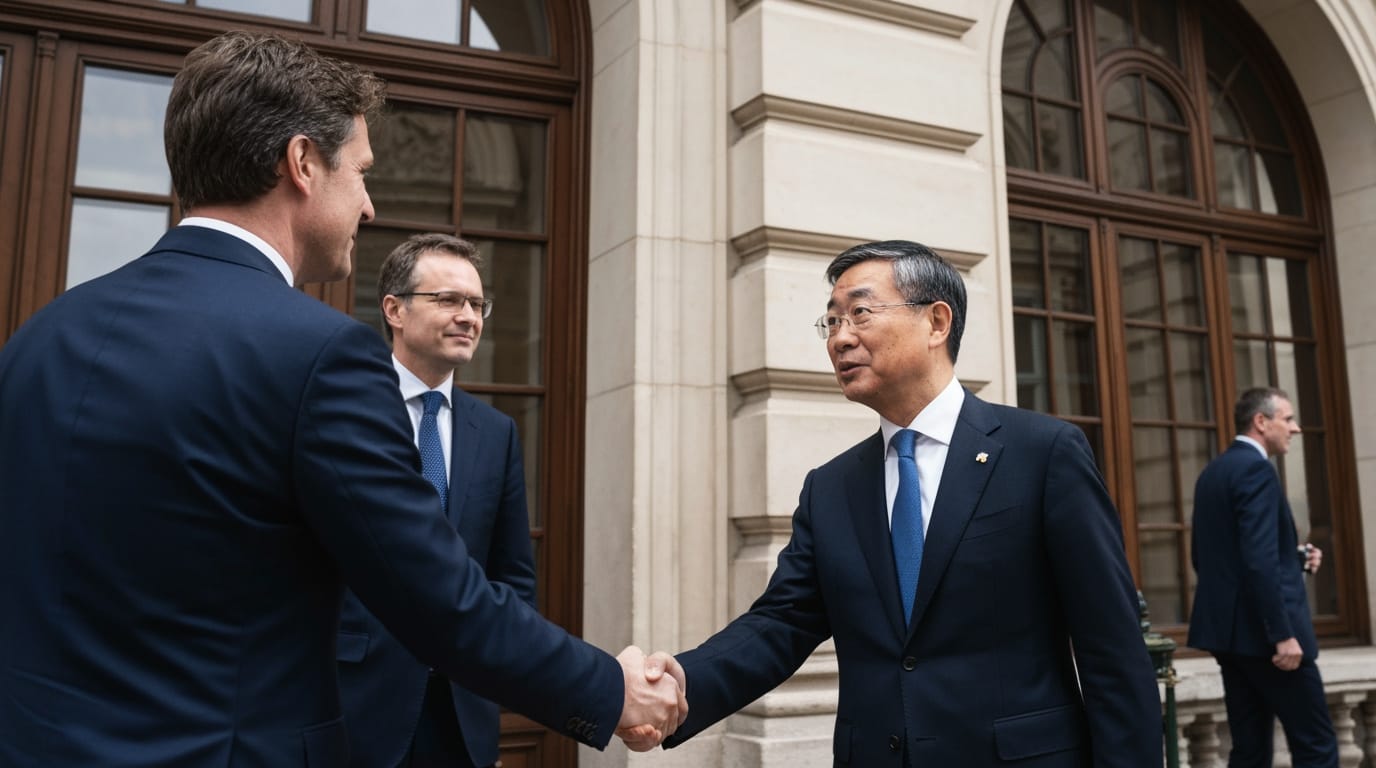
China is actively recalibrating its global diplomatic strategy, increasingly focusing attention on European nations. This intensified engagement unfolds against a backdrop of perceived political dysfunction and an "America First" approach emanating from the United States, which has introduced considerable strain into transatlantic relations. Beijing's calculated charm offensive seeks to capitalize on these tensions, presenting itself as a stable and consistent partner while aiming to reshape global power dynamics.
The Strategic Calculus: Why Europe Matters to Beijing
China's heightened interest in Europe is rooted in a confluence of geopolitical and economic factors, significantly influenced by the shifting landscape of U.S. foreign policy. The perceived instability and unilateral tendencies within the U.S. government, particularly a renewed "America First" posture, have created an opportunity for Beijing to expand its influence. As trust in the transatlantic alliance wavers and the U.S. shows signs of retreating from multilateral structures, China positions itself as a proponent of free trade and multilateralism, albeit one with distinct "Chinese characteristics." This stance appeals to a Europe that is instinctively multilateralist but also recognizes that China's priorities and values often diverge from its own. The perceived U.S. focus on domestic issues and political polarization further creates a vacuum that China appears eager to fill on the global stage.
Economically, Europe represents a critical market for Chinese goods and a significant destination for investment, becoming even more vital as China faces restrictions in the U.S. market. China's deep economic ties with the EU are substantial, with the bloc serving as China's second-largest trading partner, or third overall when services are included. This interdependence underscores the mutual economic benefits, yet it is increasingly viewed through a strategic lens in European capitals. Beijing also seeks access to advanced Western technologies and intellectual property, investing in European companies to acquire these capabilities and support its ambition to become self-sufficient in key sectors. This drive for technological independence aligns with China's broader goal of reducing its reliance on foreign innovations.
Furthermore, China aims to enhance its global influence, asserting its claim to global leadership, especially in areas where the U.S. has shown less engagement or has withdrawn from international agreements. This strategy includes appealing to Europe's desire for "strategic autonomy," hoping to translate this aspiration for independence from U.S. policy into a softer, more accommodating stance towards Chinese policies and interests. By cultivating closer ties with Europe, Beijing seeks to create a more multipolar global order, potentially weakening a unified Western front and increasing its own diplomatic leverage.
Europe's Deliberate Balancing Act: Partner, Competitor, Rival
The European Union's relationship with China is inherently complex, officially characterized as that of a "partner for cooperation, an economic competitor, and a systemic rival." This multifaceted definition reflects the deep intertwining of economic interests with profound geopolitical and values-based divergences. While trade and investment remain robust, with China being the EU's largest source of imports and third-largest trading partner overall, this economic interdependence is increasingly scrutinized through a lens of strategic caution. The EU recorded a significant trade deficit in goods with China, amounting to €305.8 billion in 2024, a figure that continues to widen in volume, highlighting concerns about high-volume, low-margin imports. This imbalance has fueled calls within Europe for greater reciprocity and a level playing field in trade relations.
Despite these tensions, areas of cooperation persist. Climate change, for instance, remains a critical domain where both the EU and China acknowledge a shared responsibility and have engaged in institutionalized cooperation since 2005. Joint initiatives include efforts on emission trading schemes, sustainable finance classifications, and bilateral discussions on methane emissions. Both powers have reiterated their commitment to work together on global environmental challenges, understanding that concerted action is necessary to address issues like global warming. However, even within climate cooperation, European policymakers are urged to re-evaluate their engagement, recognizing that Beijing does not always separate climate issues from broader geopolitical competition.
Significant areas of contention continue to strain the relationship, preventing a full alignment of interests. China's human rights record, particularly regarding the treatment of Uighurs in Xinjiang and the crackdown on freedoms in Hong Kong, remains a persistent irritant, leading to reciprocal sanctions that ultimately derailed the EU-China Comprehensive Agreement on Investment (CAI). Beijing's assertiveness in the East and South China Seas, its perceived economic coercion against member states, and its export controls on critical raw materials further compound European concerns about security and supply chain vulnerabilities. Crucially, China's continued alignment with Russia and its economic support for Moscow amid the ongoing war in Ukraine is a major obstacle for the EU, which views this as undermining its core security interests and global stability. This perceived "pro-Russian neutrality" complicates any efforts to forge closer political ties.
European Responses: De-risking and Strategic Autonomy
Europe's response to China's overtures is characterized by a "cautious engagement" rather than a wholesale "reset" of relations. While diplomatic channels remain open and high-level visits continue—such as the EU-China Summits which serve as key barometers for the relationship—an underlying erosion of trust is evident. The EU is actively pursuing a strategy of "de-risking," aiming to reduce economic dependencies and vulnerabilities without seeking a complete "decoupling" or "divorce" from the Chinese economy. This initiative, articulated by European Commission President Ursula von der Leyen, seeks economic distancing and diversification. This includes diversifying supply chains for critical raw materials, a policy underscored by initiatives like the Critical Raw Materials Act, designed to lessen reliance on Chinese dominance in areas vital for the EU's digital, defense, and green industries.
European leaders find themselves navigating a delicate balance. Some see an opportunity to leverage closer ties with Beijing as a means to gain concessions or exert influence in discussions with Washington, particularly in an era of unpredictable U.S. foreign policy. Yet, there is a clear understanding among many European policymakers that a fragmented European approach risks allowing China to dominate individual member states, rather than engaging with a united bloc. The aspiration for "strategic autonomy" is a recurring theme in European discourse, reflecting a desire to act independently of U.S. influence while also preserving core European values and security interests. However, the convergence of security and economic spheres, driven by domestic pressures in key European nations like Germany and the United Kingdom, makes it increasingly difficult for Beijing to separate commerce from politics in its engagements with European partners.
The approaches of individual European states vary, adding another layer of complexity to the EU's China strategy. While Germany's "de-risking" efforts inevitably collide with its deep economic dependence on Chinese markets, and the UK's engagement is constrained by growing security concerns and its "Five Eyes" obligations, other nations like Hungary and Serbia have pursued deeper ties with China, sometimes amid concerns over democratic backsliding within their own borders. This divergence in national priorities and approaches underscores the ongoing challenge for the EU to formulate and maintain a unified and consistent strategy toward China, a crucial element for effective engagement.
Conclusion: Navigating the Geopolitical Triangle
The current geopolitical landscape places Europe at the nexus of a complex "love-hate triangle" involving China and the United States. Beijing's strategic pivot towards Europe, fueled by perceived U.S. dysfunction and its own economic and geopolitical ambitions, is undeniable. China offers stability and economic incentives, appealing to Europe's desire for multilateralism and strategic autonomy, a narrative that resonates particularly when transatlantic unity appears fractured.
However, Europe is not passively drawn into Beijing's orbit. Its relationship with China is defined by a dynamic interplay of partnership, competition, and rivalry, where deep economic ties are increasingly offset by concerns over human rights, unfair trade practices, geopolitical assertiveness, and China's stance on critical international conflicts such as the war in Ukraine. The EU's ongoing efforts to "de-risk" and diversify its dependencies reflect a commitment to safeguarding its economic security and values, recognizing the vulnerabilities inherent in over-reliance on any single external power. The trajectory of this critical relationship will largely depend on Europe's ability to maintain a coherent and unified front, balancing its economic imperatives with its strategic autonomy and fundamental principles, while simultaneously navigating the unpredictable currents of U.S. foreign policy. The intricate interplay between these three global powers will undoubtedly continue to shape the international order for years to come.


