Belarusian Dissident Journalist Raman Pratasevich Pardoned After Contested Arrest and Conviction
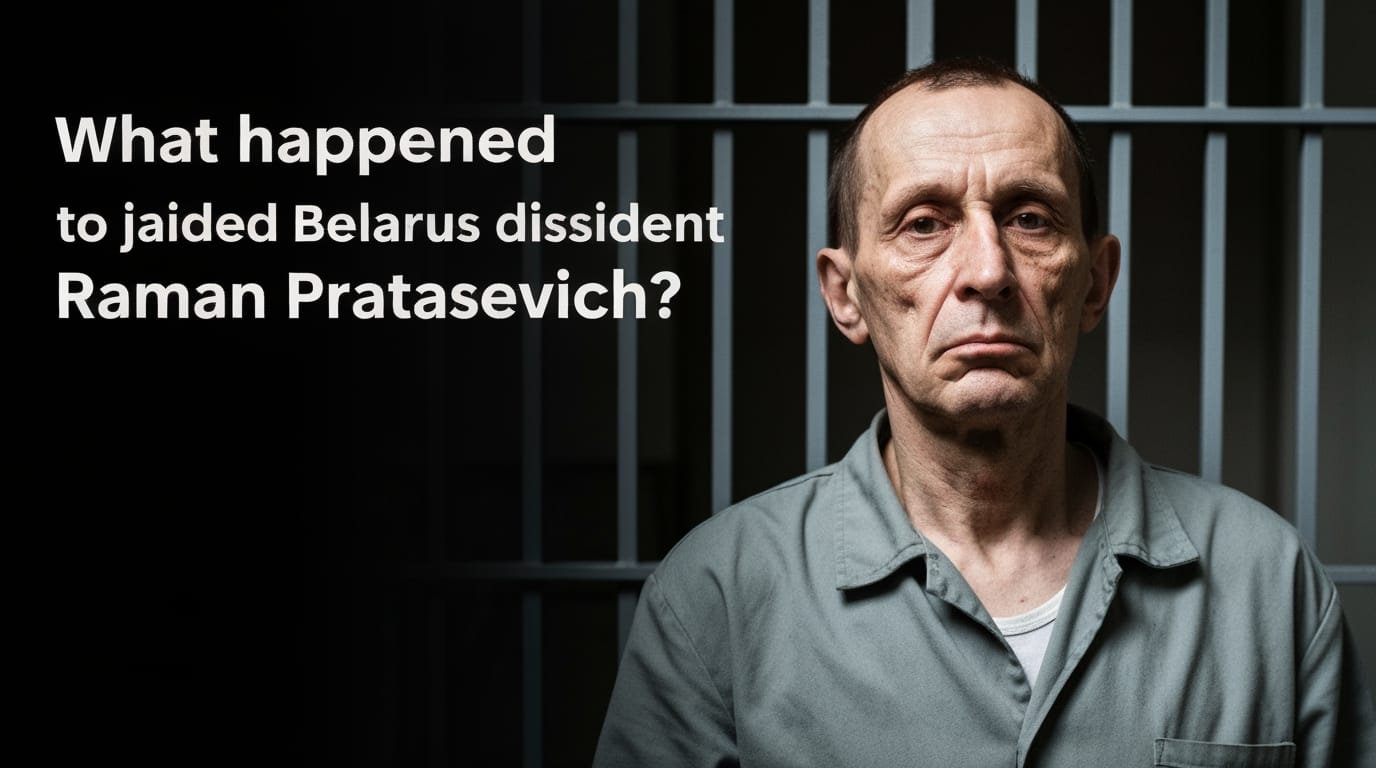
A prominent Belarusian dissident journalist, Raman Pratasevich, has been pardoned by President Alexander Lukashenko, marking a significant turn in a case that drew global condemnation for the dramatic forced landing of a commercial airliner to secure his arrest. Pratasevich, who was convicted in early May 2023 and sentenced to eight years in prison on charges including organizing mass unrest and plotting to seize power, confirmed his release on May 22, 2023, after signing official documents. His journey from an exiled opposition voice to a state television participant, a convicted felon, and now a pardoned individual, encapsulates the severe and unpredictable political climate for critics of the Belarusian government.
The Ryanair Diversion: A State-Sponsored Hijacking
The saga of Raman Pratasevich began on May 23, 2021, with an unprecedented incident that shocked the international community. Pratasevich, then 26, was aboard Ryanair Flight 4978, traveling from Athens, Greece, to Vilnius, Lithuania, when Belarusian air traffic control abruptly ordered the plane to divert and land in Minsk. The pretext for the diversion was a fabricated bomb threat, despite the aircraft being closer to its intended destination in Lithuania. Once on the ground in Minsk, no explosives were found, but Pratasevich, a Belarusian citizen living in exile, was immediately detained alongside his Russian girlfriend, Sofia Sapega.
The forced landing of a civilian aircraft carrying over 120 passengers was widely denounced by Western leaders as "state-sponsored hijacking" and an act of air piracy. The International Civil Aviation Organization (ICAO) later concluded in July 2022 that Belarus had indeed orchestrated the forced landing, identifying it as an offense under international conventions. In response to the incident, numerous Western nations imposed new sanctions on Belarus and barred their aircraft from flying over Belarusian airspace, leading to heightened diplomatic tensions.
From Detention to Televised Confessions Under Duress
Following his arrest, Pratasevich was initially held in custody. Concerns for his safety and well-being rapidly mounted as he subsequently appeared on Belarusian state television in what were widely perceived as forced "confessions." During these televised segments, Pratasevich, visibly distressed, "confessed" to organizing mass protests, denounced the opposition, and apologized to President Lukashenko. Critics and international human rights organizations, including the Committee to Protect Journalists (CPJ), swiftly condemned these appearances, asserting they were made under duress and likely involved coercion.
Pratasevich was a co-founder of the Telegram channel NEXTA (and later editor of "Belarus Golovnogo Mozga"), which played a pivotal role in organizing and disseminating information about the widespread protests that erupted in Belarus after the disputed 2020 presidential election. The election results, which saw Alexander Lukashenko claim a sixth term, were largely rejected by the opposition and numerous international observers as fraudulent. NEXTA, along with its sister channel NEXTA Live, amassed millions of followers, becoming a primary conduit for activists and a significant thorn in the side of the authoritarian government. Pratasevich was charged with a litany of offenses, including "organizing mass riots," "incitement to hatred," "founding an extremist group," "conspiracy to seize power," "publicly slandering President Alexander Lukashenko," and "appeals to commit terrorist acts," accumulating over 1,500 alleged crimes aimed at harming national security.
He was later transferred from pre-trial detention to house arrest in June 2021, where he reportedly cooperated with authorities in their investigation. This move, combined with his televised appearances, led to considerable speculation and dismay among the Belarusian opposition and his former colleagues, some of whom suggested he had been compromised.
The Trial, Conviction, and Co-defendants
The legal proceedings against Pratasevich culminated in a trial that lasted nearly three months. On May 3, 2023, a Belarusian court in Minsk convicted him on all major charges, sentencing him to eight years in prison. The verdict was met with further international outcry from press freedom advocates and human rights organizations, who characterized the trial as politically motivated and a blatant attack on journalistic freedom.
Two of Pratasevich's co-defendants, Stsiapan Putsila, the founder of NEXTA, and Yan Rudzik, another editor, were tried in absentia. Both remain in exile and were handed significantly longer sentences: Putsila received 20 years in prison, and Rudzik was sentenced to 19 years. These harsh sentences underscored the Belarusian government's determination to punish individuals associated with opposition media. Pratasevich's then-girlfriend, Sofia Sapega, a Russian citizen, was also convicted separately in May 2022 and sentenced to six years in prison on charges related to inciting social hatred and illegal collection of personal data.
A Swift and Unexpected Pardon
Just weeks after his conviction, on May 16, 2023, President Lukashenko pardoned Raman Pratasevich, a decision that became public on May 22, 2023. Pratasevich himself confirmed the pardon to state media, stating, "Literally, I just signed all the relevant documents stating that I was pardoned. This, of course, is just great news." He had not been transferred to a detention facility following his conviction, remaining under house arrest until the pardon was granted.
The Committee to Protect Journalists (CPJ) welcomed the pardon but simultaneously called for the immediate release of all other journalists imprisoned in Belarus, highlighting that the decision "should not overshadow the country's shameful record on press freedom." Belarus remains one of the world's leading jailers of journalists, with numerous members of the press detained for their work. The swiftness of Pratasevich's pardon, especially given the gravity of his charges and the international attention his case garnered, raised questions about the conditions surrounding his release and the broader political maneuvering by the Belarusian authorities.
Conclusion: A Symbol of Repression and Control
Raman Pratasevich's dramatic ordeal — from the forced diversion of an international flight to his televised "confessions," his conviction, and ultimately his pardon — serves as a stark illustration of the Belarusian government's stringent approach to silencing dissent and maintaining control. His case transcended national borders, exposing the lengths to which state authorities would go to target perceived enemies, even at the cost of international norms and aviation safety. While his pardon offers a personal reprieve, it does not diminish the severe pressures faced by independent journalists and activists within Belarus. The broader implications of his case continue to resonate, underscoring persistent concerns about human rights, press freedom, and the rule of law under the authoritarian regime in Minsk. The international community largely views the entire sequence of events as a deliberate act designed to send a chilling message to all who dare to challenge the state.


