Cyprus's Political Landscape Transformed as Voters Demand New Direction
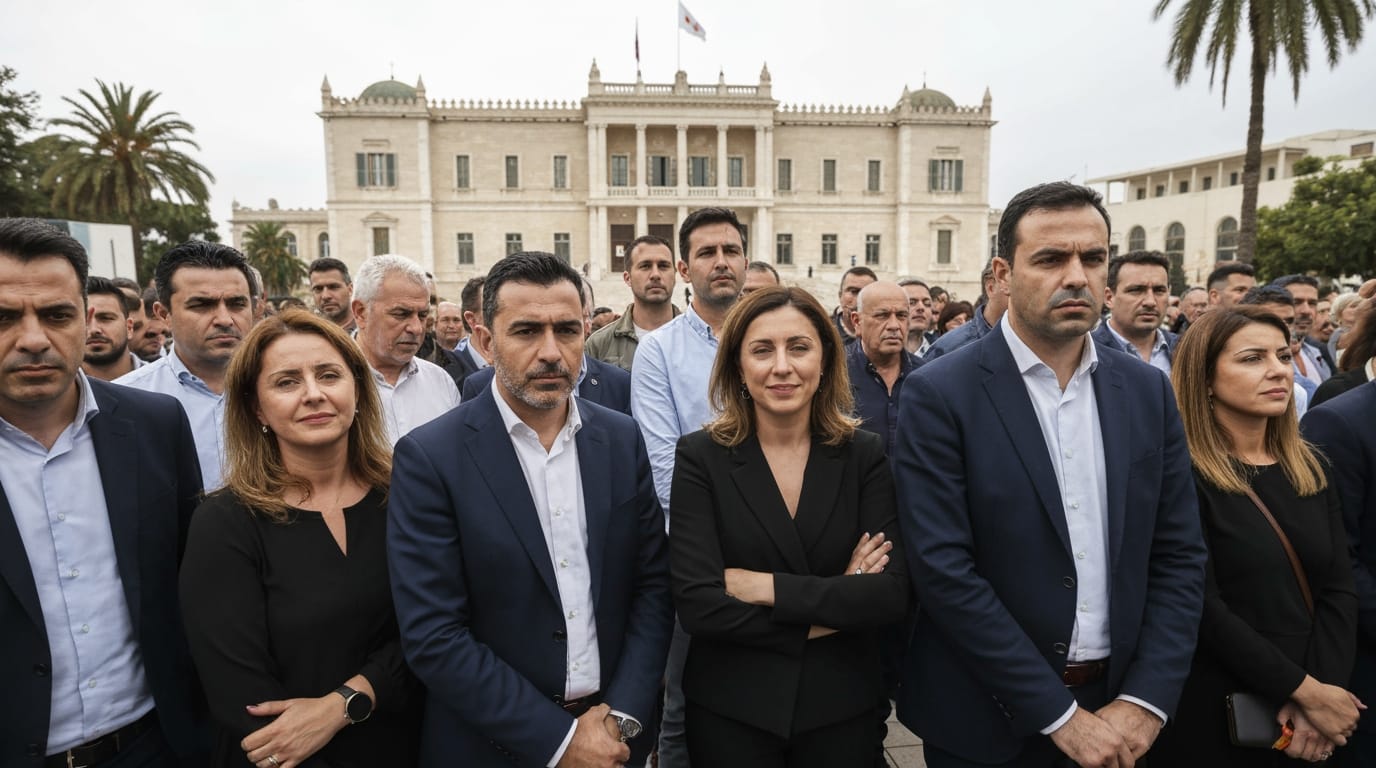
Nicosia, Cyprus – The 2023 Cypriot presidential election fundamentally reshaped the nation's political landscape, signaling a clear mandate from the electorate for a departure from traditional party politics and a renewed focus on domestic concerns. The victory of independent candidate Nikos Christodoulides, achieved amidst widespread public disillusionment and mounting concerns over corruption, marked an unprecedented shift in a system long dominated by two major political blocs. This pivotal election not only ushered in a new era of leadership but also exposed deep-seated fractures within established parties and highlighted a growing demand for transparency and accountability across the Republic.
A Decisive Shift Towards Independent Leadership
The presidential election, held over two rounds on February 5 and 12, 2023, culminated in a victory for Nikos Christodoulides, a former foreign minister who ran as an independent. This outcome was particularly noteworthy as it represented the first instance in Cypriot history where the elected president did not hail from or receive direct backing from one of the two traditionally dominant parties, the Democratic Rally (DISY) or the Progressive Party of Working People (AKEL). Christodoulides secured 32.04 percent of the vote in the first round, advancing to face Andreas Mavroyiannis, another independent candidate supported by AKEL, who garnered 29.59 percent. In the decisive second round, Christodoulides narrowly defeated Mavroyiannis with 51.97 percent of the vote, marking one of the closest presidential contests in Cyprus since 1998. Voter turnout remained consistent with previous elections, with 72.05 percent participating in the first round and 72.45 percent in the second, yet underlying these figures was a steady, two-decade trend of rising abstention, indicative of broader voter detachment.
The Undercurrents of Discontent: Corruption and Cost of Living
The catalysts for this electoral shake-up were deeply rooted in public distrust towards the political system and widespread disillusionment with established institutions. A significant driver of voter sentiment was the pervasive issue of corruption, with an overwhelming 94 percent of Cypriots in 2022 believing it to be widespread. High-profile controversies, such as the "golden passports" scandal, which allowed wealthy foreign investors to obtain Cypriot citizenship, severely eroded public confidence in mainstream political parties and fueled calls for urgent reforms. Against this backdrop, the campaign discourse increasingly gravitated towards pressing domestic concerns. Issues like the escalating cost of living and housing, and the challenges of immigration, overshadowed the traditionally dominant "Cyprus problem" – the ongoing division of the island – which saw reduced prominence in the electoral debates. Christodoulides, recognizing this shift, campaigned on a platform promising institutional reforms, including stringent measures to prevent conflicts of interest among public officials.
Fractured Foundations: The Impact on Traditional Parties
The 2023 election exposed and exacerbated existing weaknesses within Cyprus's long-standing political parties. For DISY, the center-right party that had governed for the preceding decade, the election proved particularly divisive. Nikos Christodoulides, a former foreign minister under the outgoing DISY president Nicos Anastasiades, chose to run as an independent, directly challenging DISY's official candidate, party leader Averof Neofytou. This internal discord resulted in Neofytou's elimination in the first round, a historic blow that left DISY without a candidate in the presidential run-off for the first time in its history. The left-wing AKEL also faced significant challenges, suffering its third consecutive presidential election defeat. Despite the prevailing public discontent, AKEL struggled to capitalize on the anti-establishment sentiment, further highlighting a "silent crisis of representation" that has seen a gradual erosion of ideology and a preference among the electorate for centrist political figures. This period marked a clear weakening of traditional party mechanisms and an increasing autonomy of voters in their political choices.
Charting a Course: Challenges and Implications for the Future
President Christodoulides inherited a complex political landscape fraught with significant domestic and international challenges. His victory as an independent, supported by a coalition of centrist and center-left parties, means navigating governance without the automatic parliamentary majority that traditional party-backed presidents often enjoyed. This necessitates a delicate balancing act to implement his reform agenda, which includes tackling pervasive corruption, addressing the rising cost of living, and managing immigration pressures.
On the international front, the enduring "Cyprus problem" remains a critical issue. Christodoulides has adopted a firm stance, signaling his intention to resume reunification talks within a new framework and advocating for greater international pressure on Turkey. However, his perceived "hardliner" position on the island's division could complicate efforts to bridge the long-standing divide, potentially influencing stability in the Eastern Mediterranean. The political tremors from the 2023 presidential election are expected to continue to reverberate, with upcoming parliamentary elections, such as those anticipated in May 2026, likely to further test the stability of political alignments and potentially lead to continued fragmentation within the legislature.
A New Chapter in Cypriot Politics
The 2023 presidential election in Cyprus represents more than just a change in leadership; it signifies a pivotal moment in the nation's political evolution. The electorate's decisive move to elect an independent, driven by a profound dissatisfaction with the status quo and a demand for concrete action on issues like corruption and economic hardship, has irrevocably altered the country's political trajectory. As Cyprus embarks on this new chapter, the ability of its political system to adapt to these evolving demands and deliver tangible reforms will be crucial in shaping the future stability and prosperity of the Republic. The "shake-up" was not merely an expectation, but a realized transformation, setting a precedent for a more fluid and voter-centric political environment.


