Berlin and Paris Call for Restraint as Israel-Iran Crisis Spirals
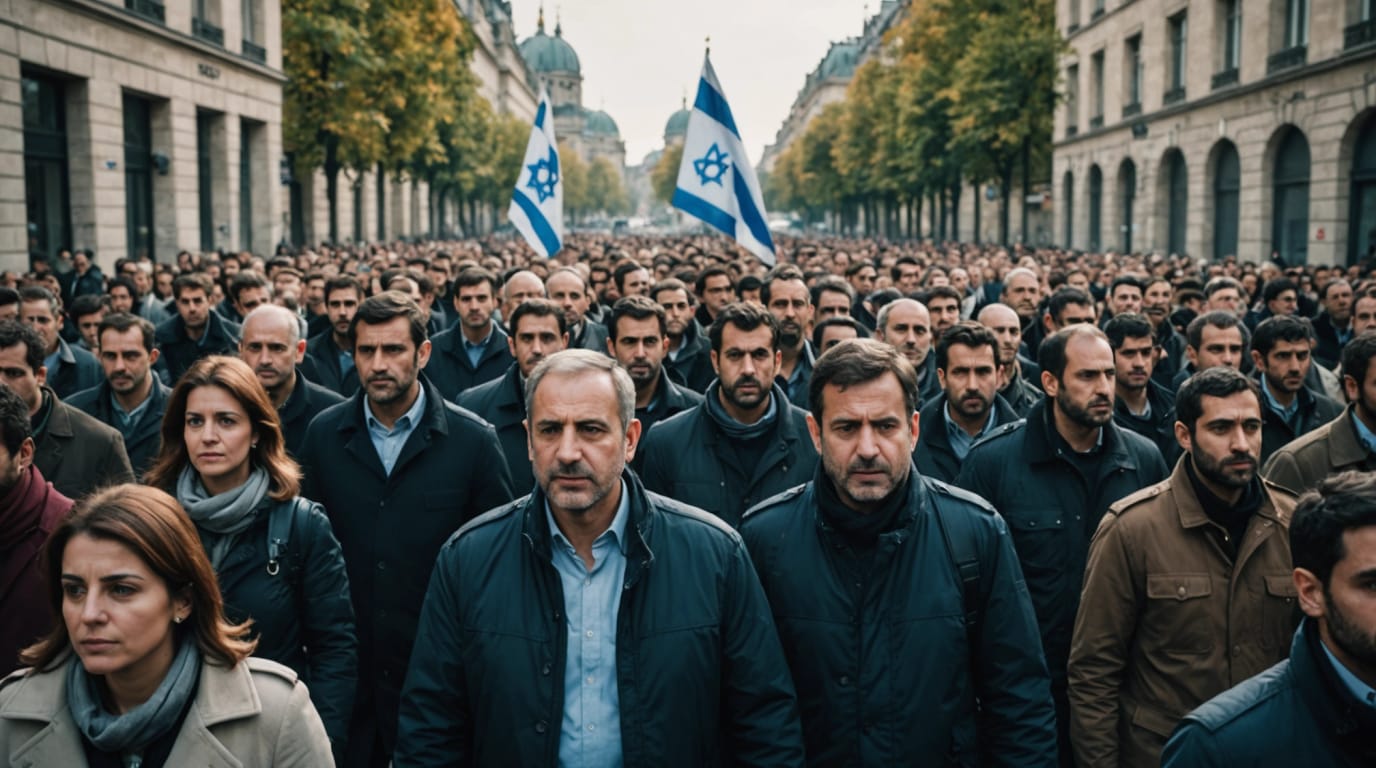
In the wake of escalating tensions between Israel and Iran, key European powers, led by Germany and France, are urging both sides to exercise restraint amid fears of a broader regional conflict. The calls come after a series of attacks, including a targeted Israeli strike on Iran's Natanz nuclear facility and retaliatory missile strikes by Tehran, which have sent shockwaves across the international community.
Targeted Strikes and Retaliation
The latest escalation began Friday when Israel launched a targeted strike on Iran's Natanz nuclear facility, resulting in the deaths of several senior military commanders and nuclear scientists. Israel described the attack as the beginning of a multi-day offensive. Tehran responded with waves of missile strikes on Israel Friday evening and early Saturday. An Israeli military official stated that the Israel Defense Forces (IDF) had “control over the situation” and that many of the 100 drones launched by Iran had been intercepted.
European Response and Calls for De-escalation
European leaders have reacted with alarm, warning of the growing risk of a wider regional war. NATO Secretary General Mark Rutte emphasized the urgency of avoiding further escalation, calling "for many allies — including the United States — to work ... to de-escalate.” European Commission President Ursula von der Leyen echoed this sentiment, urging "all parties to act with maximum restraint and work to de-escalate the situation.”
Germany and France have voiced support for Israel's right to defend itself, while also stressing the need for de-escalation. German Chancellor Friedrich Merz expressed strong support for Israel's "right to protect its existence and the security of its citizens,” adding that Iran's nuclear program presents "a serious threat to the entire region, and particularly to the state of Israel.” French President Emmanuel Macron similarly urged restraint while reaffirming Israel's right to self-defense. France's Foreign Minister Jean-Noël Barrot said that all parties should exercise restraint and avoid escalation, which could compromise regional stability and that diplomatic channels should be mobilized to dial down tensions.
Concerns Over Europe's Role as Mediator
Some analysts suggest that Europe's role as a key mediator in the conflict may be diminishing. Hugh Lovatt, a senior policy fellow with the Middle East and North Africa program at the European Council on Foreign Relations (ECFR), stated that "European capitals such as Berlin and Paris have come out in support of Israel, ignoring this was an unjustified action." Julien Barnes-Dacey, director of the Middle East program at the ECFR, warned that Germany and France's alignment with Israel runs the risk of isolating Iran. "If you are an Iranian, you would see this as Europeans siding with Israel in support of military action,” he said.
Impact on Nuclear Diplomacy
The escalating crisis also casts a shadow over efforts to revive nuclear diplomacy with Iran. With nuclear diplomacy faltering and military confrontation looming, Europe's role as a mediator — once central to the Iran nuclear deal — appears increasingly sidelined. According to Iranian media reports, senior lawmaker Aladdin Boroujerdi announced that the sixth round of talks with the United States would not proceed in the wake of Israel's strikes.
Regional and Global Implications
The conflict between Israel and Iran has far-reaching implications for regional and global security. The instability threatens to engulf neighboring countries and disrupt international trade routes. The potential for a nuclear arms race in the Middle East is also a major concern. The international community is closely monitoring the situation and working to prevent further escalation.
Conclusion
As the Israel-Iran crisis intensifies, the calls for restraint from Berlin and Paris underscore the urgent need for de-escalation and diplomatic engagement. The coming days and weeks will be critical in determining whether the region can avert a full-blown conflict and find a path towards stability. The focus remains on encouraging both sides to refrain from further actions that could destabilize the region and to prioritize diplomatic solutions to address the underlying tensions.


