Iran's Expanding Information Blackout: A Nation Grapples with Censorship Amidst Regional Strife
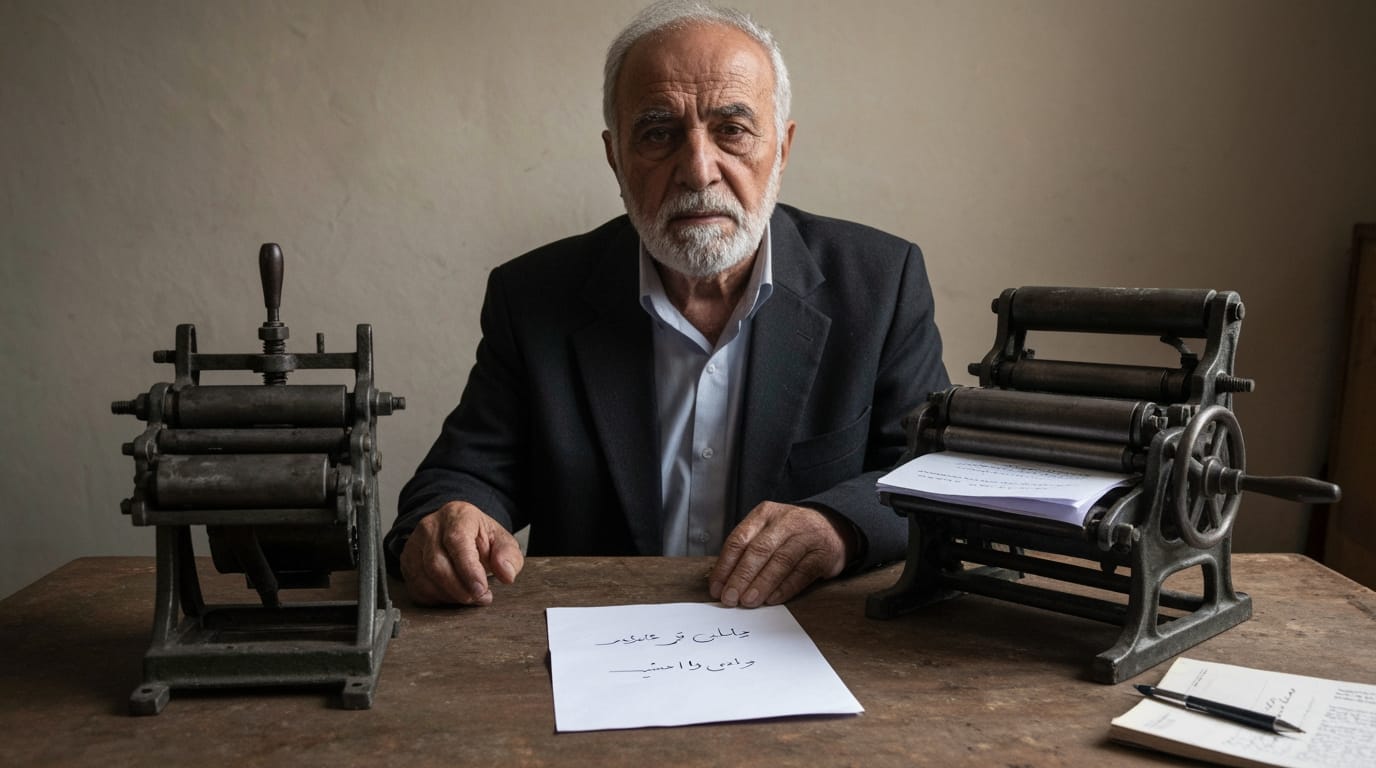
As regional conflicts intensify, Iran finds itself enveloped in an increasingly pervasive information vacuum, fueled by an escalating government crackdown on press freedom. Authorities have systematically stifled independent reporting, leading to a severe restriction of information flow both within and outside the country, isolating its citizens from global events and shaping public perception through state-controlled narratives. This tightening grip on media and communications is a clear attempt to manage dissent and control public discourse at a critical juncture for the Islamic Republic.
The Unfolding Crackdown on Journalism
The state of press freedom in Iran has steadily deteriorated, reaching alarming levels in recent years. International organizations consistently rank Iran among the worst countries globally for journalists, with Reporters Without Borders placing it 176th out of 180 in 2024 and 177th in 2026. The country is described as one of the world's five biggest prisons for media personnel. This repression is deeply rooted, supported by laws, institutions, and digital control mechanisms.
The crackdown has seen a notable surge in arrests and intimidation tactics against journalists. As of March 2026, at least seven Iranian journalists remained imprisoned, many detained following nationwide protests in January 2026 and subsequent military actions. Among those recently detained are Reza Valizadeh, an Iranian-American journalist arrested in September 2024; Mohammad Parsi, editor-in-chief of Kando magazine, arrested in February; photojournalist Artin Ghazanfari, arrested in January; Somayeh Heydari and Pedram Alamdari from Yul magazine, arrested in February; Kianoush Darvishi, arrested in February after being summoned by the IRGC Intelligence Service; and Muslim Zarei, arrested in March. These arrests reflect a recurring pattern of pressure on media professionals. Earlier, in 2022, journalists Niloufar Hamedi and Elaheh Mohammadi received six-year prison sentences for their reporting on the death of Mahsa Amini. The International Federation of Journalists (IFJ) has condemned these mounting threats from judicial and intelligence bodies, calling for the immediate release of all detained media workers.
Journalists operating within Iran face a precarious environment where arrest, interrogation, travel bans, and imprisonment are common experiences. Accusations frequently include spreading false information or threatening national security, which serve as justifications for legal action. Consequently, many journalists resort to self-censorship to avoid repercussions, limiting their reporting on sensitive issues to protect themselves and their families.
Regional Tensions as a Catalyst for Control
The current escalation in press suppression is inextricably linked to ongoing regional tensions and conflicts involving Iran. With the expansion of the war, the Iranian government has intensified its efforts to control the narrative, viewing information control as crucial for national security and the preservation of its ruling clerical establishment. Authorities use the war as a pretext to activate existing legal frameworks designed to silence critics and control information. For instance, a special task force was established within the Tehran Prosecutor’s Office in June 2025 to monitor cyberspace and media outlets for "untrue content" and refer violators to specialized prosecution branches.
The scope of this information warfare extends beyond Iran's borders. The detention of prominent US-Kuwaiti journalist Ahmed Shihab-Eldin in Kuwait in March 2026, for sharing a publicly available video related to the US-Israel war with Iran, underscores a broader regional crackdown on war-related speech. This incident highlights how national security is increasingly invoked as a pretext to restrict freedom of speech across the Middle East. Kuwaiti authorities, for example, issued warnings against filming or sharing details regarding Iranian attacks, leading to arrests for "spreading false news". Such actions create an atmosphere of fear, deterring citizens and journalists from sharing information, even if it is factual and publicly accessible.
The Pervasive Information Vacuum
The Iranian government has constructed a sophisticated "electronic curtain" to create an information vacuum, profoundly impacting the lives of its citizens. This involves extensive censorship, surveillance, and manipulation of online content. Key tools in this strategy include persistent internet blackouts and the blocking of international websites and social media platforms.
Since January 8, 2026, Iran has experienced severe and prolonged internet blackouts, with some disruptions lasting for months. These blackouts have led to a drastic reduction in internet usage, in some cases falling by as much as 97%, effectively disconnecting Iranians from the outside world. Platforms such as Instagram, Telegram, WhatsApp, YouTube, and Facebook are frequently blocked or restricted. This constitutes the longest recorded nationwide internet disruption in any country. The government has also made access significantly more expensive, increasing prices between 30% and 40%. While authorities claim these measures safeguard national interests, cybersecurity, and cultural values, they primarily serve to suppress dissent and control information.
The consequence is a heavily controlled media landscape dominated by state-aligned outlets such as Islamic Republic of Iran Broadcasting (IRIB), Tasnim, Fars News, and Mehr News, which promote narratives supporting the ruling clerical establishment. Reformist publications that challenge these narratives often face retaliation, including arrests of journalists and closure of newspapers. The information vacuum amplifies pro-regime accounts and allows for the spread of AI-generated misinformation. For citizens, this means a lack of independent reporting and difficulty in obtaining reliable information about domestic and international events. The economic toll is also significant, with online businesses suffering severe losses due to prolonged internet shutdowns. Some online businesses reported zero sales for months, and internet shutdowns have cost the Iranian economy hundreds of millions of dollars.
International Condemnation and Limited Access
The international community has expressed grave concerns over Iran's escalating repression of media. Human rights organizations and UN experts have repeatedly voiced alarm at the targeting of journalists and their families by Iranian authorities, including threats, criminal investigations, unlawful surveillance, asset freezing, and defamation. Reporters Without Borders, the Committee to Protect Journalists (CPJ), and the International Federation of Journalists (IFJ) have consistently condemned the actions of the Iranian government, highlighting the systematic nature of the crackdown.
However, the efficacy of international pressure remains challenged by Iran's almost complete control over access to its territory for independent researchers and journalists. This deliberate policy of information suppression and the isolation of its digital environment make it exceedingly difficult for external observers to ascertain the full extent of the crackdown or for external media to report from within the country. Even Persian-language media outlets operating abroad, such as Manoto and Iran International, face threats and harassment from the Iranian regime, impacting their ability to provide uncensored news to Iranians. This environment necessitates reliance on human rights organizations and activist networks for information, which themselves face significant risks.
Conclusion
The pervasive information vacuum in Iran is a deliberate strategy by the authorities to maintain control and suppress dissent amid a turbulent regional landscape. By severely restricting press freedom, arresting journalists, and imposing widespread internet blackouts, the government aims to dictate the narrative and limit the public's access to independent information. While international bodies continue to condemn these actions, the practical challenges of reporting from and within Iran have made it increasingly difficult to break through the "electronic curtain." The long-term implications for Iran's society, its economy, and its relationship with the outside world remain profound, as a nation starved of accurate information struggles to navigate its future.


