Berlin's Industrial Transformation Ignites Germany's Militarization Debate
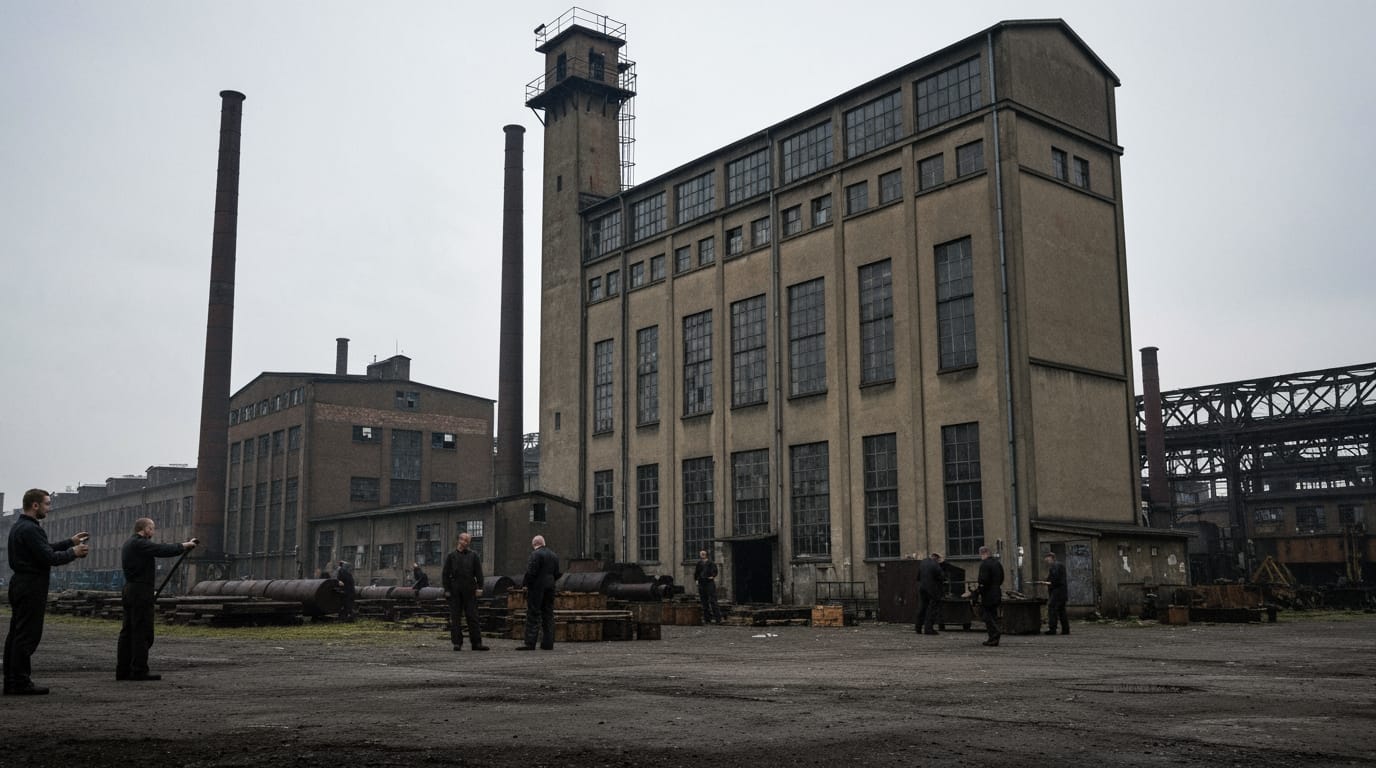
Berlin, Germany – A quiet industrial shift in the heart of Germany's capital is fast becoming a potent symbol of the nation's profound reorientation towards defense, fueling an intense national debate over militarization. Defense giant Rheinmetall's plans to repurpose a former automotive plant in Berlin, alongside another in Neuss, for military equipment production underscores a dramatic change in Germany's post-World War II security posture, driven largely by the ongoing conflict in Ukraine and a reevaluation of European defense capabilities. The transformation, while lauded by proponents as a necessary step for national and European security, is simultaneously drawing sharp criticism from anti-war activists and prompting ethical questions about Germany's growing role in the global arms industry.
From Car Parts to Components: Rheinmetall's Strategic Pivot
The focal point of this localized yet nationally significant debate is Rheinmetall's decision to convert the former Pierburg car-parts factory in Berlin, as well as a similar site in Neuss, into facilities dedicated to manufacturing defense equipment. These plants, once central to Germany's renowned automotive sector, are slated to become "hybrid plants" under Rheinmetall's Weapon and Ammunition division, producing protection and mechanical components for military use. While these specific sites will not handle explosives, their retooling signals a broader strategic pivot for Europe's leading ammunition maker and a major player in Germany's defense industry. The move comes at a time when Germany's traditionally strong automotive industry faces significant challenges, including high costs and intense competition. Rheinmetall, meanwhile, has seen its value and orders surge, highlighted by record 2024 sales of €9.75 billion. This repurposing is part of a larger expansion, including the opening of Europe's largest munitions plant in Unterlüss, Lower Saxony, in August 2025, projected to produce 350,000 artillery shells annually by 2027. Rheinmetall CEO Armin Papperger articulated that the construction of new facilities, like the one in Unterlüss, demonstrates Germany's capacity for rapid action when necessary, emphasizing the country's growing responsibility for European security.
The "Zeitenwende" and Germany's New Defense Calculus
This industrial metamorphosis is a direct consequence of Chancellor Olaf Scholz's proclamation of a "Zeitenwende," or "turning point," in German foreign and security policy following Russia's full-scale invasion of Ukraine in 2022. This landmark declaration marked an end to decades of German reticence in defense matters and a commitment to significantly boost the Bundeswehr's capabilities. The government pledged a €100 billion special fund for military modernization and committed to meeting NATO's target of spending 2% of its gross domestic product on defense, with projections indicating an increase to 3.5% by the end of the decade. Defense Minister Boris Pistorius has openly championed "Kriegstüchtigkeit" or "war readiness" for the Bundeswehr, a significant shift from the post-Cold War "peace dividend" era.
Germany, once hesitant to supply weapons to conflict zones, has become one of Ukraine's most significant supporters, providing €11.5 billion in military aid in 2026 alone. This commitment reflects a redefinition of national interest, moving beyond temporary shock to a sustained embrace of responsibility in a more contested world. Berlin's new strategy prioritizes air and missile defense, drones, cyber resilience, and logistics, aiming to evolve from an economic anchor to a logistical and defensive linchpin within NATO.
A Nation Divided: Protests and Political Fault Lines
The surge in defense spending and the expansion of the arms industry, exemplified by the Berlin factory's conversion, have not been without controversy. Anti-war activists have staged large protests in Berlin against Rheinmetall's plans, accusing the company of profiting from conflict and warning that Germany's expanding arms industry could exacerbate global tensions. Demonstrators have highlighted Berlin's role as a major arms supplier to both Ukraine and Israel, raising questions about ethical responsibilities and the potential for destabilization. Research by the Stockholm International Peace Research Institute (SIPRI) indicates that Germany accounted for approximately 30% of Israel's major arms imports between 2019 and 2023.
The political landscape also reflects this divide. The Social Democratic Party (SPD), under Chancellor Scholz, has fundamentally altered its long-held policy of restraint, with party head Lars Klingbeil emphasizing Germany's need to assume a leadership role in European security. However, the historically pacifist Green Party, a coalition partner, has navigated a complex path. While now largely supporting rearmament and arms deliveries, particularly to Ukraine, their transformation into a proponent of military engagement marks a significant departure from their founding principles. Some Greens have called for guarantees that defense investments finance new projects, not existing ones, and have pushed for increased funding for climate protection alongside military spending. The conservative CDU/CSU bloc has strongly advocated for increased defense spending and supported mechanisms to loosen Germany's constitutional "debt brake" to facilitate such investments. This polarized public discourse underscores the intricate balance between national interests, ethical considerations, and regional stability.
Economic Catalyst and Geopolitical Imperatives
Beyond the ethical considerations, the expansion of Germany's defense industry carries significant economic and geopolitical implications. The defense sector, employing 105,000 people and generating €31 billion in revenue, is experiencing rapid growth. The increased investment is seen as a crucial stimulus for the German economy, which has faced challenges in recent years. The defense industry's growth is expected to maintain industrial output and employment levels, particularly in regions like Bavaria, which is strong in aerospace and emerging drone technology. Germany's status as the world's fifth-largest arms exporter further solidifies its position in the global defense market.
Geopolitically, the rearmament aims to strengthen the European pillar within NATO, ensuring that European forces are NATO-compatible and interoperable. This "NATO-first" approach, however, has also led to skepticism within Germany regarding efforts to strengthen the EU's role in defense, driven by concerns about alienating the United States. Despite the significant financial commitments, challenges remain, including industrial bottlenecks and the time required to rebuild capacity after decades of neglect. The German establishment is particularly concerned about the potential for reduced U.S. commitment to NATO, highlighting the urgency of Europe developing its own robust defense capabilities.
A Nation at a Crossroads
The conversion of the Berlin factory into a hub for military component production is more than just an industrial project; it is a tangible manifestation of Germany's "Zeitenwende" and its repositioning on the global stage. As Germany sheds its post-Cold War pacifist identity, it grapples with the inherent tensions between historical responsibility, current geopolitical realities, and the aspirations for a more secure Europe. The debate surrounding this Berlin factory encapsulates the complex decisions facing a nation that is increasingly embracing a leadership role in defense, balancing economic opportunity with profound ethical considerations. This transformation will undoubtedly continue to shape Germany's identity and its relationship with the world for years to come.


