Bolivia Gripped by Widespread Unrest as Miners Clash with Police, President Paz Faces Calls for Resignation
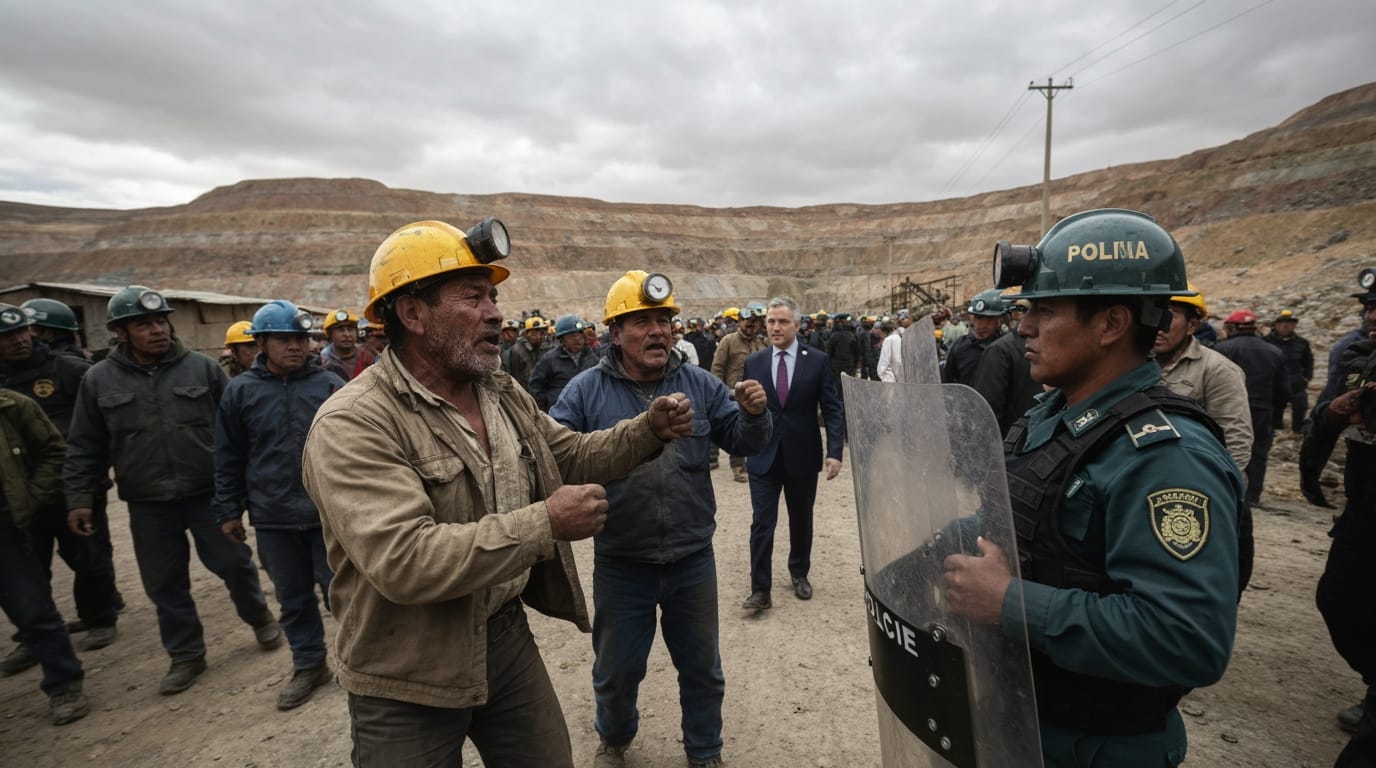
LA PAZ, Bolivia – Violent clashes erupted in Bolivia's capital on Thursday, May 14, 2026, as thousands of miners, armed with dynamite sticks, confronted police in the latest escalation of nationwide protests demanding the resignation of President Rodrigo Paz. The volatile demonstrations, which have seen widespread roadblocks and a deepening economic crisis, mark a critical challenge to Paz's nascent centrist administration just six months after he took office promising market-friendly reforms.
Explosions reverberated through the streets of La Paz as demonstrators, primarily from mining groups and allied unions, attempted to breach Plaza Murillo, the city's central square housing the presidential palace. Riot police responded with tear gas and rubber bullets in an effort to disperse the crowds, a tactic that has become increasingly common during this second week of intense unrest. The mounting confrontation underscores a deep-seated discontent among key sectors of Bolivian society, who accuse the government of failing to address a crippling economic downturn and implement promised changes.
Escalating Confrontation in the Capital
The confrontation in La Paz on Thursday intensified after a week of growing protests and road blockades that have paralyzed key arteries across the Andean nation. Miners, alongside farmers and other union-aligned groups, have been at the forefront of the demonstrations, voicing a litany of grievances that range from immediate operational concerns to broader legislative and economic demands. Eyewitnesses reported miners throwing what appeared to be dynamite sticks at law enforcement officials as they advanced toward the presidential palace, signaling a dangerous escalation in protest tactics.
Earlier in the day, rural schoolteachers had also marched through the city center, adding their voices to the growing chorus demanding higher wages and better conditions, further tightening the grip of protest on the capital. The widespread blockades have already led to critical shortages of essential supplies, including food, medical provisions, and oxygen for hospitals, prompting concerns about a humanitarian impact.
Roots of Discontent: Economic Hardship and Policy Disputes
The immediate spark for the miners' mobilization includes demands for greater access to explosives and fuel, revisions to mining contracts, and the effective implementation of mining regulations. Beyond these industry-specific concerns, the protests are fueled by a broader frustration with the country's worsening economic and fuel crisis. Bolivia is grappling with a severe shortage of U.S. dollars, falling domestic energy production, soaring inflation, and widespread supply shortages.
A significant point of contention has been the government's economic policies, particularly the controversial Decree 5503. This decree eliminated long-standing fuel subsidies, leading to an 86% increase in petrol prices and a 162% hike for diesel, according to reports. The decree also controversially grants the central bank the authority to borrow money without legislative approval, a move critics argue undermines parliamentary oversight. The Bolivian Workers Centre (COB), a powerful union bloc, has declared that at least 101 of the decree's 121 articles are unconstitutional and has vowed to intensify protests. Additionally, an agrarian reform law, Law 1720, was repealed just days prior to Thursday's clashes after significant backlash from Indigenous and rural organizations, further highlighting legislative tensions.
President Paz's Political Predicament
President Rodrigo Paz, a centrist who won a resounding electoral victory in 2025 and was sworn into office in November of the same year, is now facing mounting pressure and calls for his resignation. He campaigned on a platform of market-friendly reforms, vowing to steer Bolivia out of its worst economic crisis in a generation after two decades of governance by the Movement for Socialism (MAS) party. However, his initial months in office have been marked by deepening economic woes and widespread social unrest.
Despite the escalating protests, the government has expressed its openness to dialogue. Just before Thursday's violent clashes, a delegation of about 20 miners reportedly entered the presidential palace for an emergency meeting with President Paz and several ministers to discuss their demands. Economy Minister Jose Gabriel Espinoza reiterated the government's willingness to negotiate, having already engaged with protesters on issues including fuel subsidies and social welfare benefits. However, officials have firmly rejected calls for Paz's resignation.
A Nation Divided: Economic Fallout and Political Blame
Bolivia's economic struggles are multi-faceted. The country, once a major natural gas exporter, has seen its reserves dwindle and production plummet, transforming it into a net importer of fuel. This decline, coupled with a scarcity of foreign currency, has exacerbated the economic crisis, leading to rising inflation and widespread shortages.
The political landscape is further complicated by accusations from government officials who blame opposition figures, notably former leftist President Evo Morales, for instigating the demonstrations. Morales, who led Bolivia from 2006 to 2019, has denied these claims, asserting that the widespread outrage stems from the government's betrayal of its constituents and its failure to address fundamental issues like fuel, food, and inflation. Morales himself has faced legal challenges, including an arrest warrant and contempt of court charges, adding another layer to Bolivia's complex political environment.
The current crisis represents a significant test for President Paz and highlights the inherent challenges in implementing economic reforms in a country with a long history of resource dependency, social inequality, and political volatility. As Bolivia grapples with this multifaceted crisis, the potential for continued instability remains high, underscoring the urgent need for a resolution that can address both the immediate grievances of the protesting sectors and the nation's underlying economic vulnerabilities.