Palestinians Mark Nakba Anniversary, Reaffirming Calls for Justice and Return
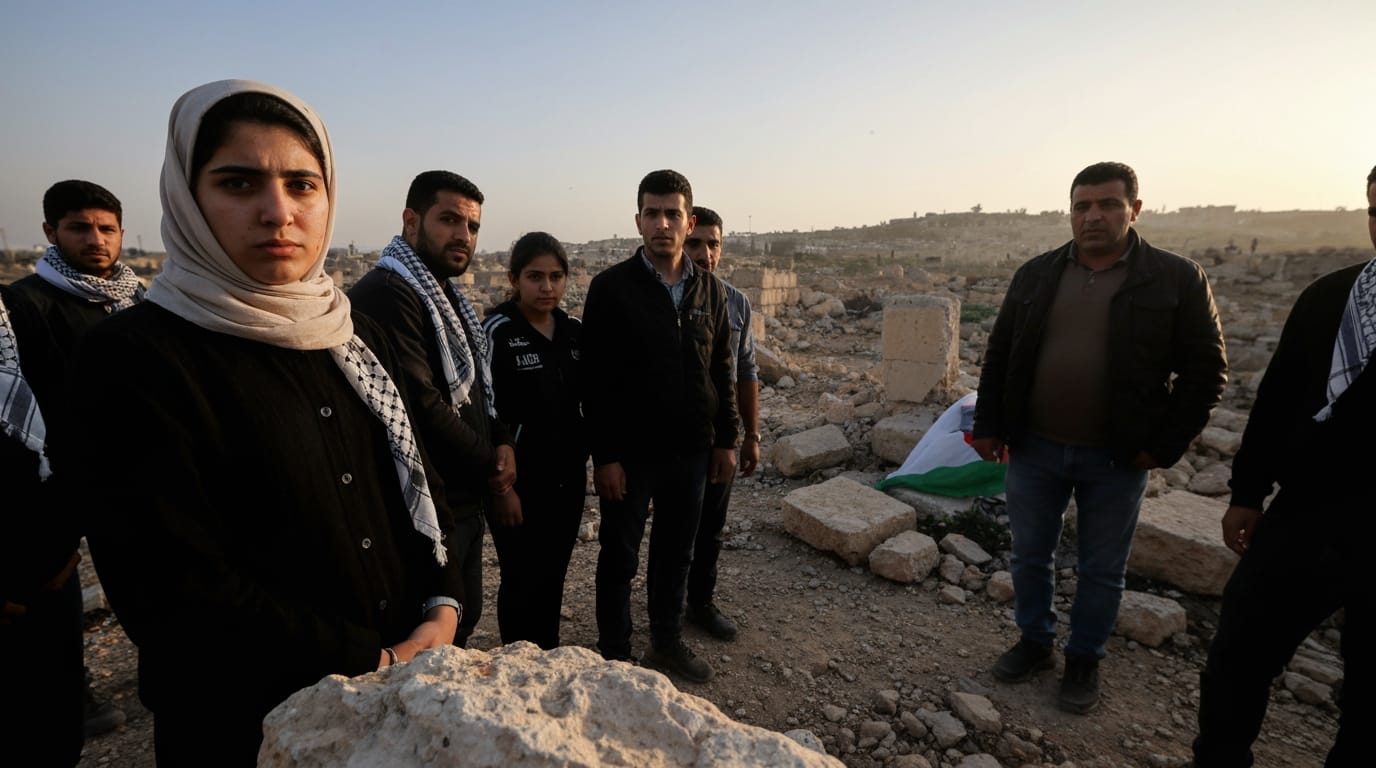
Palestinians across the globe annually observe Nakba Day on May 15, a solemn commemoration of the "catastrophe" that unfolded in 1948 with the displacement and dispossession of hundreds of thousands from their homes. This enduring day of remembrance serves as a powerful reminder of a historical trauma that continues to shape Palestinian identity and their ongoing struggle for self-determination and the right of return, with this year's observation carrying particular weight amidst renewed conflict and displacement.
The Genesis of a Catastrophe: 1948 and Its Aftermath
The term "Nakba," meaning "catastrophe" in Arabic, refers to the mass displacement and dispossession of Palestinians during the 1948 Arab-Israeli War. The roots of this period trace back to the intensifying conflict between Arabs and Jews in Mandatory Palestine, following increased Jewish immigration driven by persecution in Europe and the Zionist movement's aim to establish a Jewish state. In November 1947, the United Nations General Assembly passed Resolution 181, which proposed the partition of Palestine into separate Arab and Jewish states, with Jerusalem under international administration. This plan was accepted by Zionist leaders but rejected by the Arab world, who argued it was unfair and violated the UN Charter.
The situation escalated into a full-blown war in 1948, coinciding with the end of the British Mandate and the declaration of Israel's independence on May 14. During this period, Zionist paramilitaries and later the nascent Israeli forces launched major offensives. The result was the expulsion or flight of an estimated 700,000 to 800,000 Palestinians from their homes. Over 500 Palestinian villages and urban neighborhoods were either destroyed or depopulated, with many subsequently repopulated by Jewish immigrants and given new Hebrew names. Significant massacres also occurred, contributing to the widespread fear and displacement. By the war's conclusion in 1949, Israel controlled 78% of the former Mandatory Palestine, and no Palestinian state was established, leaving the displaced population as refugees in neighboring countries and within the newly formed state.
An Enduring Commemoration and Collective Memory
Each year on May 15, Palestinians observe Nakba Day with various commemorative actions that underscore their collective memory and aspirations for justice. While Yasser Arafat officially inaugurated Nakba Day in 1998, its informal observance dates back to 1949, making it a longstanding element of Palestinian identity.
Commemorations take place globally, including in the Palestinian territories of the West Bank and Gaza Strip, refugee camps in Arab countries, and among diaspora communities worldwide. These events often feature marches, rallies, and public gatherings where participants raise Palestinian flags, carry black banners, and display symbolic keys, representing the homes from which they were dispossessed. Cultural activities, such as poetry readings, viewings of oral histories, and the ringing of bells for destroyed villages, also form a crucial part of these observances, serving to educate younger generations and preserve the narrative of dispossession. A central demand voiced during these commemorations is the "right of return" for Palestinian refugees to their ancestral lands, a right enshrined in UN General Assembly Resolution 194 of December 1948. For many Palestinians, the Nakba is not viewed as a singular historical event but as an ongoing process of displacement and dispossession that continues to affect their lives.
The Ongoing Human Impact: Refugee Crisis and Continued Displacement
The Nakba resulted in one of the world's most protracted refugee crises, with profound and lasting humanitarian consequences. Currently, the United Nations Relief and Works Agency for Palestine Refugees (UNRWA) reports over 5 million registered Palestine refugees scattered across the Middle East. Including their descendants, the total number of Palestinian refugees worldwide is estimated to exceed 6 million. These populations primarily reside in the West Bank, Gaza Strip, Jordan, Lebanon, and Syria, often living in refugee camps.
Beyond the initial displacement of 1948, Palestinians continue to face dispossession and displacement due to ongoing Israeli settlements, evictions, land confiscation, and home demolitions. The impact of these policies reinforces the narrative that the Nakba is an ongoing reality. Recent events, particularly the extensive conflict and military operations, have led to significant new waves of displacement, notably within the Gaza Strip, where millions have been forced from their homes. This has intensified fears among Palestinians of a "second Nakba," where they might again be forcibly expelled from their territories, further cementing the perception of continuity in their historical struggle for existence and land.
Divergent Narratives and International Recognition
The events of 1948 are viewed through sharply contrasting lenses by Palestinians and Israelis. For Palestinians, the Nakba is a foundational collective trauma that defines their national identity, political aspirations, and the demand for justice and return. It represents the destruction of their society and the ongoing suppression of their cultural, political, and national rights.
Conversely, the Israeli national narrative largely regards the 1948 war as the "War of Independence," a successful struggle that led to the establishment of Israel's statehood and sovereignty. The Israeli perspective often negates or denies the atrocities and claims that many Palestinians left voluntarily or that their expulsion was a necessary consequence of the conflict.
In recent years, there has been increasing international recognition of the Nakba. For the first time, the UN General Assembly officially commemorated the 75th anniversary of the Nakba in 2023, and resolutions have been adopted requesting annual events and the dissemination of relevant archives and testimonies. This growing international acknowledgment highlights the enduring significance of the Nakba as a historical injustice and its continued relevance to global discussions on the Israeli-Palestinian conflict, particularly concerning the unresolved issue of Palestinian refugees and their right to return, which remains a core point of contention in any future peace negotiations.
The Nakba remains a central and deeply felt aspect of Palestinian life, resonating from the experiences of older generations who lived through the initial displacement to younger Palestinians who continue to grapple with its long-term consequences. As Palestinians mark this annual observance, the events of 1948 are inextricably linked to contemporary realities, underscoring a continuous struggle for land, identity, and the fulfillment of the right to return. The commemorations serve not only as a remembrance of past suffering but also as a steadfast assertion of Palestinian resilience and their unwavering pursuit of a just future.


