Bolsonaro Backs Eldest Son for 2026 Presidential Bid, Jolting Brazilian Political Landscape
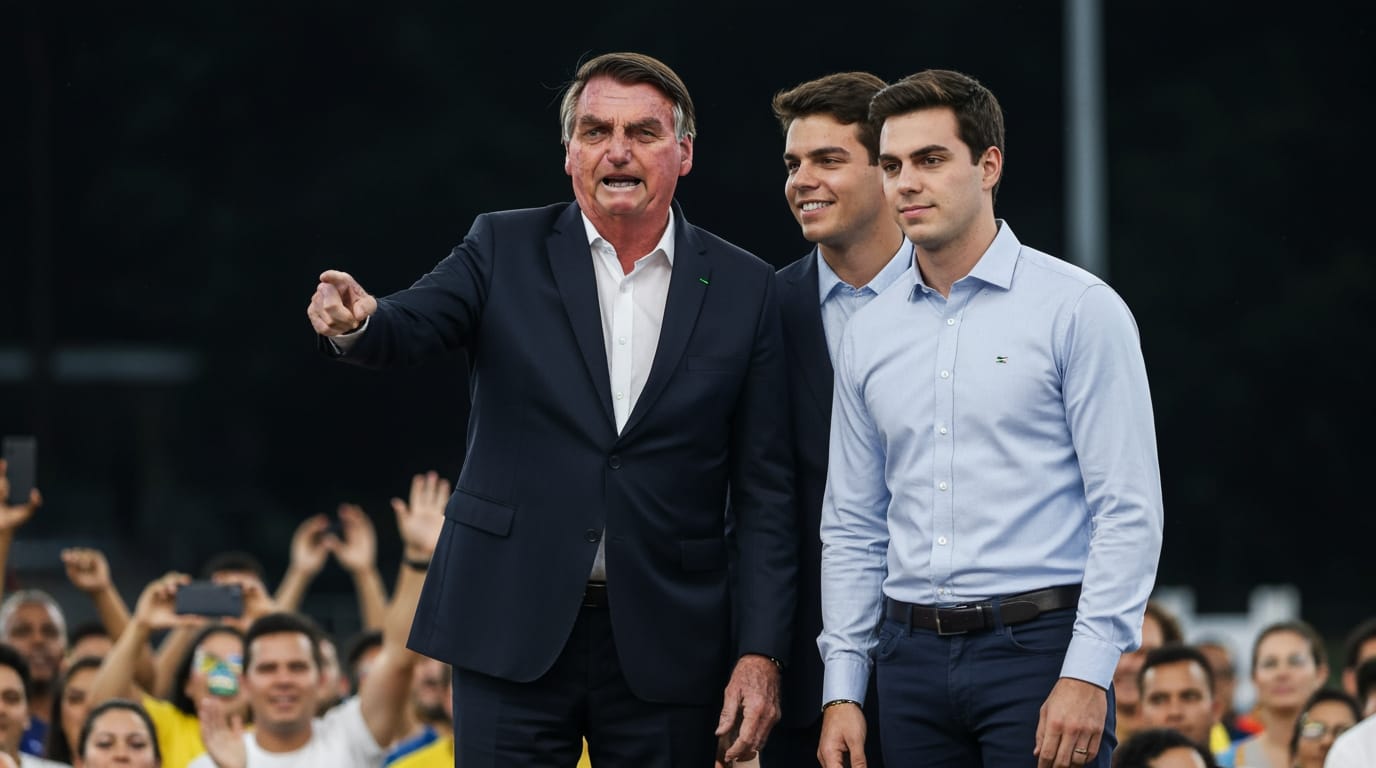
BRASILIA – Former Brazilian President Jair Bolsonaro has formally endorsed his eldest son, Senator Flávio Bolsonaro, as the right-wing candidate for the 2026 presidential election. The announcement, confirmed by Flávio Bolsonaro and the Liberal Party, signifies a determined effort to maintain the family's political dominance even as the elder Bolsonaro serves a lengthy prison sentence and faces a ban from holding office until 2030. This development has sent immediate ripples through Brazil's financial markets and introduced fresh complexities into the already fractured conservative movement ahead of a pivotal election.
The Patriarch's Choice and Market Reaction
The decision to back Flávio Bolsonaro emerged on Friday, with Reuters reporting that the head of Bolsonaro's Liberal Party, Valdemar Costa Neto, confirmed the former president had "ratified his candidacy." Flávio Bolsonaro himself took to social media, stating it was "with great responsibility" that he accepted the "mission of continuing our national project" entrusted by his father. This move came shortly after Flávio visited his father at the federal police offices in Brasilia, where the elder Bolsonaro is incarcerated.
The news immediately impacted Brazilian financial markets. The country's currency weakened by approximately 2% against the U.S. dollar, and the benchmark stock index Bovespa saw a decline of up to 3%. Investors had largely anticipated Bolsonaro would endorse a more market-friendly figure with executive experience, such as São Paulo Governor Tarcísio de Freitas, his former minister. Analysts swiftly reacted, with one noting that the market views Flávio as a weaker candidate against incumbent President Luiz Inácio Lula da Silva, and potentially less favorable from an economic policy perspective, leading to negative implications for Brazilian assets.
The Bolsonaro Dynasty Navigates a New Era
Jair Bolsonaro's endorsement of his son underscores the family's enduring ambition to shape Brazilian politics, even amidst significant legal and political challenges. The former president began serving a 27-year prison sentence in November 2025, after being convicted of plotting a coup following his 2022 electoral defeat. This sentence, combined with a separate federal electoral court ruling in June 2023 that barred him from running for office until 2030 for abuse of power, effectively removed him from direct electoral contention.
The Bolsonaro family has been a prominent fixture in Brazilian politics for decades, often blurring the lines between familial ties and governmental roles. Flávio Bolsonaro, currently a federal senator, previously served as a state legislator in Rio de Janeiro. His brothers, Carlos Bolsonaro, a councilman in Rio de Janeiro, and Eduardo Bolsonaro, a federal congressman, also hold influential positions and have been vocal in supporting their father's agenda and defending his actions. While critics have previously raised concerns about nepotism regarding the family's extensive political hirings and financial dealings, the current focus is on maintaining the Bolsonaro brand at the highest levels of government.
Divergent Paths Within the Right-Wing Movement
Flávio Bolsonaro's candidacy emerges at a time when Brazil's right-wing movement is grappling with internal divisions and the void left by Jair Bolsonaro's incarceration. Many conservative circles had been coalescing around São Paulo Governor Tarcísio de Freitas, a technocrat with a reputation for pragmatism and a pro-market stance. Freitas, who served as Bolsonaro's infrastructure minister, is seen by some as a potential unifier capable of bridging the gap between business-friendly moderates and hardline conservatives.
However, the Bolsonaro family's inner circle has resisted Freitas, viewing him with suspicion. Eduardo Bolsonaro, in particular, has publicly criticized Freitas, labeling him a "system candidate" and "dummy opposition," suggesting his election would not represent a true victory for the right. This internal friction highlights the ideological rifts within the Bolsonarista movement, complicating efforts to present a unified front against President Lula da Silva in 2026. Analysts suggest that Flávio's endorsement could "implode" alliances between the movement and more centrist political parties.
Public Opinion and the Road Ahead
Opinion polls indicate that even from prison, Jair Bolsonaro remains a central figure in Brazil's polarized political landscape, retaining influence over who will carry the right-wing banner. However, the path for any Bolsonaro scion to the presidency is fraught with challenges. While Flávio Bolsonaro aims to inherit his father's significant electoral base, recent surveys concerning presidential candidates from the Bolsonaro family have shown high rejection rates for some. For instance, Eduardo Bolsonaro led in rejection among potential candidates for 2026, with 68% of respondents indicating they would not vote for him. While specific comparable data for Flávio's rejection is less prominent in recent reports, the overall market and political analyst sentiment suggests he faces an uphill battle to be a truly competitive candidate against Lula.
The 2026 election is poised to be a defining moment for Brazil's political trajectory, testing the resilience and adaptability of the Bolsonarista movement without its figurehead actively on the campaign trail. The endorsement of Flávio signals a strategic attempt by the former president to secure his legacy and maintain the family's grip on a significant portion of the electorate.
Conclusion
Jair Bolsonaro's endorsement of his eldest son, Flávio Bolsonaro, for the 2026 presidential election marks a significant pivot in Brazilian politics. This decision, made from behind prison walls, underscores the former president's determination to perpetuate his political movement through his family. While it solidifies a direct line of succession within the Bolsonaro clan, it also introduces considerable uncertainty for the broader right-wing coalition and for Brazil's financial stability. The challenge for Flávio Bolsonaro will be to unify a fractured conservative base, overcome investor skepticism, and present a compelling alternative to the incumbent, all while navigating the shadow of his father's legal woes and political legacy. The coming electoral cycle will undoubtedly define the future trajectory of the Bolsonarista movement and the wider political landscape of Brazil.


