Border Conflict Ignites Nationalist Fervor Between Thailand and Cambodia
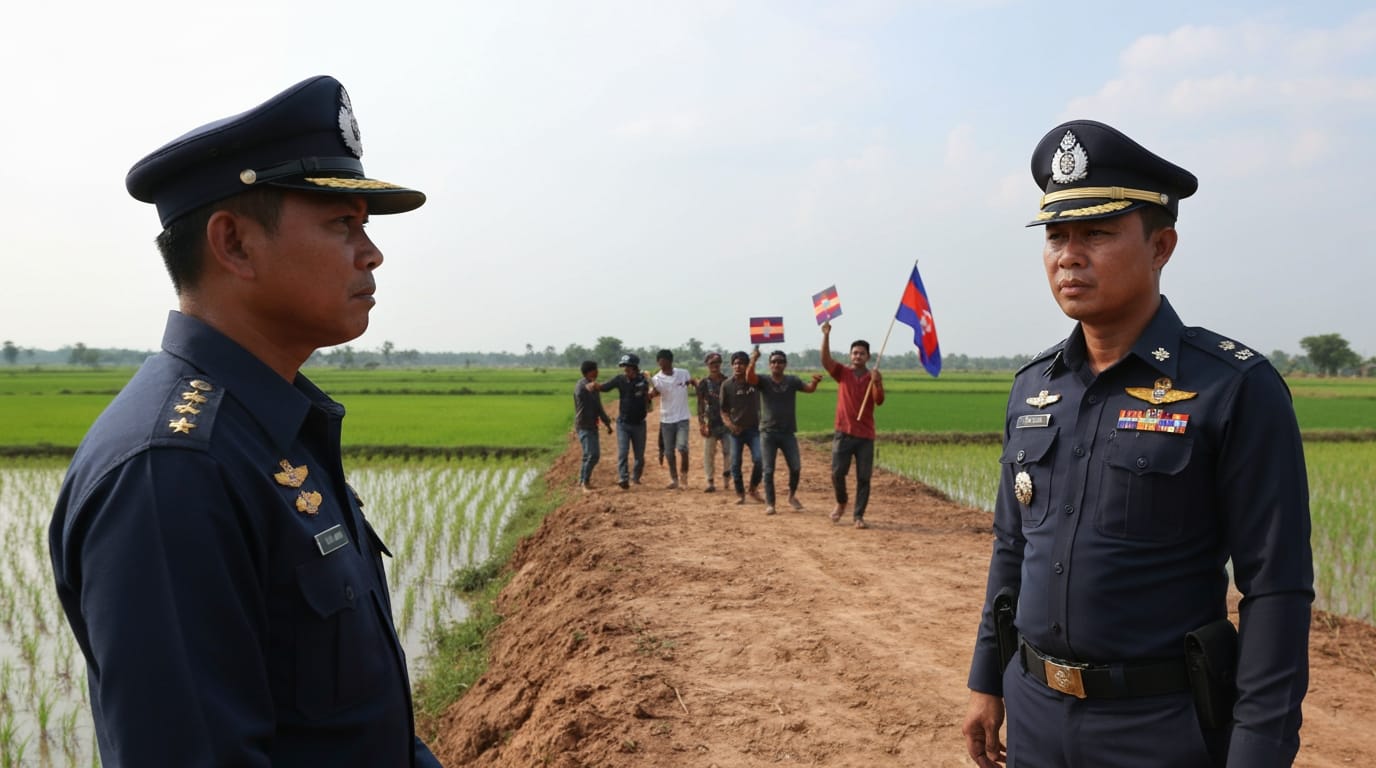
Intensified clashes along the contested border between Thailand and Cambodia have fueled a volatile mix of nationalist sentiment and historical grievances, escalating a long-standing territorial dispute into a full-blown economic and humanitarian crisis. The recent eruption of violence in 2025, particularly around ancient temple sites, has triggered significant military engagement, widespread civilian displacement, and severe disruption to cross-border trade, underscoring the deep-rooted challenges in demarcating the shared frontier and the potent influence of domestic politics on bilateral relations.
A Century of Contention: The Historical Roots of Border Ambiguity
The roots of the Thailand-Cambodia border dispute trace back to the Franco-Siamese treaties of 1904 and 1907, which sought to define the boundary between then-Siam and French Indochina, from which modern Cambodia inherited its borders. Ambiguities in colonial-era mapping, particularly where the proposed watershed line deviated from French survey maps, created zones of overlapping claims, setting the stage for decades of unresolved tensions. Central to this dispute is the 11th-century Preah Vihear temple, an ancient Khmer Hindu temple perched atop the Dângrêk Mountains, which holds immense cultural and historical significance for both nations.
The International Court of Justice (ICJ) first weighed in on the sovereignty of Preah Vihear in 1962, ruling that the temple itself belonged to Cambodia. However, this judgment did not explicitly demarcate the surrounding land, leaving a crucial aspect of the border undefined and allowing the dispute to simmer. Tensions flared notably in 2008 when Cambodia successfully sought UNESCO World Heritage status for Preah Vihear, an act that reignited Thai protests and led to military clashes. Further violence erupted in 2011, prompting Cambodia to request an interpretation of the 1962 ICJ ruling. In 2013, the ICJ reaffirmed Cambodian sovereignty over the entire promontory of Preah Vihear, obligating Thailand to withdraw its military from that territory. Despite these rulings, the broader issue of the undemarcated 817-kilometer land border, which includes other contested temple sites like Ta Muen Thom, continued to be a source of friction.
2025: A Resurgence of Hostilities and Broken Ceasefires
The simmering conflict intensified dramatically in 2025, marking the worst period of fighting in over a decade. A skirmish near Preah Vihear in May resulted in the death of a Cambodian soldier, triggering a cycle of retaliation and heightened tensions. By July, the situation had escalated into a "Five-Day War" characterized by heavy exchanges of gunfire, artillery, and rockets across multiple border locations. This surge in violence, reportedly initiated after a Thai soldier stepped on a landmine in a disputed area, led to at least 48 fatalities and displaced more than 300,000 civilians. Both nations accused the other of aggression, with Cambodia alleging Thai airstrikes targeted civilians, and Thailand claiming Cambodia laid new mines and fired first.
A fragile ceasefire, brokered in October by former U.S. President Donald Trump and signed in Malaysia, offered a brief respite. However, this peace proved short-lived. In November, Thailand suspended agreed-upon de-escalation measures after another Thai soldier was injured by a landmine, which Bangkok attributed to Cambodia. Renewed fighting erupted in December, including Thai airstrikes, resulting in further casualties among both soldiers and civilians, and displacing an estimated half-million people from border communities. The renewed hostilities prompted the U.S. to urge both countries to honor their ceasefire commitments, while Thailand's foreign ministry indicated a reluctance for external mediation at this stage, citing the need for trust to be re-established.
Nationalism's Grip: The Political Dimension of the Conflict
The enduring border dispute has consistently been a potent tool for nationalist politics in both Thailand and Cambodia. Political leaders frequently leverage the issue to rally domestic support, consolidate power, and demonstrate a firm stance on national sovereignty. In Thailand, ultra-patriotic groups have historically used the Preah Vihear issue to criticize governments perceived as weak in defending national interests, creating a political environment where appearing "soft" on the border dispute carries significant electoral risks. The narrative of "territorial sovereignty" and the military's role as the "guardian of the nation" often dictates Thailand's hardline responses.
Similarly, in Cambodia, the temple is a symbol of Khmer heritage and national pride, and any perceived infringement on its sovereignty can ignite strong public sentiment. This "weaponized nationalism" makes diplomatic compromise politically challenging for leaders on both sides, as concessions can be interpreted as betrayals of national identity. The deep-seated cultural rivalry, where Cambodians accuse Thais of cultural appropriation and Thais assert historical claims to border areas, further complicates efforts toward peaceful resolution.
Far-Reaching Consequences: Economic and Humanitarian Fallout
The escalating conflict carries severe economic and humanitarian consequences for both nations. The paralysis of cross-border trade, particularly at vital crossings like Klong Luek–Poipet, has halted an estimated $4.7 billion in annual commerce, disrupting established regional supply chains and increasing transportation costs by 25 to 40 percent. The border tourism sector has collapsed, and the instability has led to a significant exodus of Cambodian migrant workers from Thailand, with over 780,000 workers returning home. This sudden departure has created acute labor shortages in Thailand's construction, fishing, and agricultural sectors.
Beyond economic disruption, the conflict has created a humanitarian crisis, displacing hundreds of thousands of civilians who have sought refuge in temporary shelters. The recurrent evacuations undermine local livelihoods and contribute to refugee-like instability in border communities. Moreover, the dispute threatens a multi-trillion-baht joint energy project involving natural gas reserves in the Gulf of Thailand's Overlapping Claims Area, which has been indefinitely suspended. The cultural heritage itself is also at risk, with ancient temples, which are part of the shared heritage of Southeast Asia, facing damage or abandonment.
An Uncertain Path to Resolution
Despite the existence of mechanisms like the Joint Boundary Commission (JBC), which convened in June 2025 after a 13-year hiatus, progress on border demarcation remains elusive. The latest round of fighting underscores the fragility of peace efforts and the pervasive influence of nationalist politics that often overshadow pragmatic solutions. While the ICJ has repeatedly affirmed Cambodian sovereignty over the Preah Vihear temple, the lack of full demarcation for the surrounding territory continues to be a flashpoint, allowing political leaders to exploit the issue for domestic gain. The economic and human costs of this protracted dispute are substantial and growing, highlighting the urgent need for a sustained, good-faith commitment from both Thailand and Cambodia to resolve their differences through peaceful dialogue and cooperation, rather than allowing historical grievances and nationalist fervor to dictate their future.


