U.S. Temporarily Eases Russian Oil Sanctions Amid Global Energy Turmoil
Washington D.C. – In a significant but temporary pivot from its stringent sanctions policy, the United States Treasury Department has issued a general license permitting the sale of Russian crude oil and petroleum products currently stranded at sea. This decision, announced on March 12, 2026, and effective until April 11, 2026, aims to inject urgently needed supply into global energy markets reeling from escalating geopolitical tensions, particularly the ongoing conflict in Iran that has sent oil prices soaring. The move underscores a delicate balancing act by the Biden administration, attempting to mitigate severe economic disruptions without undermining the broader impact of sanctions against Russia.
The Temporary Lifeline for Stranded Cargoes
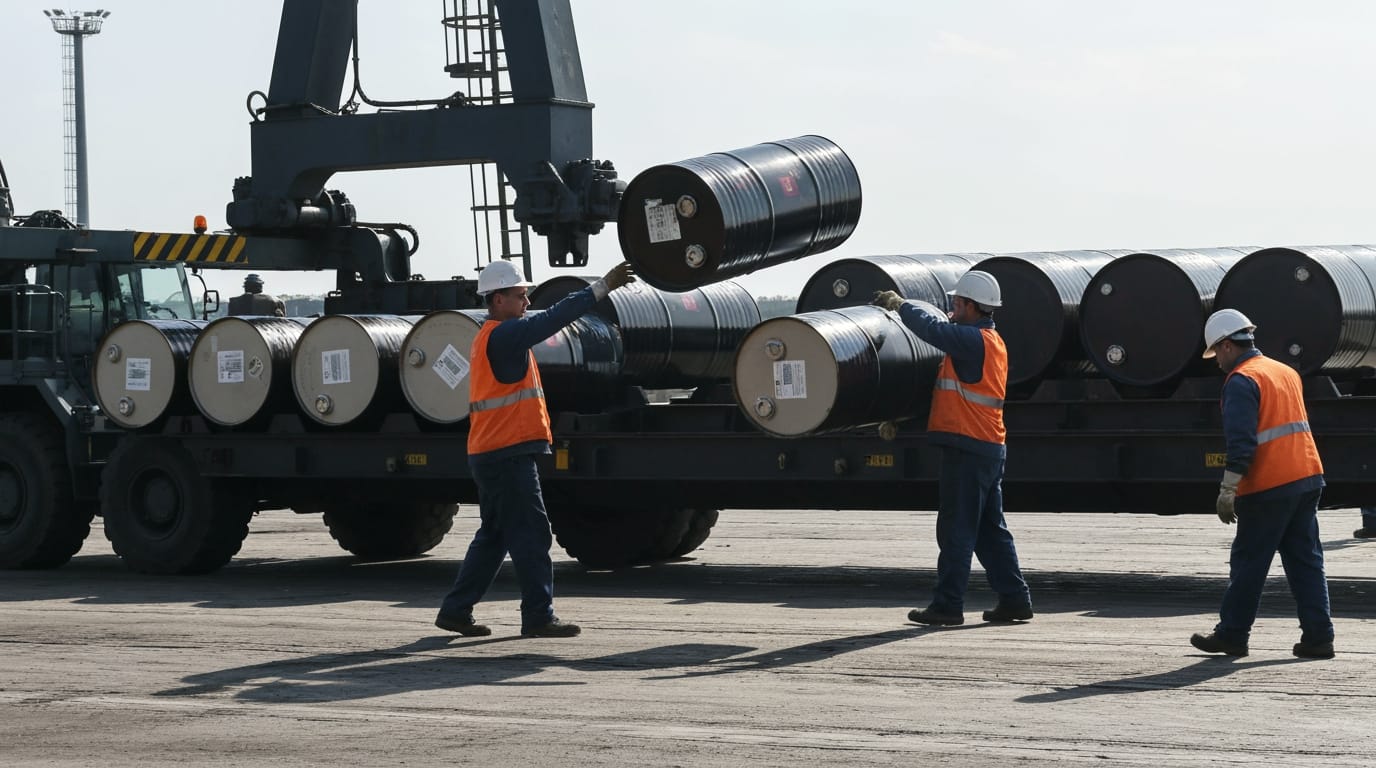
The U.S. Treasury's Office of Foreign Assets Control (OFAC) introduced Russia-related General License 134, specifically authorizing transactions necessary for the sale, delivery, or offloading of Russian-origin crude oil and petroleum products. Crucially, this authorization applies only to oil that was loaded onto vessels before 12:01 a.m. Eastern Time on March 12, 2026, and remains valid through April 11, 2026. This measure follows an earlier, similar 30-day waiver issued on March 5, 2026, specifically for India, allowing New Delhi to purchase Russian oil cargoes stuck at sea, with that authorization expiring on April 3, 2026.
Treasury Secretary Scott Bessent clarified that this is a "narrowly tailored, short-term measure" designed to promote stability in global energy markets and help keep prices low. He emphasized that the administration believes this action will not provide significant financial benefit to the Russian government, as Moscow primarily derives its energy revenue from taxes assessed at the point of extraction, not from the sale of already loaded cargoes. The intent is to resolve logistical bottlenecks and prevent environmental risks associated with prolonged vessel idling, rather than to ease broader sanctions against Russia.
Genesis of the "Stranded at Sea" Phenomenon
The predicament of Russian oil finding itself without a buyer at sea is a direct consequence of the extensive international sanctions imposed on Moscow following its full-scale invasion of Ukraine. While the U.S. implemented a ban on Russian oil imports in March 2022, and the G7, EU, and Australia introduced a price cap limiting the sale of Russian seaborne oil sold above $60 a barrel, a complex web of restrictions, reputational risks, and operational challenges began to ensnare shipments.
Sanctions on major Russian oil companies like Rosneft and Lukoil, coupled with the reluctance of many buyers and shippers to engage with Russian crude to avoid potential secondary sanctions or reputational damage, led to a significant build-up of oil at sea. By January 2024, reports indicated that approximately 10 million barrels of Russian Sokol crude were stranded off South Korea. This number fluctuated, with around 7.5 million barrels still at sea by February 2024. More broadly, in November 2025, the volume of Russian oil held in floating storage had swollen to 380 million barrels, with roughly 1.3 million barrels per day floating on ships with no declared destination. These "ghost fleets" or "shadow tankers" emerged as Russia sought ways to circumvent restrictions, yet logistical hurdles and buyer hesitancy persisted.
The reluctance of key buyers, notably India and China, to accept certain Russian shipments due to fears of running afoul of sanctions or payment difficulties, exacerbated the issue. Indian refiners, who had become major purchasers of discounted Russian oil, began pausing their acquisitions, causing a rapid plunge in Russia's seaborne oil deliveries.
Navigating a Volatile Global Market
The immediate catalyst for Washington's latest intervention has been the severe disruption to global energy markets caused by the ongoing war in Iran. The conflict, coupled with U.S.-Israeli military operations against Iran and retaliatory actions by Tehran, has paralyzed shipping through the vital Strait of Hormuz, a critical chokepoint for global oil and gas flows. This has driven benchmark oil prices sharply upwards, with Brent crude surpassing $100 a barrel for the first time in nearly four years.
U.S. officials acknowledged the "temporary increase in oil prices" as a "short-term and temporary disruption" that necessitated immediate action. The decision to allow the sale of stranded Russian oil is part of a broader strategy to stabilize the energy market and curb skyrocketing prices. This strategy also includes the U.S. Energy Department's announcement to release 172 million barrels of oil from the Strategic Petroleum Reserve, in coordination with a 400 million barrel release from the 32-nation International Energy Agency. Secretary Bessent explicitly linked the measure to "alleviate pressure caused by Iran's attempt to take global energy hostage."
Balancing Sanctions Pressure with Market Stability
The U.S. Treasury's move highlights the complex trade-offs inherent in sanctions policy, especially when dealing with major energy producers. While the primary goal of sanctions against Russia is to cripple its war economy, the unintended consequences can include global energy price volatility, which then pressures consuming nations.
U.S. officials maintain that this temporary license will not significantly benefit the Russian government, arguing that the oil was already extracted and the immediate revenue stream for Moscow would be minimal. However, some analyses suggest that allowing these stranded cargoes to find buyers could have a more subtle impact. Such waivers might reduce the wide discount on Russian crude that emerged due to sanctions, potentially increasing Russia's overall tax revenue from oil sales in the long run.
The decision also raises questions about the long-term enforcement of sanctions and the willingness of international actors to continuously absorb such economic pressure. While the measure is presented as a practical solution to logistical challenges, it also represents a limited relaxation that could be interpreted differently by various stakeholders, including Russia, its traditional buyers, and other sanctioning bodies.
Short-Term Relief, Long-Term Questions
The U.S. Treasury's temporary authorization for the sale of Russian oil stranded at sea offers immediate relief to a global energy market grappling with acute supply concerns and soaring prices exacerbated by the conflict in Iran. Initial market reactions saw oil prices drop, signaling that the measure had eased some short-term anxieties.
However, this tactical maneuver does not fundamentally alter the underlying dynamics of the global energy landscape or the geopolitical tensions driving them. It underscores the inherent difficulty in maintaining robust sanctions against a major energy producer while simultaneously ensuring global economic stability. As the temporary license approaches its expiration date, the international community will be watching closely to see if this short-term solution provides sufficient breathing room, or if more profound questions about the future of energy supply, sanctions enforcement, and geopolitical stability will continue to dominate the global agenda.


