Border Erupts: Thailand and Cambodia Clash Anew as World Awaits Trump's Diplomatic Push
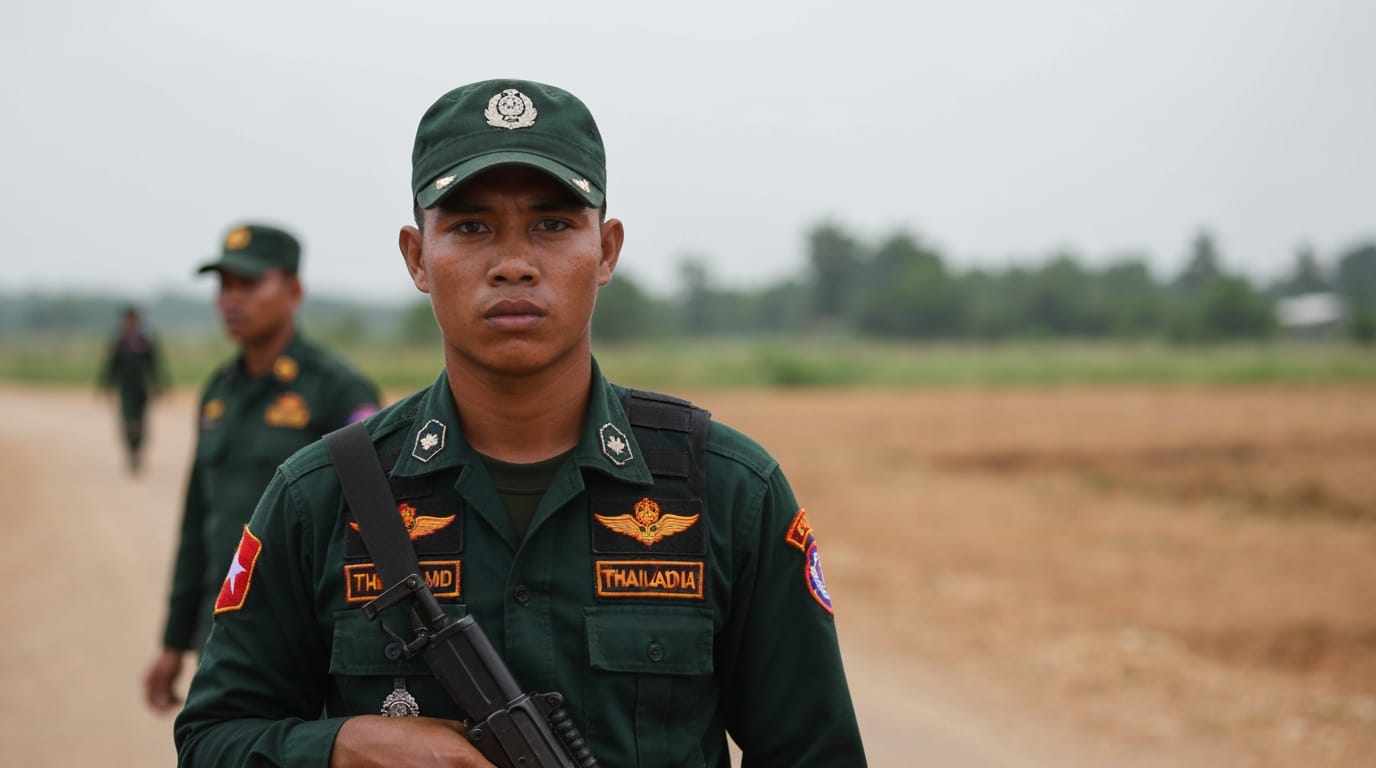
PHNOM PENH/BANGKOK — Escalating military confrontations along the contentious border between Thailand and Cambodia have plunged the region into renewed crisis, claiming lives, displacing thousands, and casting a shadow over Southeast Asian stability. As artillery shells and gunfire echo across the frontier for a fourth consecutive day, both nations now turn their attention to an anticipated phone call from U.S. President Donald Trump, whose previous interventions have yielded fragile ceasefires that ultimately faltered. The latest surge in violence, which erupted on December 8, underscores the deep-seated nature of a territorial dispute that has defied resolution for decades, now bringing with it significant human cost and renewed international concern.
Renewed Hostilities Ignite Frontier
The current hostilities mark the most severe escalation since July of this year, with reports of intense fighting along a significant stretch of the 200-kilometer border. On December 8, a fresh round of clashes began when Cambodian forces reportedly fired shells and rockets across the border, resulting in the death of one Thai soldier and injuries to several others. In retaliation, Thailand launched airstrikes, deploying its F-16s and ground forces in operations involving small arms, machine guns, mortars, and artillery at multiple border locations. The fighting intensified on December 10, with Cambodian officials reporting 37 of their soldiers and five local police injured in clashes near Preah Vihear.
The human toll has been immediate and severe. Tens of thousands of civilians have been forced to flee their homes, seeking refuge from the violence. By December 10, over 883 schools across six provinces had closed their doors, disrupting the education of more than 208,959 students. Initial estimates indicated five civilian deaths, including Cambodians. Reports also emerged of damage to the ancient Preah Vihear Temple, a UNESCO World Heritage Site, with Cambodia's Ministry of Culture and Fine Arts condemning the alleged shelling and claiming impacts on conservation efforts. The Cambodian Ministry of National Defense also announced plans to collect evidence of alleged Thai invasion for a potential complaint to the International Criminal Court (ICC). This rapid escalation follows a "momentous" peace deal signed in late October, which had been abruptly suspended in November after a landmine explosion injured four Thai soldiers, highlighting the extreme fragility of any negotiated peace.
The Diplomatic Lifeline: Trump's Anticipated Call
Against this backdrop of renewed conflict, U.S. President Donald Trump announced on December 9 his intention to directly engage with the leaders of Cambodia and Thailand. "Tomorrow I'll have to make a phone call" to both countries, Trump stated at a rally, expressing confidence in his ability to mediate. "Who else could say: I'm going to make a phone call and stop a war between two very powerful countries? We're making peace through strength." This impending diplomatic push carries significant weight, as Trump previously played a crucial role in brokering a ceasefire during similar intense fighting in July 2025.
In July, after a conflict that claimed dozens of lives and displaced over 300,000 people, Trump's direct call to Thai Acting Prime Minister Phumtham Wechayachai and Cambodian Prime Minister Manet helped break a diplomatic deadlock. At the time, Thailand had been reluctant to accept third-party mediation, preferring bilateral negotiations. However, following Trump's intervention, which reportedly linked the cessation of hostilities to ongoing U.S. tariff negotiations with both nations, a ceasefire was agreed upon July 28. This led to the Kuala Lumpur Peace Accords signed on October 26, witnessed by President Trump and Malaysian Prime Minister Anwar Ibrahim. Despite these diplomatic successes, the current violence demonstrates the persistent challenges in achieving a lasting peace. The U.S. State Department, on December 9, expressed concern over the renewed clashes, urging both sides to honor the peace accords and return to de-escalatory measures.
Roots of a Century-Old Dispute
The enduring flashpoint between Thailand and Cambodia centers on a long-standing territorial dispute, most prominently surrounding the 11th-century Preah Vihear temple. The genesis of the conflict traces back to border delimitations from 1904 to 1908 between Siam (now Thailand) and French Indochina, which then governed Cambodia. A 1907 French map, which showed the temple within Cambodian territory despite a general agreement to follow a watershed line, became a point of contention.
In 1962, the International Court of Justice (ICJ) ruled that the Preah Vihear temple belonged to Cambodia, a decision that has significantly shaped Thai public consciousness regarding territorial sovereignty. The issue lay relatively dormant for decades but flared up repeatedly, notably in 2008 when Cambodia's successful bid to list Preah Vihear as a UNESCO World Heritage Site reignited nationalist sentiments and led to subsequent deadly skirmishes between 2008 and 2011. These historical narratives and the military's role as a guardian of the nation continue to influence Thailand's hardline stance, making concessions politically challenging. The contested 4.6 square kilometers around the temple remain a focal point of friction, viewed by Thailand as a disputed area and by Cambodia as integral territory.
The Mounting Human Cost and Regional Implications
Beyond the geopolitical maneuvers and historical grievances, the ongoing conflict exacts a heavy toll on the civilian populations residing near the border. The displacement of families not only disrupts daily life but also inflicts significant psychological trauma. A survey conducted in August 2025 by World Vision International Cambodia revealed that nearly two-thirds of refugee families across 43 camps were experiencing severe psychological distress due to the border conflict. Elderly residents, in particular, recall previous periods of aggression, expressing profound fear for their children and grandchildren. The conflict has also resulted in loss of income, destruction of property, and heightened uncertainty for those caught in the crossfire.
The volatility along the Thai-Cambodian border poses broader implications for regional stability in Southeast Asia. While the Association of Southeast Asian Nations (ASEAN) and the United Nations have consistently urged for peaceful resolutions, the recurrent clashes demonstrate the challenges of managing such entrenched disputes. Malaysia and China have also engaged in mediation efforts, highlighting the regional and international concern over the potential for wider destabilization. The ability of international diplomacy, particularly U.S. involvement, to enforce and sustain a lasting peace remains a critical test for the stability of mainland Southeast Asia.
Conclusion
As the current fighting rages on, all eyes remain on President Trump's promised intervention. The rapid re-escalation, despite previous ceasefire agreements and peace accords, underscores the complexity of the Thailand-Cambodia border dispute—a tangle of historical claims, nationalistic pride, and strategic interests. While Trump's previous diplomatic efforts yielded temporary results, the enduring human suffering and the recurrent violence demand a more fundamental and sustainable resolution. The coming days will reveal whether this latest high-level diplomatic push can once again de-escalate tensions and pave the way for genuine, lasting peace along the volatile frontier.


