BRICS Navigates Iran War Tensions, Oil Shocks Amidst Pivotal India Meeting
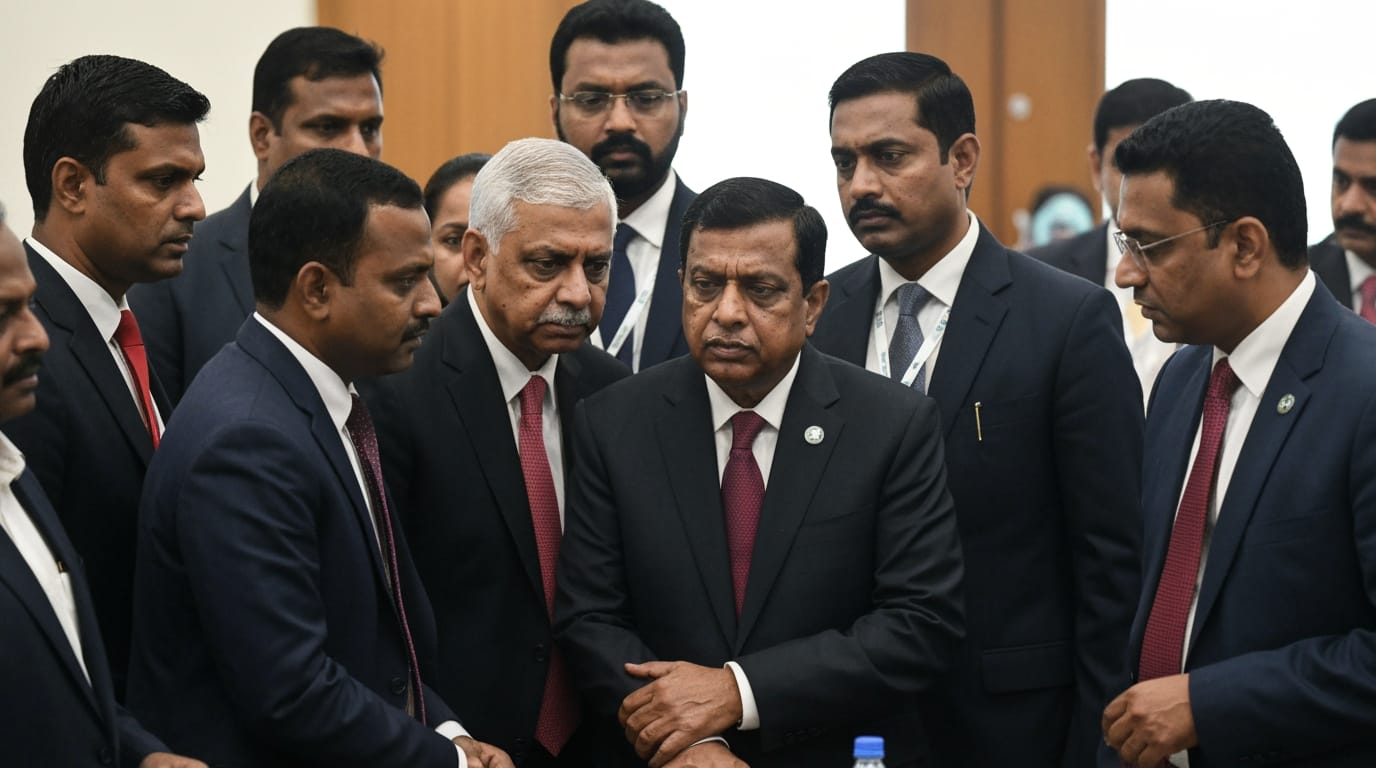
NEW DELHI – Foreign ministers of the expanded BRICS bloc convened in New Delhi this week, facing a daunting agenda dominated by escalating tensions surrounding the conflict involving Iran and the resultant instability in global oil markets. India, presiding over the BRICS forum for 2026, hosted the crucial two-day gathering as a "war in Iran" triggered significant economic uncertainties and energy insecurity, underscoring the bloc's struggle for unified responses amidst a volatile global environment.
A Geopolitical Confluence in New Delhi
The high-stakes meeting, held on May 14 and 15, brought together top diplomats from the significantly expanded BRICS lineup, which now includes new members like Iran, Saudi Arabia, the United Arab Emirates, Egypt, Ethiopia, and Indonesia, alongside founding nations Brazil, Russia, India, China, and South Africa. India's External Affairs Minister, Subrahmanyam Jaishankar, set a somber tone for the discussions, acknowledging a period of "considerable flux" in international relations and emphasizing a growing expectation for BRICS to play a "constructive and stabilizing role" for emerging economies and developing countries. The gathering aimed to address global security, economic cooperation, and reforms to the international financial system, with India's 2026 BRICS chairship guided by the theme “Building for Resilience, Innovation, Cooperation and Sustainability.”
The expanded membership itself highlights BRICS' ambition to wield greater influence on the global stage, positioning itself as a counterweight to Western-dominated institutions. This expansion, which saw Egypt, Ethiopia, Iran, and the UAE join in 2024, and Indonesia in 2025, reflects a push for a bigger voice for the Global South, where many nations have voiced criticism of Western-led financial structures.
The Shadow of Conflict and Energy Volatility
Central to the New Delhi talks was the ongoing conflict involving Iran, which erupted on February 28, impacting global energy supplies and driving up oil prices. This "war in Iran" has added considerable strain to India's economy, a nation heavily reliant on Middle Eastern energy supplies and fertilizer imports. As the world's third-largest oil buyer, India typically sources approximately half of its crude through the Strait of Hormuz, a critical waterway that has seen repeated disruptions since the conflict began. Disruptions around these Gulf shipping routes continue to fuel volatility in oil and gas markets, intensifying pressure on energy-importing economies globally. The precariousness of the situation was further underscored by concerns over maritime security near the Strait of Hormuz, a vital energy corridor.
The economic repercussions extend beyond oil. India's growth outlook faces uncertainty, and the nation is actively exploring alternative energy suppliers and routes, including underground pipelines, to mitigate risks associated with the Strait of Hormuz. While Russian crude has served as a partial buffer, India has spent the past year attempting to diversify its energy sources amidst global tariffs.
Divisions and Diplomatic Maneuvers
Despite the shared economic anxieties, the BRICS meeting exposed significant internal divisions, particularly regarding the conflict involving Iran. Iran’s Foreign Minister, Abbas Araghchi, present at the New Delhi meeting, reportedly called on BRICS nations to condemn the "unlawful aggression" against Tehran by the U.S. and Israel. He urged bloc members to take practical steps to halt what he described as "warmongering" and to end perceived impunity for violations of the U.N. Charter, also advocating against the "politicization of international institutions."
However, achieving a unified position, let alone a joint statement, proved challenging due to competing interests and differing perspectives within the bloc. Notably, the expanded BRICS now includes Iran, Saudi Arabia, and the United Arab Emirates – countries that have been at odds over the Middle East conflict. Reports indicated that disagreements, stemming from at least one member country's reluctance to condemn Iran, complicated efforts to forge a consensus. This internal friction tested the bloc's unity and its capacity to speak with a single voice on pressing geopolitical issues.
Seeking Stability and Alternative Pathways
Against this backdrop of geopolitical tension and economic uncertainty, the BRICS ministers discussed avenues for deeper cooperation. Discussions focused on "trade and investment, energy and connectivity," highlighting the bloc's ongoing efforts to enhance economic resilience and strategic coordination among its diverse members. India's Foreign Minister Jaishankar emphasized the importance of addressing challenges in energy, food, fertilizer, health security, and access to finance, which continue to plague many developing nations.
A long-term objective for BRICS members is to reduce dependence on the U.S. dollar and strengthen alternative financial mechanisms, a topic that gains renewed urgency amid global economic volatility. The bloc also seeks greater representation for developing nations within global institutions traditionally dominated by Western powers. The strategic significance of infrastructure projects like the Chabahar port and the International North-South Transport Corridor (INSTC), which facilitate trade and connectivity, also featured in bilateral discussions, particularly between India and Iran.
Conclusion
The BRICS foreign ministers' meeting in New Delhi underscored the profound challenges facing the bloc as it attempts to forge a common path in an increasingly fragmented world. While the "war in Iran" and its reverberations across global oil markets dominated discussions, the complexities of an expanded membership and differing national interests revealed the inherent difficulties in presenting a unified front. India, as the chair, navigated these intricate dynamics, advocating for resilience and cooperation. As BRICS continues to assert its role in shaping a multipolar world, its ability to bridge internal divides and effectively respond to critical global events like the Iran conflict will be a definitive test of its growing influence and relevance.


