Honda Navigates Historic Loss with Strategic EV Reset, Eyes Future Profitability
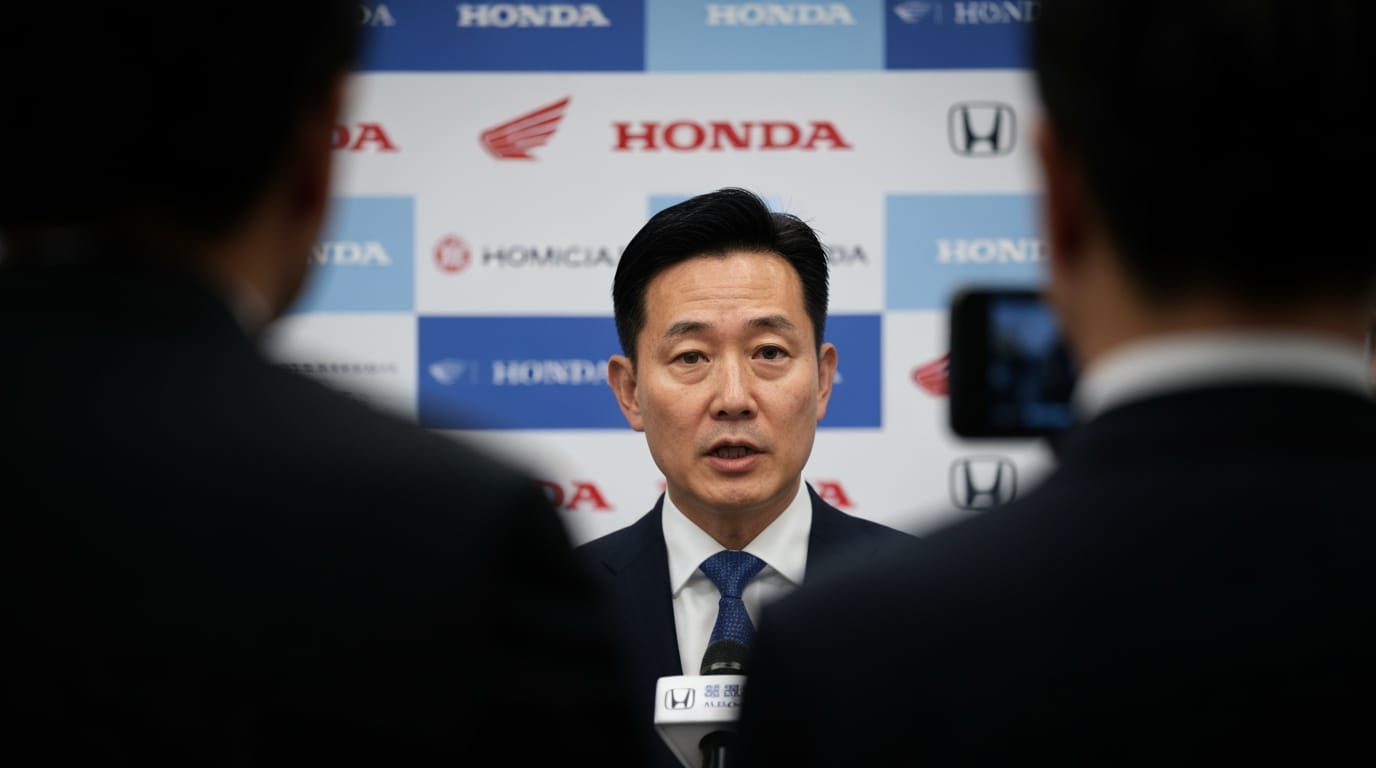
TOKYO – Honda Motor Co. has announced its first annual net loss since going public in 1957, grappling with substantial write-downs stemming from a significant reassessment of its electric vehicle (EV) strategy. Despite the historic financial setback for the fiscal year ending March 31, 2026, the automaker's shares experienced an uptick, fueled by investor confidence in its revised, more pragmatic approach to electrification and optimistic profit forecasts for the upcoming fiscal year. This paradoxical market response underscores a challenging but potentially pivotal period for the Japanese automotive giant as it recalibrates its ambitious carbon-neutral goals against evolving market realities and geopolitical shifts.
A Historic Reversal in Financial Fortunes
For the fiscal year 2026, Honda reported a net loss of ¥423.9 billion (approximately $2.7 billion), a stark contrast to the previous year's substantial profit. The company also posted an operating loss of ¥414.3 billion (about $2.62 billion), reversing a ¥1.21 trillion operating profit from the prior year. This marks the first time in 69 years that Honda, a symbol of Japanese manufacturing prowess, has ended a fiscal year in the red. The primary driver behind this significant financial downturn is attributed to massive impairment charges, totaling up to ¥2.5 trillion ($15.7 billion) over two years, directly linked to its EV operations.
The unprecedented loss was triggered by a comprehensive reassessment of Honda's electrification strategy, which led to the cancellation of certain EV model launches and development projects, particularly for the North American market. These decisions were prompted by a notable slowdown in EV demand in the region, which Honda stated was "less than half of what we were assuming". Compounding these challenges were policy changes in the United States, including the expiration of federal EV tax credits, which significantly impacted consumer demand. Furthermore, new tariffs imposed by the U.S. on imported auto parts and vehicles also contributed to denting Honda's profitability. The company also cited intense competition from agile new EV manufacturers in China and other Asian markets, which are rapidly developing software-defined vehicles aligned with shifting consumer preferences.
The Electric Vehicle Strategy Undergoes a Pragmatic Pivot
Honda's strategic pivot signals a departure from its earlier aggressive "all-electric dream," acknowledging that the path to carbon neutrality may be more diverse than initially envisioned. The automaker had previously committed to making EVs and fuel-cell vehicles 100% of its global automobile sales by 2040, with plans for more than 2 million EV units annually by 2030. However, CEO Toshihiro Mibe has now indicated that the company will cancel its ambitious target of transitioning all models to EVs or fuel-cell vehicles by 2040.
The revised strategy involves canceling the development of specific EV models, such as the Honda 0 SUV, Honda 0 Saloon, and Acura RSX, originally planned for North American production. Instead, Honda is now prioritizing a "multi-pathway" approach, emphasizing a greater focus on hybrid vehicles for markets like the U.S.. This shift recognizes that while BEVs are a pathway, they are not the sole means to achieve carbon neutrality, and solutions like hybrids, carbon-neutral fuels, and software-defined vehicles will play crucial roles. The company plans to continue research and development for future EV technologies, positioning itself to introduce appealing EV products when market conditions are more favorable. This re-evaluation aligns Honda with a broader industry trend where other major automakers are also adjusting their EV timelines and investments in response to cooling demand and profitability challenges.
Investor Confidence and the Promise of Fiscal 2027
Despite the significant annual loss, Honda's shares demonstrated resilience, partly due to the company's clear projections for a robust financial recovery in the fiscal year ending March 31, 2027. For FY2027, Honda forecasts a net profit of ¥260 billion (approximately $1.7 billion) and an operating profit of ¥500 billion. Sales are also projected to grow, reaching ¥23.15 trillion. This optimistic outlook, coupled with the company's decision to maintain its annual dividend at ¥70 per share, signaled to investors that management is confident in its ability to navigate the current headwinds and return to profitability.
The market appears to have largely priced in the challenges and is reacting positively to Honda's more realistic and diversified future strategy. The company's strong motorcycle business, which achieved record operating profits driven by robust sales in India and Brazil, also provided a crucial buffer, partially offsetting the automotive division's losses. Furthermore, temporary pay reductions for CEO Toshihiro Mibe and other automotive executives underscore a commitment to accountability and cost management during this transitional period.
Broader Industry Context and the Road Ahead
Honda's experience mirrors a broader struggle within the global automotive industry as legacy automakers navigate the complex and capital-intensive transition to electrification. Many manufacturers are facing similar impairment losses and are reassessing their EV strategies as consumer demand plateaus in key markets and profitability remains elusive for dedicated EV ventures. The regulatory environment, particularly in the U.S., has also played a significant role, with shifts in incentive programs creating an unpredictable market for battery-electric vehicles.
The challenges extend beyond market demand, encompassing the high costs of battery technology, the need for extensive charging infrastructure, and intense competition, particularly from Chinese manufacturers who have rapidly gained ground with software-defined EV models. Honda's prior investments, including over ¥3 trillion in EV-related projects and a $4.4 billion battery plant with LG Energy Solution in Ohio, highlight the substantial financial commitments involved in this transition, making strategic adjustments all the more impactful.
Honda's historic loss is a stark reminder of the immense pressures transforming the automotive sector. The company's pivot towards a more balanced "multi-pathway" approach, while painful in the short term, reflects an adaptable strategy designed to reconcile ambitious environmental goals with market realities and financial prudence. As Honda looks towards fiscal year 2027, its ability to execute this revised strategy and leverage its traditional strengths, particularly in hybrids and motorcycles, will be critical in regaining its footing and ensuring long-term sustainability in a rapidly evolving global landscape.