Latvian Prime Minister Evika Siliņa Resigns Amid Drone Controversy and Coalition Collapse
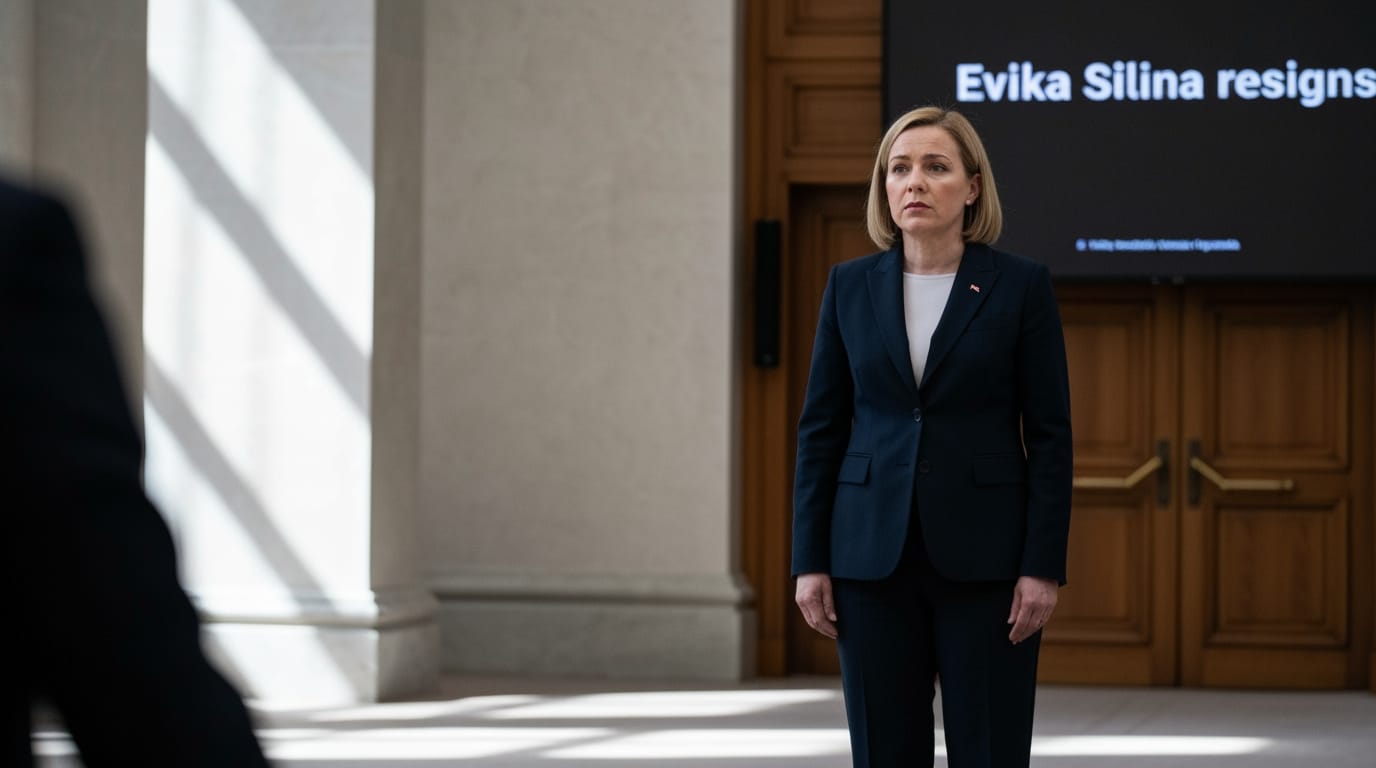
RIGA, Latvia – Latvian Prime Minister Evika Siliņa announced her resignation on Thursday, May 14, 2026, triggering the collapse of her three-party coalition government just months before national elections. The decision follows intense scrutiny over her administration's handling of recent drone incidents and the subsequent withdrawal of a key coalition partner, the left-wing Progressives party. Siliņa's departure plunges Latvia into political uncertainty as President Edgars Rinkevics begins consultations to form a new government.
The Prime Minister, a member of the centre-right New Unity party, cited "political jealousy and narrow party interests" as having taken precedence over national responsibility in her televised statement, describing her decision as difficult but necessary. Her resignation effectively dissolves the government, which lost its parliamentary majority after the Progressives' withdrawal on Wednesday.
The crisis escalated dramatically after a series of drone incursions into Latvian airspace earlier in May. Multiple suspected Ukrainian drones, reportedly diverted by Russian electronic warfare, entered Latvian territory from Russia. Two of these unmanned aerial vehicles crashed into an oil storage facility in Rezekne, an eastern Latvian region bordering Russia and Belarus, damaging an empty oil tank. The incidents sparked widespread public and political criticism regarding the government's perceived slow response and the defense sector's failure to adequately secure the nation's skies.
In the immediate aftermath of the drone incidents, Prime Minister Siliņa on May 10 dismissed Defence Minister Andris Spruds, a member of the Progressives party, stating that he had lost her confidence and that of the public. Siliņa emphasized that the incidents "clearly demonstrated that the political leadership of the defence sector has failed to fulfill its promise of safe skies over our country" and that anti-drone systems had not been deployed with sufficient speed. Spruds, however, contested the Prime Minister's account, reportedly claiming he had already decided to step down and accusing Siliņa of rushing the announcement for political motives.
The dismissal of Defence Minister Spruds ignited significant friction within the governing coalition. The Progressives party, feeling sidelined and disrespected by Siliņa's move to replace Spruds with Colonel Raivis Melnis (a non-party affiliated military professional) rather than another representative from their party, subsequently announced their withdrawal of support for the government. This defection left Siliņa's New Unity party and its remaining partner, the Union of Greens and Farmers, without the necessary parliamentary majority to govern. The fragile nature of Latvian coalition governments has been evident in recent years, with previous disputes over issues such as the Istanbul Convention highlighting underlying ideological tensions that often strain multi-party alliances.
With parliamentary elections already scheduled for October, Latvia now faces the challenge of forming a new, stable government under tight deadlines. President Edgars Rinkevics is set to meet with leaders of all parliamentary factions on Friday to discuss the political situation and begin the process of identifying a new head of government. Potential outcomes include the formation of a new coalition, the establishment of an interim government to steer the country until the elections, or the possibility of snap elections if a viable majority cannot be secured. The opposition United List party has already indicated its readiness to initiate a vote of no confidence and potentially lead the next government.
The resignation of Prime Minister Siliņa underscores the significant domestic political impact of external security threats, particularly in a nation like Latvia that shares a border with Russia. The controversy over drone incursions and the subsequent government collapse highlight the acute sensitivities surrounding national security and defense in the Baltic region. As Latvia navigates this period of political transition, the focus will remain on ensuring stability and addressing the pressing issues of national defense and public confidence in its leadership.


