Navigating Turbulent Waters: Merz's Grand Coalition Faces Headwinds as Echoes of Merkel's Counsel Resurface
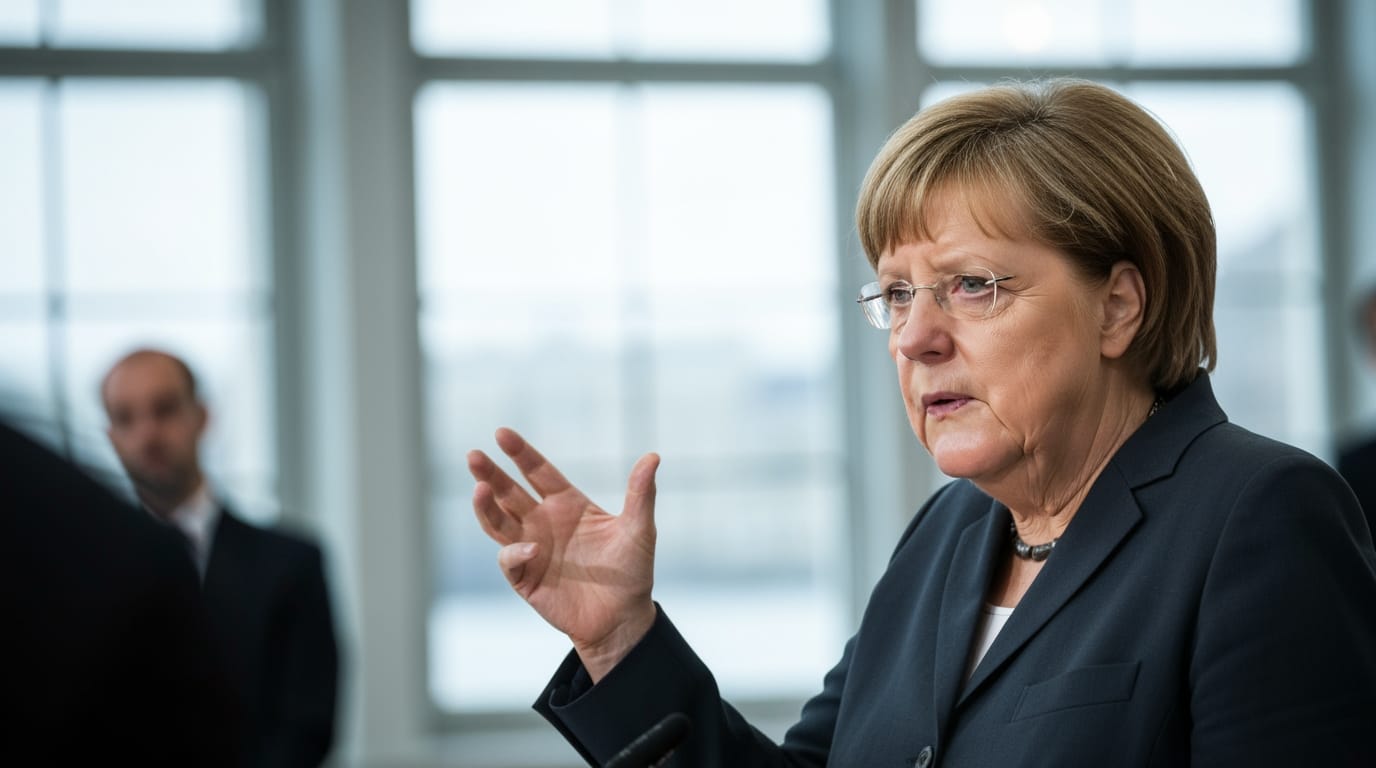
BERLIN – Just over a year into his chancellorship, Friedrich Merz finds his grand coalition government in Germany grappling with significant challenges, prompting calls for patience and unity from within his own ranks as the nation navigates a complex political and economic landscape. The delicate balancing act required to maintain stability in a multi-party government, a hallmark of German democracy, resonates with the often-cited counsel of his predecessor, Angela Merkel, whose past observations on political conduct and the exigencies of governance now offer a poignant backdrop to the current administration's struggles.
Friedrich Merz, who assumed the chancellorship on May 6, 2025, leads a grand coalition comprising his Christian Democratic Union/Christian Social Union (CDU/CSU) alliance and the center-left Social Democratic Party (SPD). This alliance was forged following the February 2025 federal election, which saw the CDU/CSU emerge victorious with 28.5% of the vote, with the far-right Alternative for Germany (AfD) securing second place. The coalition agreement, a comprehensive 144-page document outlining plans for economic reform, defense spending, and migration policy, was signed on April 9, 2025, after securing internal party approvals. This swift formation, a process that has historically stretched for months in Germany, was reportedly driven by "extraordinary external pressure," including geopolitical shifts and the rising influence of the AfD.
The Chancellor's Call for Patience Amidst Mounting Pressure
Despite a relatively quick formation, Merz's government has encountered considerable turbulence. In early May 2026, Chancellor Merz himself appealed for patience and unity within his CDU/CSU-SPD coalition, acknowledging the inherently time-consuming and politically demanding nature of democratic decision-making processes in Germany. His defense of the slow pace of reform comes as the government faces low public satisfaction, with a significant majority of Germans expressing dissatisfaction with its performance. The coalition's commitment to ambitious reforms, including healthcare cost cuts and a public-pension overhaul, has been met with skepticism and outright opposition, notably from trade unions where Merz faced jeers during a recent conference.
The Chancellor has stressed the importance of maintaining a cooperative and collegial atmosphere, underlining that no realistic alternative currently exists for the governing alliance. This emphasis on unity is crucial as the government grapples with structural economic challenges, including slow growth and high costs, alongside internal disputes on critical policy areas such as welfare and migration. Measures to reduce subsidies by approximately €3 billion to create fiscal space for tax relief have been a point of intense discussion and negotiation between the CDU-led bloc and the SPD.
Merkel's Enduring Shadow: Caution and Consensus
While Angela Merkel concluded her sixteen-year chancellorship in 2021, her influence on German politics and the principles of coalition governance remains palpable. Her tenure was characterized by a pragmatic approach to consensus-building, often navigating complex alliances and crises with a steady hand. Merkel's experience offers a historical lens through which to view the current calls for patience, as she frequently steered Germany through challenging political waters, often leading grand coalitions herself.
A notable instance of Merkel's direct, albeit pre-chancellorship, commentary on Merz’s political maneuvering occurred in January 2025. She issued a rare public criticism of Merz, then a front-runner for the chancellorship, after proposed tough new migration rules passed parliament with the assistance of the far-right AfD. Merkel emphasized that "all democratic parties" must cooperate, respecting European Union law, and voiced concern over a perceived "breach of the informal firewall" against the AfD. This earlier criticism highlighted a fundamental difference in approach and underscored Merkel’s long-standing commitment to isolating extremist parties, potentially serving as an implicit call for caution in political alliances. Merz, a more conservative figure, has consistently advocated for a more restrictive stance on migration, even criticizing Merkel's open-border policy during the 2015 migrant crisis.
The Intricacies of German Coalition Politics
Germany's federal electoral system rarely yields an absolute majority for a single party, making coalition governments the standard outcome. This necessitates extensive negotiations and compromises between diverse political factions, a process that inherently demands patience and strategic foresight. Historically, two-party coalitions were preferred, but the political landscape has become increasingly fragmented, leading to a rise in three-party coalitions at the state level. Merz's current grand coalition with the SPD, a traditional "black-red" alliance, reflects the ongoing challenge of forming stable governments in an evolving multi-party system, especially since the SPD is now the third-largest party, making this technically a "grand coalition" but often referred to as a "black-red" one due to the shifting power dynamics.
The ability to build and sustain such alliances is critical for effective governance. Merkel's long political career, much of it spent leading or participating in grand coalitions, cemented an understanding that major reforms require extensive deliberation and consensus-building. Her approach often involved absorbing policy positions from across the political spectrum, which, while fostering stability, also led to critiques of the CDU's identity being diluted. Merz now faces a similar challenge: pushing through his reform agenda while managing the inherent tensions and ideological differences within his own broad alliance, all under the glare of public dissatisfaction and economic uncertainty.
Looking Ahead: Stability in a Fragmented Era
The ongoing appeals for patience from Chancellor Merz underscore the significant pressures weighing on his grand coalition. As Germany navigates domestic policy debates on taxes, social welfare, and migration, alongside global challenges like the energy crisis and international trade tensions, the stability of the government is paramount. While Merz is committed to advancing reforms and reassuring the public, the lessons from Merkel's era—emphasizing careful deliberation, consensus, and a cautious approach to political alliances—remain pertinent. The future trajectory of Merz's government will depend not only on its ability to deliver on its policy promises but also on its capacity to maintain internal cohesion and patiently build broad support in an increasingly fragmented political environment.


