Buchenwald: Germany's Haunting Reminder of Nazi Atrocities
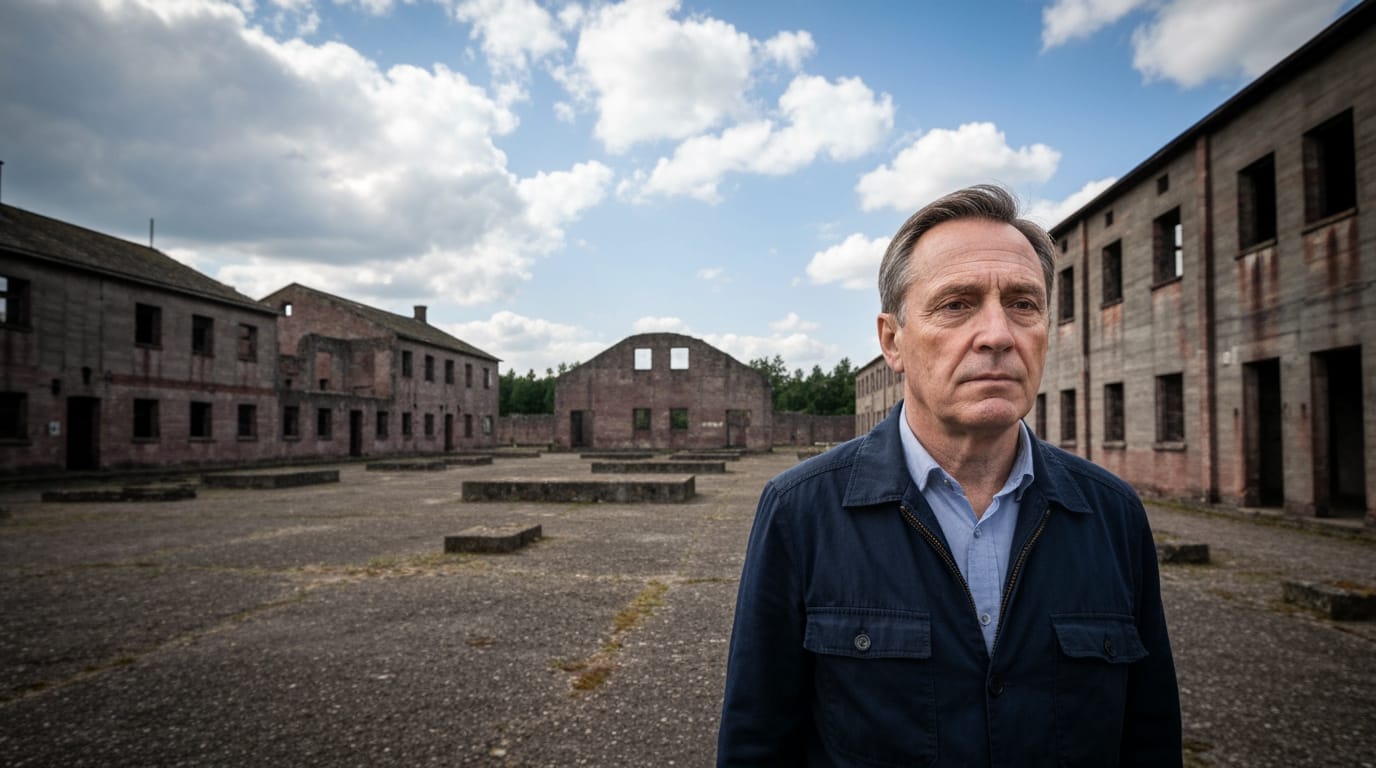
Weimar, Germany – The somber grounds of Buchenwald, nestled on the Ettersberg hill near the historic city of Weimar, stand as a stark and enduring monument to the unfathomable barbarity of the Nazi regime. Established in 1937, this was one of the largest concentration camps within the German Reich, a site where the meticulously planned machinery of persecution and death systematically extinguished more than 56,000 lives over eight years. Today, it serves as a critical nexus for remembrance, education, and a perpetual warning against the resurgence of hatred and extremism.
The Genesis of Terror: From Political Prison to Instrument of Annihilation
The concentration camp, initially named Ettersberg, was established by the Schutzstaffel (SS) in July 1937. Its name was soon changed to Buchenwald, referencing the local beech forest, to avoid association with cultural figures like Johann Wolfgang von Goethe, who had resided in Weimar. The initial internees were primarily German political prisoners, particularly communists, along with individuals deemed "asocials" by the Nazi regime. However, as Nazi Germany's territorial ambitions expanded across Europe, so too did Buchenwald's grim population. The camp rapidly transformed into a crucible of suffering for a diverse array of victims, including Jews, Poles and other Slavs, Roma, homosexuals, Jehovah's Witnesses, and prisoners of war from across Europe and the Soviet Union. Even the mentally ill and physically disabled were among those imprisoned.
Under the commandants Karl-Otto Koch and later Hermann Pister, Buchenwald was designed as a work camp, not initially an extermination camp. Yet, the conditions imposed were inherently lethal. Prisoners were subjected to brutal forced labor, often in local armaments factories or quarries, enduring insufficient food, appalling hygiene, and constant violence. The SS also utilized slave labor from Buchenwald and its 139 subcamps for private firms within the Third Reich, further expanding the exploitation of its captives. This relentless exploitation, coupled with deliberate executions, starvation, and disease, led to a staggering mortality rate.
Horrors Within the Fences: A Microcosm of Nazi Cruelty
Life within Buchenwald was a daily struggle for survival against systematic degradation and violence. The camp complex itself was divided into a main prisoner camp and an administration area for SS guards. Barbed wire fences, watchtowers, and machine guns enforced a rigid, inescapable control. The high mortality rate necessitated the construction of a crematorium in 1940, which was expanded in 1942, particularly following the rise in executions of Soviet prisoners of war. Most ashes were dumped into the nearby River Saale, while late-war fuel shortages led to the use of mass graves.
Beyond the brutal forced labor, prisoners faced deliberate medical experiments conducted in Block 46, also known as the Hygienic Institute. Here, doctors intentionally infected inmates with diseases and poisons, transforming human beings into unwilling subjects in grotesque scientific endeavors. Children, many housed in Block 8, also suffered immensely, with thousands succumbing to the camp's horrific conditions.
Between 1937 and 1945, approximately 250,000 individuals from 50 countries were incarcerated within Buchenwald and its extensive subcamp system. Out of this quarter-million, at least 56,545 perished due to executions, starvation, disease, torture, or medical experimentation. Among the victims were at least 11,000 Jews. The experiences of survivors like Leon Merrick, who described being transported in cattle cars and witnessing the stark contrast between his imprisonment and the freedom of ordinary German citizens, underscore the dehumanizing reality of the camp. Another survivor, Sidney Finkel, recalled the overwhelming presence of SS guards and electrified fences upon his arrival, a grim "city" where he was merely a prisoner. The desperation was so profound that some prisoners chose suicide by running into the electrified fences.
The Brink of Collapse and Liberation's Dawn
As Allied forces advanced into Germany in early 1945, the Nazi regime began to evacuate prisoners from camps closer to the front lines, forcing thousands onto brutal "death marches." In early April 1945, Buchenwald itself became a departure point for these forced evacuations, with the SS attempting to empty the camp of its remaining 48,000 prisoners. Despite delays orchestrated by an underground resistance group within the camp, an estimated 28,000 inmates were forced onto these marches, during which approximately one in three died or were shot. The resistance group's efforts, however, are credited with saving several thousand lives.
On April 11, 1945, the advance elements of the U.S. Army's 6th Armored Division, part of General Patton's Third U.S. Army, approached Buchenwald. Recognizing the imminent arrival of their liberators, the armed resistance groups within the camp mobilized, stormed watchtowers, and took control of the camp. American soldiers, who had already encountered the horrors of other camps like Ohrdruf, were nevertheless profoundly shaken by what they discovered at Buchenwald. They found approximately 21,000 emaciated survivors, many too weak to even cheer their rescuers. The sheer scale of suffering deeply impacted Allied commanders, including General Dwight D. Eisenhower, who visited a subcamp and ordered journalists and politicians to witness the atrocities to ensure they would never be denied.
A Legacy of Remembrance: Buchenwald as a Memorial
The torment of Buchenwald did not end with its liberation by American forces. From August 1945 to March 1950, the site was repurposed by the Soviet occupation authorities as NKVD special camp Nr. 2, an internment camp for former Nazis and anti-communist dissidents. During this period, an additional 28,455 prisoners were held, and 7,127 died. After its closure, much of the Soviet camp was razed in an attempt to obscure this later chapter of its history.
Today, the remains of Buchenwald serve as a powerful and crucial memorial site, dedicated to preserving the memory of the Nazi atrocities and educating future generations. It is the largest concentration camp memorial site in Germany, featuring a museum with permanent exhibitions, archives, and a library. Monuments throughout the site honor the diverse groups of victims, including a heated metal slab at the site of the first memorial, inscribed with the initials "K.L.B." and the names of over fifty countries, symbolizing the nationalities of the victims. A Jewish memorial, built from stones from the Buchenwald quarry, and a memorial for the murdered Sinti and Romani further underscore the targeted persecution endured by these groups.
German leaders consistently emphasize the importance of Buchenwald's legacy. German President Frank-Walter Steinmeier, speaking on an anniversary of the camp's liberation, underscored that Buchenwald represents "the entire barbarism of the Nazis, its aggressive nationalism to the outside, its dictatorship on the inside, and a racist way of thinking." He warned against racial fanaticism, torture, murder, and elimination, reminding the world that "it was human beings, Germans, who did this to other human beings." The Buchenwald Memorial today stands as a solemn reminder of the depths of human cruelty and the imperative to remain vigilant against all forms of intolerance and political extremism. Its stark landscape, where only the stone outlines of buildings remain, silently recounts a history that must never be forgotten.


