Pakistan's Delicate Diplomacy: Bridging the Divide Between Washington and Tehran
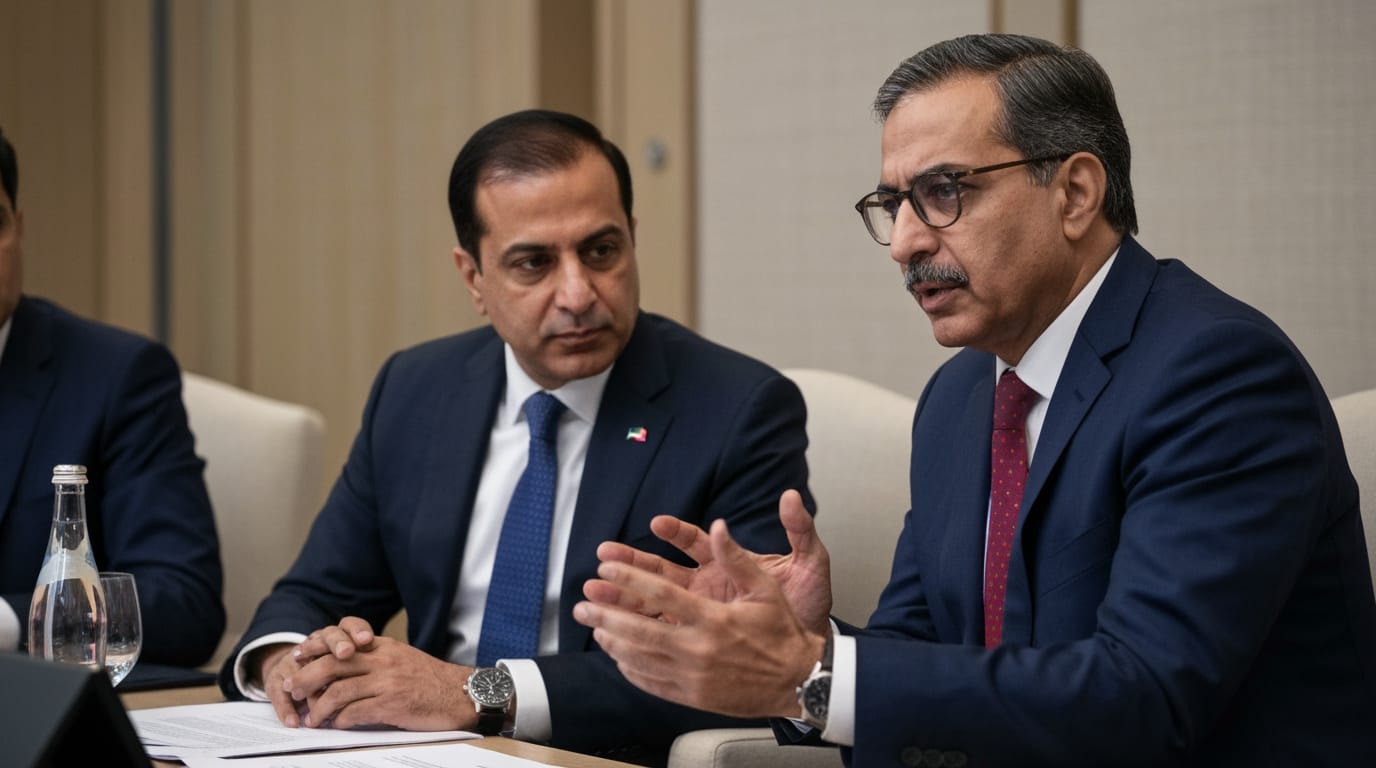
Islamabad, Pakistan – In a period of heightened geopolitical tension between the United States and Iran, Pakistan has recently emerged as an unexpected, yet pivotal, intermediary, striving to de-escalate a conflict that has threatened to engulf the wider Middle East. Islamabad's proactive diplomatic push, characterized by high-level engagements and the hosting of critical talks, underscores its ambition to play a significant role in regional stability, even as deep-seated distrust and complex demands continue to challenge prospects for lasting peace.
Pakistan's foray into this high-stakes mediation follows a period of intense hostilities between Washington and Tehran, which escalated in late February. The ensuing conflict, marked by military actions and economic disruption, prompted a global call for de-escalation, creating an opening for a nation with established, albeit complex, ties to both adversaries. Pakistani officials, including Prime Minister Shehbaz Sharif and Army Chief Field Marshal Asim Munir, quickly leveraged their relationships to facilitate communication, leading to an initial, albeit fragile, two-week ceasefire. This diplomatic gambit, while securing a temporary halt in hostilities, has since encountered significant hurdles, revealing the intricate web of interests and historical grievances that define the US-Iran dynamic.
Islamabad's Strategic Imperative for Peacemaking
Pakistan's decision to actively mediate stems from a confluence of strategic, economic, and domestic factors. Geographically positioned between the Middle East and South Asia, a prolonged conflict between the US and Iran carries immediate and severe implications for Pakistan's stability. A significant portion of Pakistan's energy imports, primarily crude oil from Saudi Arabia and the United Arab Emirates, transits through the Strait of Hormuz, a critical chokepoint whose disruption would severely impact Pakistan's already fragile economy. Preventing wider regional instability is, therefore, a paramount concern for Islamabad.
Furthermore, Pakistan shares a nearly 900-kilometer border with Iran and is home to the world's second-largest Shia Muslim population. An escalation of sectarian tensions, or indeed any spillover from an Iran-US conflict, could directly fuel internal unrest within Pakistan, a nation already contending with domestic security challenges such as the Balochistan insurgency and fluctuating relations with Afghanistan. These internal pressures provide a strong domestic impetus for Pakistan to advocate for peace. Islamabad also recognizes an opportunity to elevate its diplomatic standing on the global stage, leveraging its historical ties with both Washington and Tehran to project itself as a credible and necessary interlocutor. This is not entirely new territory for Pakistan, which historically served as a secret backchannel between the United States and China in the 1970s.
Diplomacy in Action: From Ceasefire to Stalled Talks
The genesis of Pakistan's recent mediation efforts saw a flurry of diplomatic activity. Prime Minister Shehbaz Sharif and Army Chief Field Marshal Asim Munir engaged in extensive discussions with US President Donald Trump and Iranian officials. President Trump publicly acknowledged Pakistan's role, particularly praising Field Marshal Munir, whom he referred to as "my favorite field marshal," for his involvement in mediating a previous ceasefire between Pakistan and India. These personal connections proved instrumental in establishing a line of communication.
The culmination of these early efforts was the announcement of a two-week ceasefire on April 8th, a significant relief for a world on edge. Following this, Islamabad formally offered to host direct talks between the US and Iranian delegations. The Pakistani capital became the venue for these anticipated negotiations on April 11-12, attracting global attention as a potential turning point in the conflict. During these discussions, Pakistan played a crucial role in conveying a 15-point proposal from the US to Iran, which reportedly included demands regarding Iran's nuclear program, ballistic missile limitations, and the reopening of the Strait of Hormuz.
Navigating Deep Divisions and Unmet Expectations
Despite the initial breakthrough of a ceasefire and the hosting of direct talks, the path to a comprehensive resolution proved exceptionally challenging. The negotiations in Islamabad, which lasted nearly 21 hours, ultimately concluded without a significant agreement. Deep-seated strategic divides and a profound lack of trust between Washington and Tehran emerged as insurmountable obstacles.
The US delegation, led by Vice President JD Vance, underscored Washington's "red lines," particularly concerning Iran's nuclear program and the unimpeded navigation of the Strait of Hormuz. Iran, in turn, expressed skepticism about US assurances, citing past experiences with sanctions, military escalations, and the collapse of previous agreements as reasons for their caution. Tehran reportedly sought not only negotiations on the Strait of Hormuz but also asserted greater control, including the right to collect transit fees, a position deemed unacceptable by the United States.
This failure to bridge core differences led to mutual recriminations, with both sides attributing the stalemate to the other. Iranian media, including the semi-official Tasnim news agency, pointed to disagreements over the nuclear program and the Strait of Hormuz as principal reasons for the collapse. The outcome left many questioning the effectiveness and credibility of the mediation, particularly as Iran reportedly dismissed certain aspects of the formal mediation talks.
The Road Ahead: Complexities and Continued Efforts
The faltering of the Islamabad talks highlights the inherent difficulties in mediating between adversaries with such entrenched positions and profound distrust. While Pakistan's initial success in securing a ceasefire offered a glimmer of hope, the subsequent inability to achieve a more substantial agreement underscores the complexity of the US-Iran conflict.
Pakistan's diplomatic efforts, though not yielding an immediate comprehensive peace, have positioned it as a key actor in regional crisis management. The country's continued commitment to dialogue, despite the evident obstacles, demonstrates its understanding that a sustained conflict in its neighborhood would have severe repercussions. With the ceasefire having expired and tensions remaining high, Pakistan's role as a potential conduit for future discussions remains relevant. However, the path to a lasting resolution will necessitate significant concessions from both the United States and Iran, a prospect that appears distant given the current diplomatic landscape. The international community continues to watch, hoping that persistent diplomatic engagement, perhaps reinforced by other regional and global players like China, can eventually pave the way for a more stable and peaceful Middle East.