Hungary Ushers In New Era As Orbán's 16-Year Rule Ends In Landslide Defeat
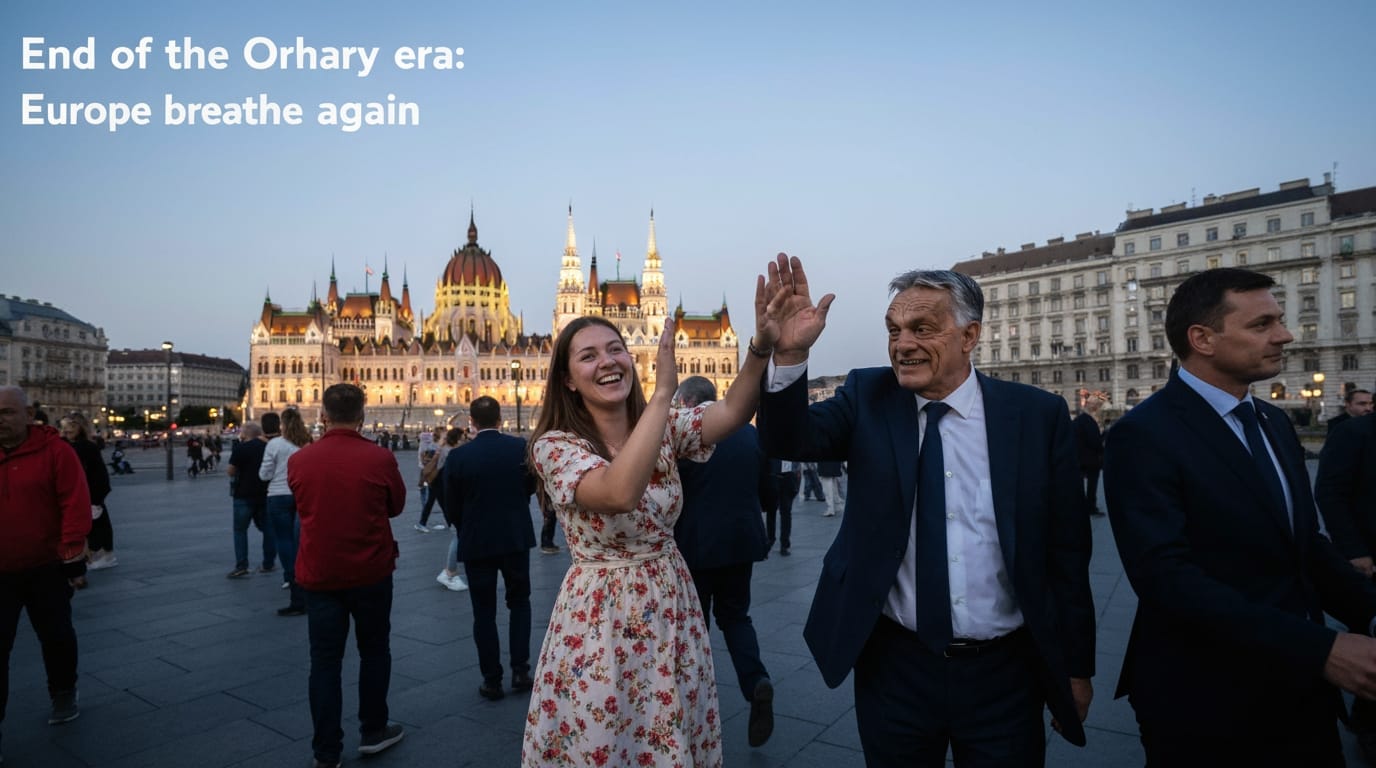
BUDAPEST, Hungary – April 13, 2026 – After 16 years dominating Hungarian politics, Prime Minister Viktor Orbán's tenure has concluded with a decisive parliamentary election defeat on April 12, 2026. The upstart Tisza (Respect and Freedom) party, led by former Fidesz insider Péter Magyar, secured a two-thirds supermajority, signaling a monumental shift for the Central European nation and reverberating across the European Union. The outcome, driven by record voter turnout, marks a historic turning point, as Hungary now looks to forge a new path toward democratic restoration and closer integration with its European partners.
A Political Earthquake Rocks Hungary
The parliamentary elections held on April 12, 2026, saw an unprecedented political upheaval. Preliminary results, with 97.35% of precincts counted, showed Péter Magyar's Tisza party winning 138 of the 199 seats in parliament, garnering 53.6% of the vote. This represented a stunning defeat for Orbán's Fidesz party, which managed to secure only 55 seats with 37.8% of the vote. In the wake of the clear results, Prime Minister Orbán acknowledged his loss, congratulating Magyar on his victory.
Péter Magyar, a 45-year-old lawyer and former diplomat, emerged as a formidable challenger to Orbán's long-entrenched power structure in early 2024. His rise followed a high-profile pardon scandal involving a child sexual abuse cover-up, which led to the resignation of two senior Fidesz officials, including his ex-wife, then-Justice Minister Judit Varga. Magyar seized the moment, positioning himself as an anti-corruption crusader and advocating for a return to democratic norms and improved relations with the European Union. His campaign resonated deeply with a populace grappling with economic hardships and growing discontent, successfully transforming districts previously considered Fidesz strongholds into battlegrounds. The election witnessed a remarkable turnout exceeding 77%, the highest since Hungary's transition from communism in 1989, underscoring the profound stakes involved for the nation's future.
The Illiberal Era's Sunset and European Implications
Viktor Orbán, Europe's longest-serving leader prior to this election, had governed Hungary since 2010, systematically consolidating power and implementing what he termed an "illiberal democracy." His administration frequently clashed with the European Union over issues pertaining to the rule of law, judicial independence, media freedom, and fundamental rights. The European Parliament had notably declared Hungary an "electoral autocracy" as early as 2022, citing a decline in democratic indicators. These disputes led to the freezing of nearly €20 billion in EU funds, withheld due to rule-of-law concerns and allegations of corruption.
Orbán also forged close ties with figures like former U.S. President Donald Trump and Russian President Vladimir Putin, often disrupting EU foreign policy consensus, particularly regarding support for Ukraine against Russian aggression. His defeat is thus seen by many as a significant "political and moral victory" for the European Union. Péter Magyar's Tisza party campaigned on a distinctly pro-European platform, promising to mend the strained relationship with Brussels. His agenda includes restoring judicial independence, reducing political control over media, and joining the European Public Prosecutor's Office (EPPO) to investigate fraud and the alleged misuse of EU funds. This shift could lead to greater unity within the EU, particularly on critical issues like Ukraine, where Orbán's obstructionism had been a persistent challenge.
Domestic Discontent Fuels Change
The decisive electoral outcome was fueled by deep-seated domestic dissatisfaction with Orbán's administration, particularly concerning economic conditions and governance. Hungarian citizens have been struggling with a soaring cost of living, persistent inflation, and stagnant salaries. Despite government projections of modest GDP growth for 2025 and 2026, and efforts to reduce inflation, the reality on the ground reflected ongoing economic pressures. Elevated budget deficits and a relatively high national debt further contributed to public unease.
Corruption emerged as a central theme of Magyar's campaign. He pledged to dismantle the systems of control and enrichment built under Orbán's long rule, addressing concerns about the channeling of EU funds to politically connected networks. Beyond economic grievances, there was growing public pushback against the government's perceived erosion of democratic freedoms. Independent civil society organizations and media outlets faced increasing pressure, and legislative changes were criticized for restricting fundamental rights. Notably, a government bill in March 2025 that banned Pride parades and other assemblies deemed to violate child protection laws sparked significant public outcry. The subsequent Budapest Pride in June 2025 drew between 100,000 and 200,000 participants, transforming into one of the largest anti-government demonstrations in years and signaling widespread dissatisfaction with the ruling party's policies.
The Path Ahead: Challenges and Opportunities
Péter Magyar's victory, particularly his party's two-thirds supermajority, grants the Tisza party significant power to implement sweeping reforms. Among his key promises are constitutional amendments, including introducing term limits for prime ministers, a measure he has stated would apply retrospectively to Orbán. He also plans to overhaul the electoral system, which critics argued was designed to favor Fidesz, and restore independence to public media. A primary objective is to unlock the frozen EU funds by addressing the rule of law concerns that led to their suspension. Joining the EPPO is a crucial step in demonstrating commitment to combating corruption and restoring accountability.
However, the path ahead is not without its challenges. Rebuilding democratic institutions and reversing years of systematic changes will be a complex and lengthy process. While Magyar's platform is pro-EU, some of his stated positions on certain policy issues may still align with elements of Orbán's approach. Furthermore, despite the clear electoral mandate, Hungary's political landscape remains deeply polarized, and the entrenched influence of Fidesz loyalists within various state institutions could pose ongoing hurdles to reform. The international ramifications are also significant; Orbán's defeat represents a setback for the global populist far-right movement, which had viewed Hungary as a model and actively supported his re-election.
Conclusion
The April 12, 2026 election marks an undeniable inflection point in Hungarian history, ending Viktor Orbán's 16-year dominance and ushering in an era of renewed hope for democratic change. The landslide victory of Péter Magyar's Tisza party, propelled by public yearning for an end to corruption, economic improvement, and a re-engagement with Europe, signifies a profound rejection of the previous illiberal model. As the new government prepares to take office, the immediate task will be to navigate the intricate process of institutional reform, restore the rule of law, and unlock vital European Union funding. While challenges abound, Hungary stands at the precipice of a new chapter, with the potential to rebuild trust, strengthen its democratic foundations, and reaffirm its place within the European community.


