Budapest Celebrates Landmark Pride March in Post-Orbán Era
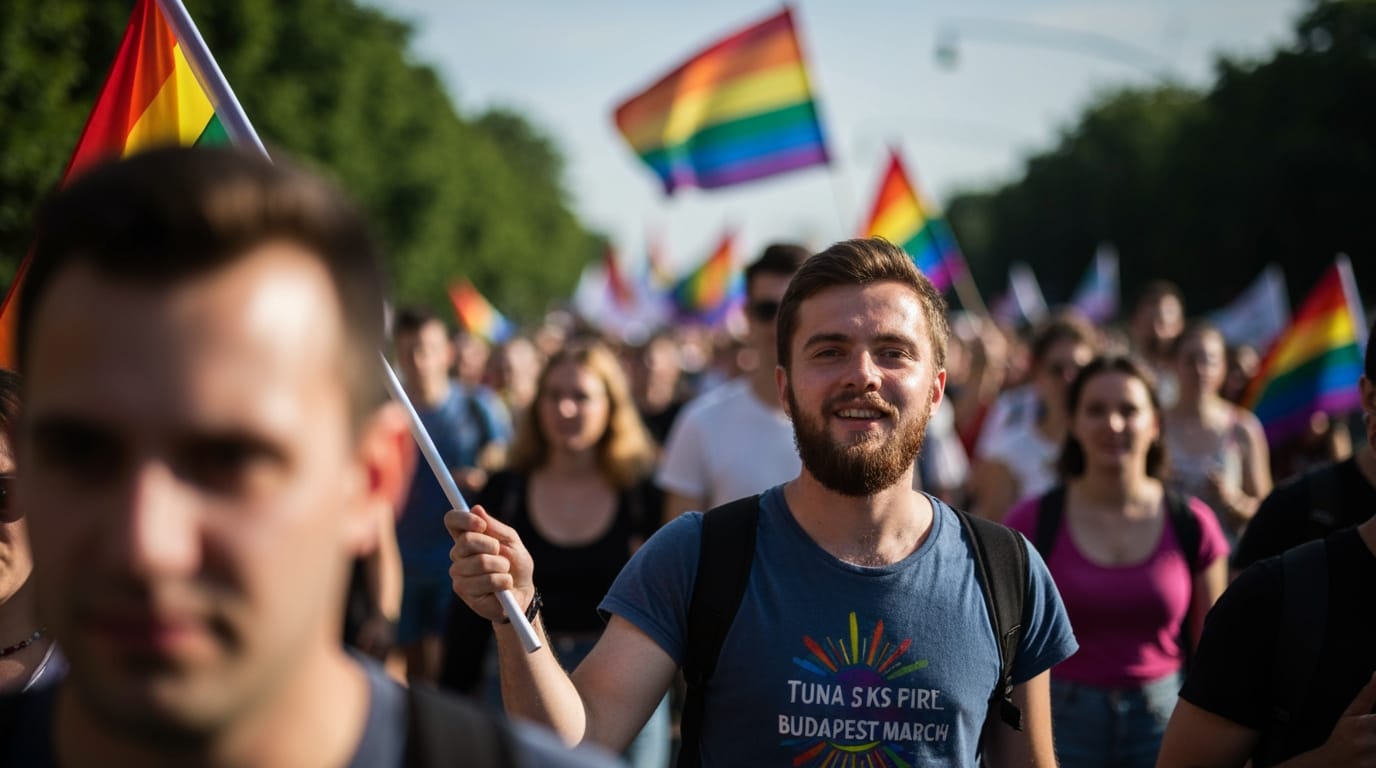
BUDAPEST, Hungary – Tens of thousands of jubilant participants surged through the streets of Budapest on Saturday, June 27, 2026, in the 31st annual Budapest Pride march, marking a pivotal moment as the first such event since the ousting of long-serving Prime Minister Viktor Orbán. Braving soaring temperatures that reached at least 38 degrees Celsius (100 degrees Fahrenheit), attendees waved rainbow flags and European Union banners, celebrating a newfound sense of optimism and freedom after years of restrictive anti-LGBTQ+ policies. The march served as both a vibrant celebration of diversity and a powerful statement of renewed hope for equality in Hungary's evolving political landscape.
A New Chapter for Hungarian LGBTQ+ Rights
The atmosphere at this year's Budapest Pride was distinctly different from previous years, described by participants as significantly more relaxed and uplifted. The march commenced from the iconic Opera House, winding through the city center before crossing the historic Erzsébet Bridge over the Danube River, a route symbolizing a bridge toward a more inclusive future. Organizers, mindful of the record-breaking heatwave gripping Europe, distributed water bottles, and city fountains were opened along the route, underscoring a commitment to public safety that contrasted sharply with past governmental opposition. For many, including young participants and older attendees observed by organizers, the palpable shift in mood reflected the profound political change that swept Hungary in April.
The significance of this year's event is inextricably linked to the recent political upheaval. In an April 2026 election, Viktor Orbán's 16-year tenure as prime minister came to an end, with Péter Magyar and his center-right Tisza party securing a decisive victory. This marked a dramatic departure from an era characterized by democratic backsliding and a concerted effort to curtail LGBTQ+ rights. While the new government has not yet moved to repeal the Orbán-era legislation targeting the LGBTQ+ community, the authorization of this year's Pride march by police and the provision of security along its route were seen as clear signals of a shifting approach. This policy change was a marked contrast to the previous year, when Orbán's government had sought to outright ban the event.
The Lingering Shadow of Orbán's Legacy
For 16 years, Viktor Orbán's administration systematically implemented policies that significantly eroded the rights and visibility of Hungary's LGBTQ+ community. Casting himself as a defender of "Christian values" against what he termed "Western liberalism," Orbán's government passed a series of laws that drew widespread condemnation from human rights organizations and the European Union. Key among these was a 2020 bill that effectively ended legal recognition of gender identity, making gender change in personal documents de facto impossible. The same year, same-sex couples were constitutionally banned from adoption.
Further legislative measures included a 2021 "child protection" law prohibiting the distribution of content promoting homosexuality or gender transition to minors, which critics argued was a thinly veiled attempt to stigmatize and silence the LGBTQ+ community. By 2025, Orbán's government had escalated its efforts, enacting a law that effectively banned public assemblies, including Pride parades, if they were deemed to violate the child protection law. This legislative assault culminated in an amendment to the Fundamental Law, codifying gender as a male-female binary. These actions led to Hungary being described as a country that had imported Russia's anti-LGBT propaganda law into the European Union.
Despite these legislative hurdles and the government's attempts to ban the event, Budapest Pride continued to be held, often serving as a powerful act of defiance and a mass anti-government demonstration. The 2025 Pride march, held in open defiance of government bans, was reportedly the largest in Hungary's history, with organizers estimating an attendance of over 350,000 people. This massive turnout was widely interpreted as a significant blow to Orbán's prestige and a clear indication of public sentiment. Budapest's liberal mayor was even charged for organizing the banned 2025 event, highlighting the fraught political climate under the previous administration.
Hungary at a Crossroads: Hopes and Challenges Ahead
The electoral defeat of Viktor Orbán and the rise of Péter Magyar's Tisza party have ignited cautious optimism within Hungary and among international observers. Magyar, while positioning himself as a conservative, has expressed support for freedom of assembly and articulated a vision of Hungary "where no one is stigmatised for loving someone differently than the majority." However, he has also called for patience regarding the potential amendment or repeal of existing legislation that curtailed LGBTQ+ rights, suggesting that any significant policy shifts will require careful navigation.
The new government faces the formidable task of dismantling a system built over 16 years, characterized by a concentration of power, a lack of media independence, and an erosion of democratic institutions. The restoration of liberal democracy and the rule of law are paramount, and the approach to LGBTQ+ rights will be a key indicator of this broader commitment. Participants in the recent Pride march voiced hopes for future equal rights related to adoption and marriage, as well as a more general sense of safety and acceptance in daily life. The authorization of the 2026 Pride march is a positive first step, signaling a potential shift towards greater respect for fundamental freedoms.
A Resilient Community Looks to the Future
The 31st Budapest Pride march represents more than just an annual parade; it is a powerful symbol of resilience, change, and enduring activism. From its origins as a "Pink Picnic" in 1992 and its first official march in 1997, Budapest Pride has consistently evolved, growing from a modest gathering to a major public demonstration that now attracts tens of thousands. Despite facing counter-protests and state-sanctioned hostility in earlier years, the event has consistently served as a vital platform for the LGBTQ+ community to assert its rights and demand recognition.
The energy and turnout at this year's march underscore the community's determination to continue the fight for full equality. While the political landscape has undeniably shifted, and a sense of relief pervades, activists acknowledge that the work to reverse the trauma inflicted by previous policies and secure comprehensive rights is far from over. The first post-Orbán Budapest Pride serves as a beacon of renewed hope, yet it also stands as a reminder that the journey towards a truly inclusive and equitable Hungary requires sustained effort and vigilance from both its citizens and its new leadership.


