Bulgarian Youth Roars: Gen Z Leads Unprecedented Protests Against Corruption and Stagnation
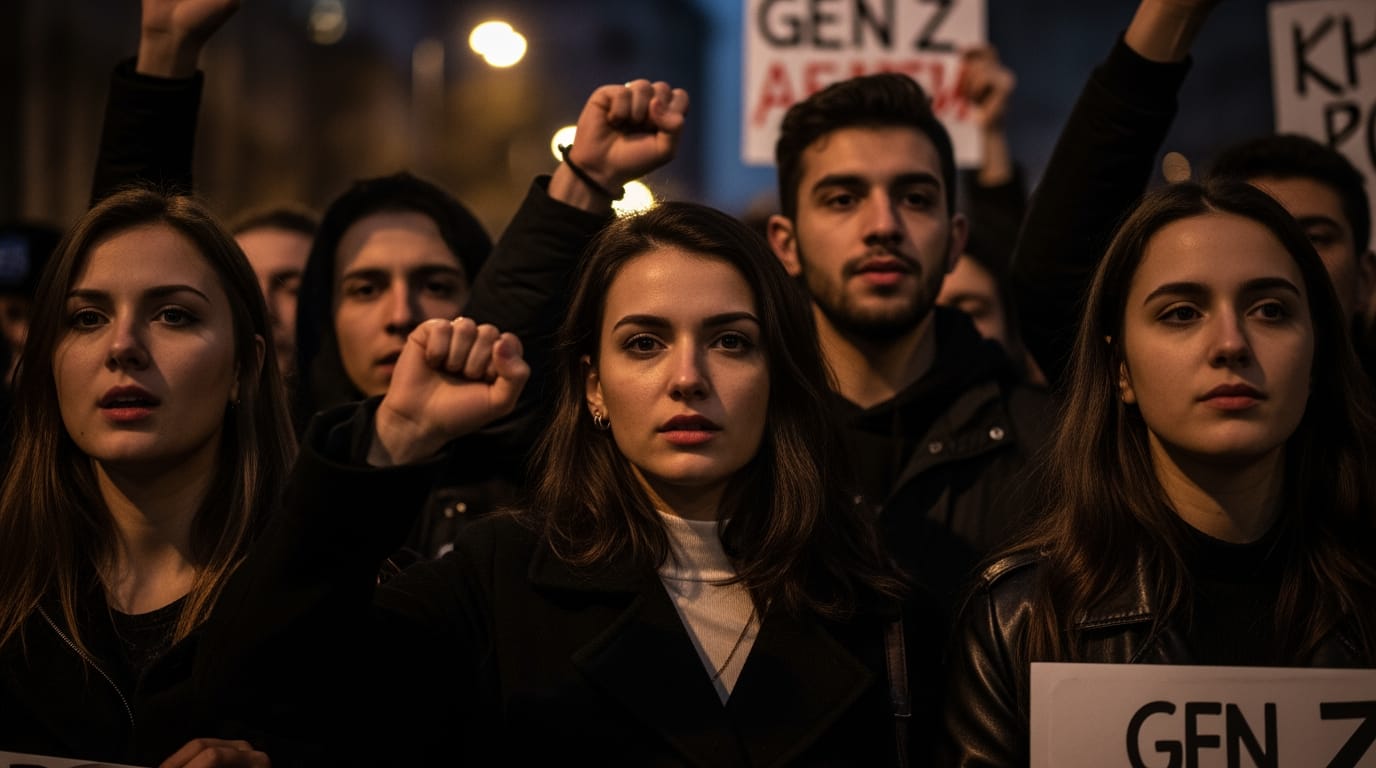
Sofia, Bulgaria – A wave of fervent dissent, largely spearheaded by a vocal Generation Z, has engulfed Bulgaria, pushing the nation into a renewed period of political reckoning. What began in late November 2025 as outrage over a controversial draft budget quickly escalated into the largest anti-government demonstrations since the 1990s, with tens of thousands taking to the streets to demand an end to endemic corruption and a profound overhaul of the political system. Young Bulgarians, armed with social media and an unwavering resolve, have proclaimed, "Gen Z won't stay silent!" as they challenge decades of perceived state capture and political instability.
The Spark: A Budget Ignites Years of Frustration
The immediate catalyst for the widespread protests, which began around November 26, 2025, was the government's proposed 2026 draft budget. This budget, notably Bulgaria's first to be drafted in euros in anticipation of the country's planned entry into the eurozone on January 1, 2026, sparked outrage for its perceived injustices. Critics argued the budget significantly increased salaries for state employees, including the Interior Ministry, military, and judiciary, while simultaneously burdening the private sector with higher social security contributions and a doubled dividend tax. This allocation fueled public anger, with many feeling the public sector would be rewarded at the expense of ordinary workers and small businesses.
Beyond the immediate budgetary concerns, a significant undercurrent of anxiety surrounded Bulgaria's imminent adoption of the euro. Approximately half of Bulgarians reportedly opposed euro adoption, fearing it would lead to increased inflation and a loss of monetary sovereignty. These financial grievances, however, merely served as a flashpoint for deep-seated frustrations that have simmered for years, pointing to a broader malaise concerning governance and public trust.
Generation Z: The Unsilent Force
What set these protests apart was the unprecedented and highly visible role of Generation Z. Born roughly between 1997 and 2012, this demographic cohort has come of age witnessing a political landscape dominated by the same figures and fraught with persistent corruption. Approximately 600,000-700,000 new voters have emerged since Bulgaria's last major protests in 2013, representing a substantial shift in the electoral landscape. This generation, which has only known the post-2009 era characterized by the dominance of the GERB party, oligarchic consolidation, and a staggering seven elections since 2021 alone, views the current system as a profound failure.
Young Bulgarians actively leveraged social media platforms like TikTok and Instagram to organize, disseminate information, and amplify their message. Their placards carried defiant and poignant messages such as "Gen Z is coming for U," "Give us a reason to stay," and "Young Bulgaria Without the Mafia." For these young protesters, the choice is stark: either fight for transformative change or emigrate, seeking opportunities that Bulgaria's current system often fails to provide. Their involvement signifies a generational awakening, channeling decades of accumulated frustration with Bulgaria's political establishment and demanding a renewed, corruption-free future for their homeland.
A Nation's Cry Against State Capture
While the budget was the initial spark, the protests rapidly evolved into a comprehensive rejection of what many Bulgarians describe as a "captured state." The core demands quickly coalesced around the resignation of the government and the calling of early elections, along with broader calls for accountability and an end to corrupt political alliances.
Prominent figures like Delyan Peevski, leader of the DPS-New Beginning party, and former Prime Minister Boyko Borissov became central targets of the protesters' anger. Peevski, sanctioned for corruption by both the United States and the United Kingdom under the Magnitsky Act, is widely perceived as the embodiment of oligarchic control, wielding significant influence despite not holding a formal government position. Protesters viewed both Peevski and Borissov as symbols of the systemic corruption and impunity that have plagued Bulgarian politics for decades. The widespread demonstrations, which drew between 50,000 and 100,000 people in Sofia alone, with tens of thousands more protesting in cities like Plovdiv, Varna, Burgas, and Ruse, demonstrated a collective desire for fundamental change, transcending the immediate budgetary concerns.
Government Concessions and Lingering Instability
In response to the overwhelming public pressure, the government, led by Prime Minister Rosen Zhelyazkov, initially promised to withdraw the controversial 2026 budget. After a brief reversal, the government ultimately scrapped the planned tax hikes and withdrew the budget following the massive demonstrations. Prime Minister Zhelyazkov acknowledged the significance of the youth's involvement, stating that "This is a visible protest of young people, young people who are looking for their place in the future of Bulgaria, which we are obliged to hear."
Despite this concession, the protesters maintained their demand for the government's resignation, signaling that the withdrawal of the budget was merely a first step and that deeper structural changes were necessary. Bulgaria has been in a state of political crisis, enduring seven parliamentary elections since 2020, a testament to the persistent instability and difficulty in forming stable governing coalitions amidst allegations of corruption. This ongoing political volatility highlights the profound challenges facing the nation as it grapples with its future trajectory.
A Defining Moment for Bulgaria's Future
The recent protests in Bulgaria, prominently featuring the energy and determination of Generation Z, mark a potentially pivotal moment in the country's struggle against corruption and for genuine democratic reform. While previous protest waves, such as those in 2013 and 2020-2021, demonstrated resilience, they often led to limited structural change. However, the current mobilization, driven by a generation unwilling to accept the status quo, suggests a heightened urgency. These young Bulgarians face an existential choice: fight for their future within Bulgaria or join the ranks of those who have emigrated in search of better opportunities.
Their sustained commitment, articulated through social media and massive street demonstrations, has forced immediate government concessions and intensified calls for systemic change. The political crisis continues, with the path toward early elections in 2026 now appearing increasingly inevitable. The unwavering voice of Bulgaria's youth underscores a clear message: the time for incremental adjustments is over, and a fundamental shift towards transparency, accountability, and justice is not just desired, but demanded for the future of the nation.


