Sudan's Unfolding Catastrophe: A Nation Grappling with Endless Crisis
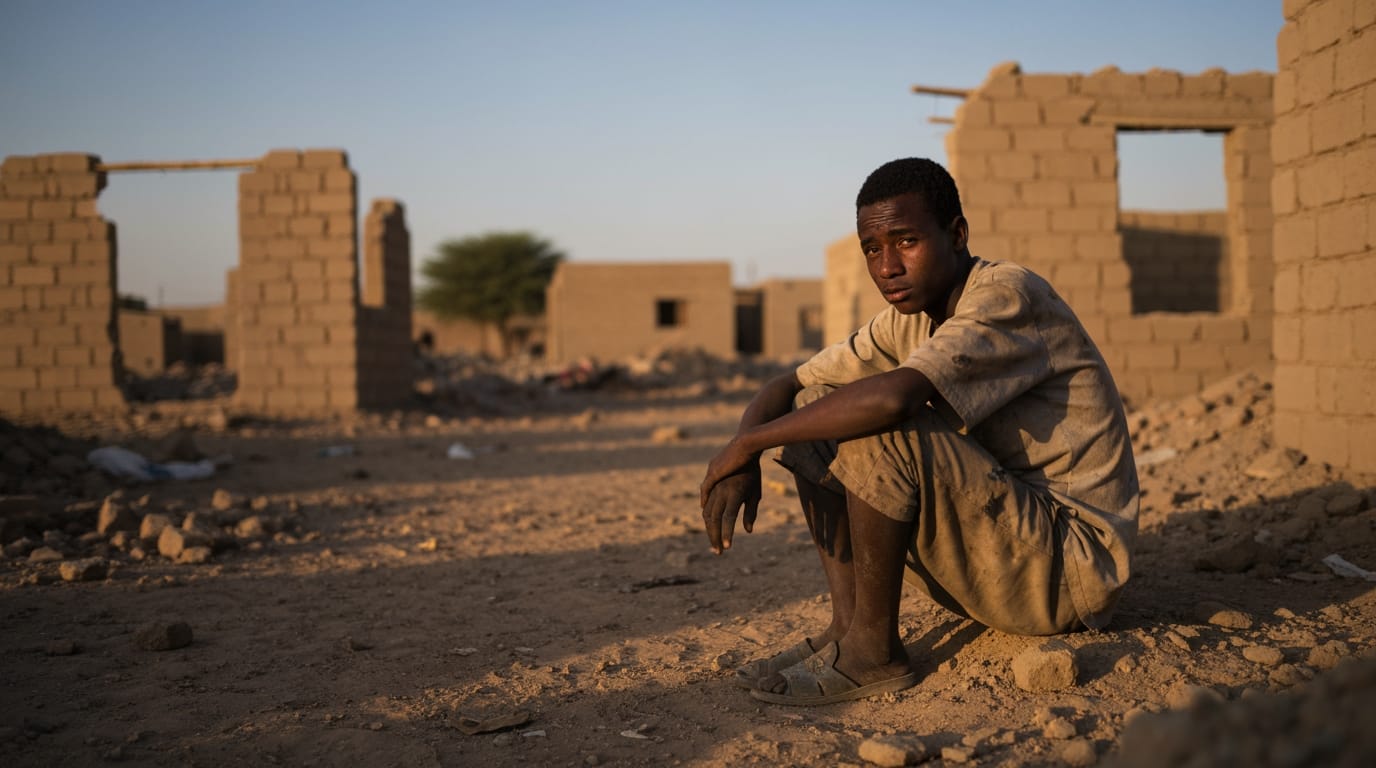
KHARTOUM, Sudan – Nearly three years since its eruption, the civil war in Sudan continues to spiral into an unparalleled humanitarian catastrophe, shattering lives, fueling mass displacement, and pushing millions to the brink of starvation. The relentless conflict between the Sudanese Armed Forces (SAF) and the paramilitary Rapid Support Forces (RSF) has not only decimated the nation's infrastructure but has also created the world's largest displacement crisis and deepest hunger emergency, demanding urgent international intervention amidst persistent diplomatic failures.
The fighting, which began in April 2023, has plunged Sudan, a country already scarred by decades of instability, into a profound and multifaceted crisis. What started as a power struggle has evolved into a brutal conflict characterized by widespread violence, human rights abuses, and a systematic dismantling of essential services. International observers and aid organizations describe a nation on the precipice, where civilians bear the brunt of an escalating war with no immediate end in sight.
Roots of a Relentless Conflict
The current hostilities are deeply rooted in Sudan's complex political history, a nation grappling with recurrent military rule and civil unrest since its independence in 1956. The immediate spark for the current war was a power struggle between SAF leader Gen. Abdel Fattah al-Burhan and RSF commander Gen. Mohamed Hamdan Dagalo, known as Hemedti. This rivalry intensified following the 2021 military coup, which derailed Sudan's fragile transition to civilian rule after the 2019 overthrow of long-time dictator Omar al-Bashir.
The RSF itself emerged from the notorious Janjaweed militias, armed groups responsible for egregious atrocities during the Darfur conflict in the early 2000s. The formal integration of the RSF into the national armed forces in 2017 did little to quell underlying tensions, as both leaders sought to preserve and expand their influence. The current war, therefore, represents a bitter culmination of these historical grievances and power dynamics, with devastating consequences for the Sudanese people.
Militarily, the conflict has seen significant shifts. After initial RSF gains, including control of much of Khartoum, the SAF launched a coordinated offensive in the latter half of 2024 and early 2025, retaking key areas in Khartoum, Omdurman, and Bahri. However, the RSF consolidated its control over Darfur, notably capturing El Fasher, the capital of North Darfur, in October 2025 after an 18-month siege. This has led to the emergence of two rival governments, one backed by the SAF in Port Sudan and the other by the RSF in Nyala, Darfur, raising concerns about potential partitioning of the country.
A Crisis of Displacement and Desperation
The civil war has unleashed an unprecedented wave of displacement, marking Sudan as the world's largest displacement crisis. Over 12 million people have been forced to flee their homes since April 2023. Approximately 9 to 9.5 million people are internally displaced within Sudan, often in precarious conditions with limited access to basic services. Millions more, estimated between 3.5 and 4.2 million, have sought refuge in neighboring countries such as Chad, Ethiopia, South Sudan, and Egypt, overwhelming already strained host communities and humanitarian resources.
The human cost extends beyond mere numbers. Families are torn apart, and individuals face perilous journeys, often enduring violence, sexual exploitation, and severe deprivation. Children are particularly vulnerable, with Sudan experiencing the world's largest child displacement crisis and millions of school-age children having no access to education. Many displaced individuals have experienced multiple relocations, further exacerbating their trauma and making it increasingly challenging for aid organizations to provide consistent support.
Famine Looms as Hunger Crisis Deepens
Simultaneously, Sudan is experiencing the world's largest hunger crisis, with the specter of famine becoming an grim reality for millions. Over 21 to 29 million people, more than half of the population, face severe food insecurity. Famine conditions have been officially confirmed in several areas, including El Fasher, Um Baru, and Kernoi in North Darfur, and Kadugli in South Kordofan. An additional 20 districts across Darfur and Kordofan are at immediate risk of famine.
The conflict has brought agricultural production to a near standstill, disrupted crucial supply chains, and driven up prices, making basic foodstuffs unaffordable for many. Both the SAF and RSF have been accused of actively obstructing aid delivery, using starvation as a tactic of war by imposing sieges and denying travel permits for humanitarian agencies. This deliberate hindrance of aid, combined with a severe lack of funding for humanitarian operations, leaves millions without access to life-saving food assistance. The consequences are dire, with approximately 4 million children acutely malnourished, and nearly 800,000 at imminent risk of death.
Collapse of Healthcare and Soaring Morbidity
The nation's healthcare system, already fragile before the conflict, has been devastated to the point of collapse. More than 70% of hospitals in conflict-affected areas are non-functional, largely due to direct attacks, looting, or military occupation. Over 622 attacks on healthcare facilities have been documented by June 2025, with scores of health workers killed or injured. The systematic destruction has left millions without access to essential medical services, even as disease outbreaks surge.
Widespread shortages of medical supplies, equipment, and personnel exacerbate the crisis. Preventable diseases like cholera, malaria, dengue fever, measles, and polio are rapidly spreading across all 18 states, overwhelming the few remaining operational health facilities. The long-term implications are profound, as the damage to Sudan's health infrastructure and the loss of trained personnel are expected to impact the country for decades.
International Response Falls Short
Despite the catastrophic scale of the crisis, the international response has been widely criticized as inadequate and underfunded. United Nations agencies and humanitarian partners have repeatedly appealed for greater support, with billions of dollars needed to address the escalating needs. However, funding remains critically short, forcing aid organizations to scale back vital programs at a time when they are most needed.
Diplomatic efforts to broker a lasting peace have largely failed, with both warring parties showing little incentive to halt the violence. Regional and international actors have been accused of taking sides, further complicating mediation attempts. The international community's focus has often been diverted by other global crises, leaving Sudan's suffering largely overlooked and neglected. Without a renewed and concerted push for peace, coupled with sustained humanitarian support and guaranteed safe access for aid, the future for Sudan's 51 million people remains bleak.
A Nation's Future Hangs in the Balance
The civil war in Sudan is a tragedy of immense proportions, a conflict that has relentlessly eroded the fabric of society and pushed a proud nation to its knees. The ongoing humanitarian crisis, characterized by unimaginable levels of displacement, food insecurity, and a collapsed healthcare system, represents a profound failure of both national leadership and international responsibility. As the conflict grinds into its third year, the urgent plea from the Sudanese people for an end to the violence and a return to stability echoes louder than ever, a stark reminder that without immediate and decisive action, the long-term consequences of this "never-ending" crisis will continue to destabilize the region and haunt generations to come.


