Caribbean Crossroads: US Seizes Oil Tanker Olina Amid Escalating Sanctions Enforcement Against Venezuela
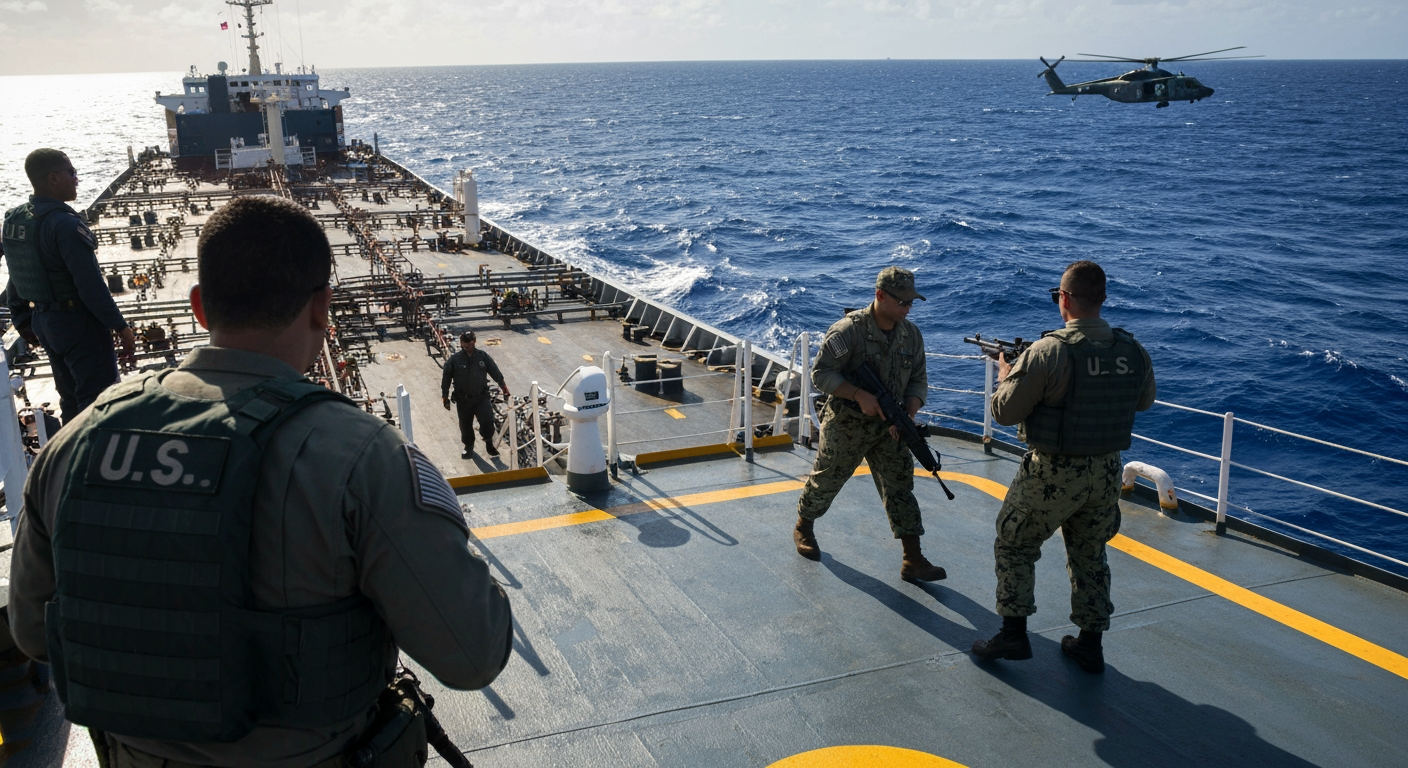
In a significant move underscoring an intensified campaign against illicit oil trade, U.S. forces on Friday seized the Olina, an oil tanker with reported ties to Venezuela, in the Caribbean Sea near Trinidad. The dramatic interdiction marks the fifth such seizure in recent weeks and the third in just two days, signaling Washington's unwavering resolve to enforce sanctions aimed at curbing Venezuelan oil exports and dismantling a burgeoning "shadow fleet" operating outside international regulations. The ongoing operations highlight a deepening confrontation in the vital shipping lanes of the Caribbean, with geopolitical ramifications extending beyond the immediate region.
The Interception of the Olina
The mid-size tanker Olina, a 114,809 deadweight tonnage (dwt) vessel, became the latest target in a series of U.S. maritime operations. According to public shipping databases, the vessel was falsely flying the flag of Timor-Leste, a tactic frequently employed by tankers attempting to obscure their origins and activities. Owned by the Hong Kong-based company Tantye Peur, the Olina had been previously sanctioned by the U.S. in January of last year under its former name, Minerva M, for its alleged involvement in the "shadow fleet" – a network of ships operating with minimal oversight and often without transparent insurance or regulation.
The seizure itself was a coordinated effort involving elements of the U.S. Coast Guard, Navy, Marines, and sailors from the USS Gerald R. Ford aircraft carrier, with support from Joint Task Force Southern Spear and the Department of Homeland Security. U.S. Southern Command confirmed the interdiction, stating that the forces launched a pre-dawn operation to "defend our homeland by ending illicit activity and restoring security in the Western Hemisphere." Maritime security specialists reported that the Olina's Automatic Identification System (AIS) tracker had been inactive for 52 days, with its last known position in the Venezuelan Exclusive Economic Zone, northeast of Curaçao, before it broke away from a U.S. naval blockade. Industry sources indicated the tanker had previously sailed from Venezuela and was returning to the region when it was seized, with one report suggesting it had left Venezuela fully loaded with oil just last week, shortly after the U.S. reportedly "seized" Venezuelan President Nicolás Maduro on January 3.
Escalating Campaign Against Illicit Oil
The seizure of the Olina is not an isolated incident but rather the latest action in Washington's escalating pressure campaign against the Venezuelan oil industry. U.S. officials have openly stated their objective to control Venezuelan oil exports, which serve as a critical revenue source for the government of Nicolás Maduro. The past two days alone have seen the interdiction of three Venezuela-linked tankers. In addition to the Olina, U.S. forces also seized the 2002-built VLCC Marinera (formerly known as Bella 1) and the 2004-built 320,000 dwt tanker M Sophia.
The Marinera presented a particularly challenging pursuit, with U.S. Coast Guard efforts to intercept it beginning as early as December 20 in the Caribbean. The vessel was subsequently tracked across the North Atlantic before its eventual seizure. This sustained effort underscores the significant resources and determination the U.S. is committing to disrupting these shipping operations. The U.S. Southern Command, in a public statement, reiterated the clear message sent by these actions: "there is no safe haven for criminals." The crackdown aims to tighten the naval blockade around Venezuela, making it increasingly difficult for sanctioned oil to reach international markets and for the Maduro government to circumvent sanctions.
Geopolitical Fallout and International Repercussions
The aggressive enforcement of sanctions in the Caribbean has not gone without significant international notice and condemnation, particularly from nations supportive of Venezuela. The seizure of the Marinera, in particular, drew a strong rebuke from Russia. The Russian Foreign Ministry vehemently condemned the U.S. actions, stating that such measures "can only lead to a further escalation of military and political tensions in the Euro-Atlantic region, as well as a visible lowering of the threshold for the use of force against peaceful shipping." Russia reportedly even deployed a submarine and other naval assets to escort the Marinera across the ocean during its prolonged pursuit, highlighting the direct military and diplomatic tensions these seizures can ignite.
The international community watches closely as the U.S. continues to exert pressure, balancing the enforcement of sanctions against concerns over freedom of navigation and potential destabilization in sensitive geopolitical areas. The U.S. maintains that its actions are necessary to combat illicit activities and apply economic pressure on a regime it deems illegitimate, while critics argue such tactics could inflame regional conflicts and violate international maritime law.
The Complex Dynamics of US-Venezuela Relations
The recent tanker seizures occur within the turbulent and often contradictory landscape of US-Venezuela relations. For years, the U.S. has imposed a raft of sanctions targeting Venezuela's state-owned oil company, PDVSA, and individuals associated with the Maduro government, citing widespread corruption, human rights abuses, and democratic backsliding. The objective has consistently been to deprive the Maduro regime of financial resources and pressure for a democratic transition.
Adding another layer of complexity to the current situation are recent remarks from U.S. President Donald Trump, who claimed he had canceled a second wave of attacks on Venezuela. These comments reportedly came after cooperation from the South American nation, including the alleged release of a significant number of political prisoners. President Trump described this as a "very important and smart gesture" indicating a willingness by Venezuela to seek peace. However, the aggressive enforcement against oil tankers, particularly the Olina's alleged movement of oil even after the reported "seizure" of Maduro, suggests that while diplomatic channels may be active, the U.S. administration is simultaneously pursuing a robust strategy of economic coercion and physical interdiction at sea. The contrasting narratives underscore the multifaceted and often unpredictable nature of the relationship, where diplomatic overtures can coincide with assertive military and economic actions.
Conclusion
The seizure of the oil tanker Olina in the Caribbean represents a definitive statement of intent from the United States to intensify its enforcement of sanctions against Venezuela's oil sector. As the fifth such interdiction in recent weeks, and part of a broader crackdown on a global "shadow fleet," these actions signal a deliberate strategy to choke off revenue streams to the Maduro government. While the U.S. frames these operations as essential for homeland security and combating illicit activity, they simultaneously escalate geopolitical tensions, drawing condemnation from allies of Venezuela such as Russia. The coming weeks will likely see continued scrutiny of these maritime operations and their implications for international shipping, regional stability, and the ever-complex future of U.S.-Venezuela relations, as Washington continues its assertive stance in the critical waters of the Caribbean.
Related Articles

Ratko Mladić, "Butcher of Bosnia" and Convicted War Criminal, Dies at 84
THE HAGUE, Netherlands – Ratko Mladić, the former Bosnian Serb military commander known as the "Butcher of Bosnia" and convicted of genocide, war crimes, and crimes against humanity, has died at the age of 84. Serbian...


Long-Awaited 9/11 Mastermind Trial Set for 2028, Decades After Attacks
GUANTANAMO BAY, Cuba – Nearly a quarter-century after the devastating terror attacks of September 11, 2001, a military judge has finally set a trial date for Khalid Sheikh Mohammed, the alleged mastermind behind the...