Catastrophic Landslide at Illegal Gold Mine Claims Over 100 Lives in Central African Republic

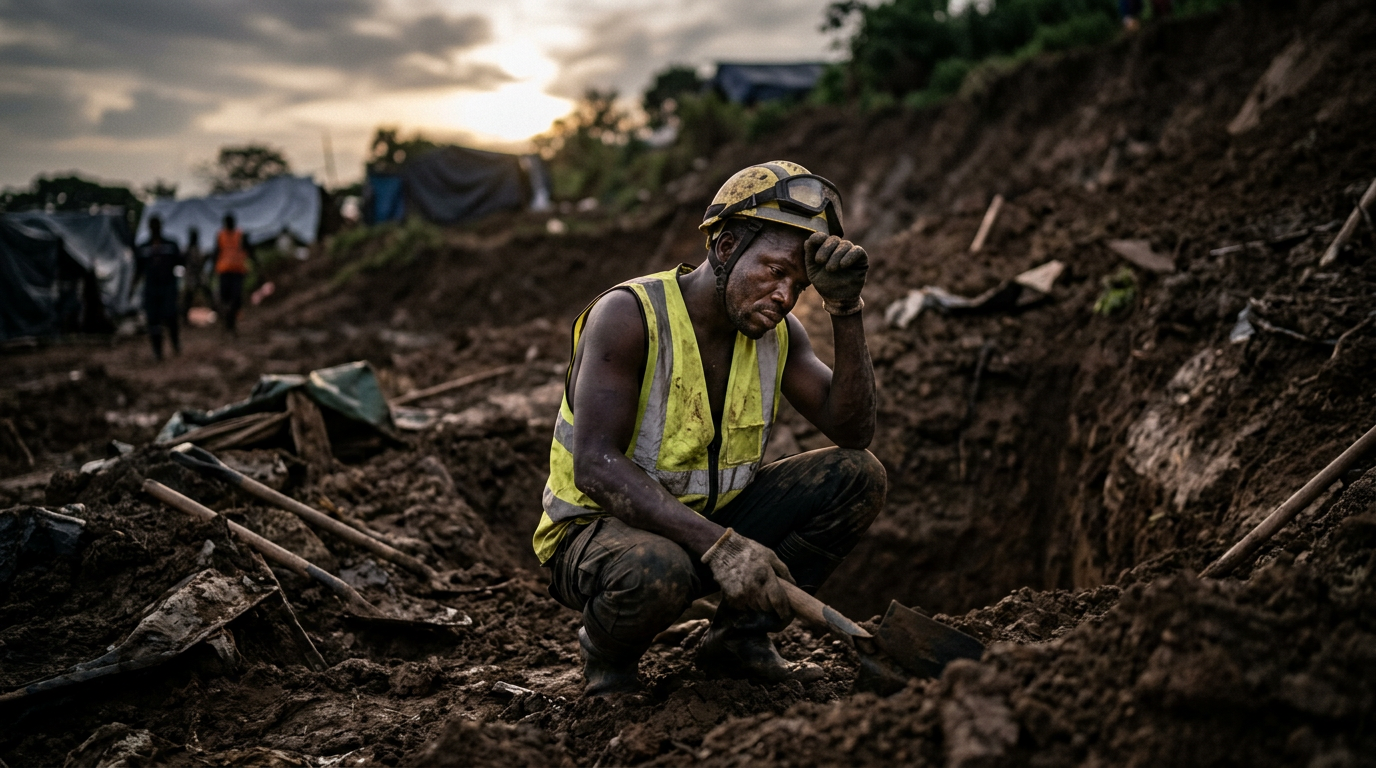
BOUAR, Central African Republic – A devastating landslide at an illegal gold mining site in the western Central African Republic, near the border with Cameroon, has killed at least 100 people. The tragedy, which occurred on Tuesday afternoon, August 18, 2026, has once again cast a stark light on the perilous conditions faced by thousands engaged in unregulated artisanal mining in the mineral-rich nation. Rescue operations remain underway, with officials struggling to ascertain a definitive casualty count amidst the ongoing search for those still buried under the rubble.
The Catastrophe at Zamboye: A Race Against Time
The disaster struck the Zamboye mining site, located approximately 50 kilometers (31 miles) from the town of Baboua in the Nana-Mambere prefecture. Witnesses described a horrific scene as a section of the ground at the vast open-pit site, where hundreds of artisanal miners were working, gave way. The landslide is primarily attributed to the collapse of several underground tunnels used by miners, with some reports also suggesting heavy rains as a contributing factor. The sheer scale of the collapse and the primitive conditions of the mining operation made immediate rescue efforts exceptionally challenging.
Local sources and officials initially reported varying death tolls, with some indicating at least 30 fatalities on Tuesday evening. However, by Wednesday, August 19, multiple reports from news agencies and local mining associations escalated the estimated death toll to over 100, with some sources citing as many as 107 victims. The fluidity of the situation, coupled with the lack of official oversight at illegal sites, has made it difficult for authorities to provide a precise number. Laurent Ngon Baba, an elected official in Baboua, stated the challenge in establishing a formal toll.
Survivors, many of whom sustained injuries, were transported to hospitals in Baboua for treatment. Among the confirmed deceased, at least four were identified as Cameroonian, underscoring the cross-border nature of artisanal mining activities in the region. Emergency teams and local residents continued their arduous search through the debris for potential survivors, though hopes diminished with each passing hour. The government spokesman, Evariste Ngamana, extended sympathies to the affected families and stated that authorities are actively working to provide relief and assistance. A judicial inquiry into the incident has been initiated by the Baboua public prosecutor.
The Perilous Lure of Artisanal Gold Mining
The tragedy at Zamboye is a grim reminder of the inherent dangers associated with artisanal and small-scale gold mining, an activity that, while providing a livelihood for thousands, often operates in a regulatory vacuum in the Central African Republic. These informal mines frequently lack basic safety protocols, proper engineering, or environmental safeguards, making them highly susceptible to collapses, especially during periods of unstable ground or heavy rainfall.
The Central African Republic possesses significant gold and diamond reserves, making mineral extraction a crucial, albeit often illicit, economic activity. For many in impoverished rural areas, artisanal mining represents one of the few available avenues for income, pushing individuals to undertake extreme risks for meager returns. This economic pressure fuels a sector largely operating outside government control, creating an environment ripe for exploitation and environmental degradation. Reports indicate that a significant portion, as high as 97.5 percent, of the country's gold output is not legitimately documented and is illegally exported, often benefiting criminal networks and armed groups. These illicit operations exacerbate instability, contribute to environmental damage including deforestation and pollution, and pose severe health risks to the miners and surrounding communities.
A Cycle of Tragedy and Systemic Challenges
The incident at Zamboye is far from an isolated event. Landslides and mine collapses are distressingly common occurrences in the Central African Republic's informal mining sector, signaling a recurring pattern of preventable deaths. The past year alone has seen multiple similar catastrophes. In June, dozens of miners perished in a collapse at the Be-Mbari gold mining site, also situated near the Cameroon border. Prior to that, seven lives were lost in a mine landslide in Ngourroum in mid-March, and another 20 individuals died in February in Gordi. These incidents collectively highlight the systemic failures in regulating the sector and protecting its workers.
The proliferation of illegal mining sites is deeply intertwined with the country's broader challenges, including ongoing instability and the presence of armed groups who often control these lucrative operations, engaging in forced labor. This illicit economy not only leads to catastrophic loss of life but also diverts potential state revenue, hindering national development and perpetuating a cycle of poverty and vulnerability for those who turn to mining out of desperation. Without comprehensive regulation and alternative economic opportunities, the human and environmental toll of illegal mining is expected to continue.
Urgent Calls for Sustainable Solutions
The tragic loss of life at the Zamboye gold mine underscores the urgent need for robust interventions in the Central African Republic's artisanal mining sector. While rescue efforts continue, the long-term focus must shift toward preventing such disasters. This necessitates a multi-faceted approach involving the establishment and enforcement of stringent safety regulations, coupled with increased government oversight of mining activities.
Beyond regulation, there is a critical need to address the underlying economic drivers that push individuals into dangerous, unregulated mining. Developing sustainable alternative livelihoods and formalizing aspects of the artisanal mining sector could provide safer working conditions and ensure that mineral wealth benefits the nation and its citizens, rather than fueling illicit trade and armed conflict. International organizations and humanitarian bodies have repeatedly called for stronger protections for artisanal miners, who often operate under precarious and exploitative circumstances. Without concerted efforts to implement these changes, the Central African Republic risks witnessing further tragedies, with its human capital and natural resources continuously eroded by the uncontrolled pursuit of gold.
Related Articles

Ratko Mladić, "Butcher of Bosnia" and Convicted War Criminal, Dies at 84
THE HAGUE, Netherlands – Ratko Mladić, the former Bosnian Serb military commander known as the "Butcher of Bosnia" and convicted of genocide, war crimes, and crimes against humanity, has died at the age of 84. Serbian...


Long-Awaited 9/11 Mastermind Trial Set for 2028, Decades After Attacks
GUANTANAMO BAY, Cuba – Nearly a quarter-century after the devastating terror attacks of September 11, 2001, a military judge has finally set a trial date for Khalid Sheikh Mohammed, the alleged mastermind behind the...