Central African Republic's Touadéra Secures Contentious Third Term Amidst Constitutional Overhaul
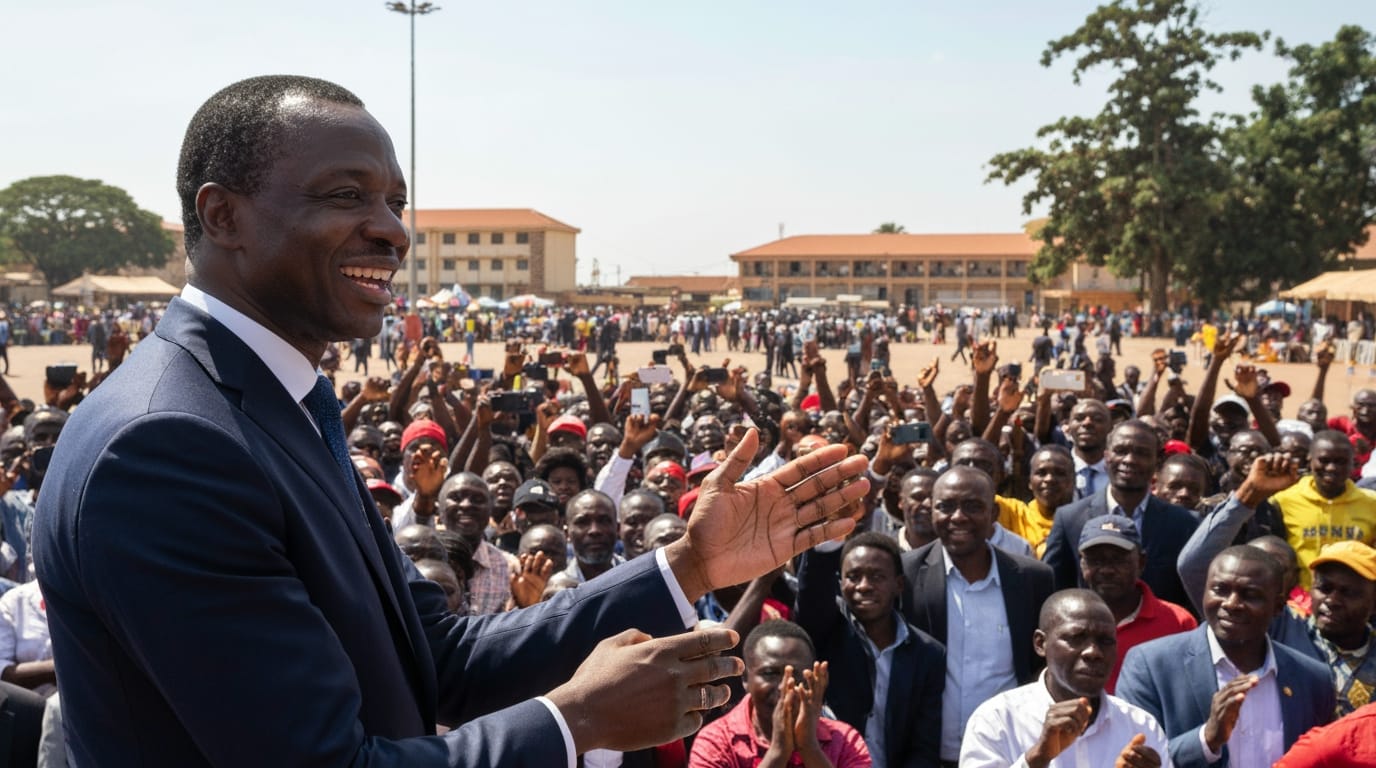
BANGUI, Central African Republic – President Faustin-Archange Touadéra of the Central African Republic (CAR) has secured a third term in office following presidential elections held on December 28, 2025. The victory, which provisional results announced on January 5, 2026, place at 76.15% of the vote, follows a controversial 2023 constitutional referendum that abolished presidential term limits and extended the presidential mandate from five to seven years. This outcome ignites fresh debate over democratic principles in a nation grappling with persistent instability and significant foreign influence.
Touadéra's successful bid for an extended stay in power marks a pivotal moment for the CAR, a country long plagued by internal conflict, weak governance, and humanitarian crises. While his administration champions the narrative of restoring stability, critics, including a boycotting opposition and human rights organizations, decry the constitutional changes and the subsequent election as a move toward authoritarianism, undermining the fragile democratic gains the country has struggled to achieve. The election's backdrop of a revamped legal framework and the continued presence of foreign military support paints a complex picture of a nation striving for peace yet seemingly compromising on core democratic tenets.
The Constitutional Path to Extended Rule
The groundwork for President Touadéra's third term was meticulously laid in 2023, culminating in a highly contentious constitutional referendum. On May 30, 2023, Touadéra announced his intention to hold a referendum to change the constitution and remove term limits, a move his allies argued was common in many neighboring countries. The proposed amendments aimed to reset the clock on the two terms Touadéra had already served, enabling him to seek a seven-year term starting in 2025. Crucially, the new constitution not only eliminated presidential term limits but also extended the term duration, granting broader executive powers to the presidency.
Human Rights Watch was among the first to warn that these constitutional changes posed a significant threat to democracy in the CAR. The draft constitution, only made public on July 10, 2023, provided insufficient time for adequate public review and discussion, further fueling concerns about transparency and genuine public participation. Despite these criticisms and a boycott by main opposition parties, voters in the CAR overwhelmingly approved the draft constitution in July 2023. The country's top court subsequently approved the referendum's outcome, solidifying the legal basis for Touadéra's extended political ambitions. Critics, including the former president of the Constitutional Court, even alleged visits from Russian Embassy officials seeking advice on changing the constitution to prolong Touadéra's tenure, highlighting external influence in the process.
A Contentious Vote and a Boycotting Opposition
With the constitutional barriers removed, President Touadéra officially declared his intention to seek a third term in July 2025, setting the stage for the December 28, 2025, elections. The elections were unprecedented in scope, combining presidential, legislative, regional, and municipal ballots. Touadéra, a 68-year-old mathematician, faced six challengers, including former prime ministers Anicet-Georges Dologuélé and Henri-Marie Dondra.
However, the electoral process was marred by a significant boycott from the main opposition coalition, the Republican Bloc for the Defence of the Constitution (BRDC). The opposition had consistently denounced Touadéra's third-term bid as an attempt to entrench himself in power and questioned the legitimacy of the constitutional changes. They boycotted the December elections, citing a lack of confidence in the preparations and an unequal political environment. Protests against Touadéra's perceived power grab were held in Bangui, with thousands taking to the streets to express frustration over deteriorating public services and what they viewed as a closing civic space. Opposition figures alleged election fraud and malpractice even before the provisional results were announced. Despite these objections, the African Union and European Union observer missions described the conduct of the polls as largely peaceful and orderly, noting high voter turnout and no major security incidents.
Geopolitical Chessboard: Russian Influence and Security Narratives
A defining feature of Touadéra's administration and his successful re-election campaign has been the deepening ties with Russia. Since 2018, the CAR has heavily relied on Russian military support, initially through the Wagner Group, now reportedly under a rebranded Russian state-linked structure like Africa Corps, and Rwandan troops. Touadéra's campaign largely hinged on his record of improving security across the chronically unstable nation, attributing these gains to the assistance provided by these foreign forces. His government also pointed to infrastructure improvements in the capital, Bangui, as evidence of progress.
This security-for-resources model has made the CAR a key arena for Russian influence in Africa. In exchange for military assistance, Russia has gained significant access to the CAR's rich natural resources, including gold, diamonds, lithium, and uranium. This strategic partnership has been framed by Moscow as a showcase of its growing influence in Africa, resistant to Western pressures. While Western nations have criticized the constitutional changes, their influence in Bangui has reportedly waned. The reliance on foreign security guarantees has, according to some analysts, emboldened Touadéra, allowing him to bypass negotiations with domestic opposition or civil society. The United Nations peacekeeping mission, MINUSCA, also maintains a substantial presence, though its role has sometimes been overshadowed by the activities of the Russian-backed forces.
A Nation's Fragile Future: Context and Implications
The Central African Republic is a landlocked nation consistently ranked among the world's poorest and most fragile, enduring decades of political instability, weak governance, and deep social fractures since its independence in 1960. The country has experienced numerous coups and mutinies, with a significant part of its territory frequently under the control of armed groups. While Touadéra's government claims to have restored authority over much of the country, pockets of insecurity persist in rural areas, particularly in the east near the borders with Sudan and South Sudan. Armed groups continue to engage in banditry and seek control over mining sites.
Touadéra's extended tenure, facilitated by the controversial constitutional changes, carries significant implications for CAR's democratic trajectory and long-term stability. Critics allege that it reflects an authoritarian drift and a "power grab" that risks exacerbating ethnic tensions and democratic backsliding. Concerns have been raised about perceived ethnic favoritism in government appointments and military promotions, potentially fueling resentment among various ethnic groups. The country's economic struggles persist, with a majority of the population living in extreme poverty despite abundant natural resources. The long-term consequences of dependency on external powers like Russia for security and economic interests also raise questions about sovereignty and sustainable development.
Conclusion
President Faustin-Archange Touadéra's victory in the December 2025 elections for a third term, made possible by a constitutional referendum that abolished term limits, ushers in a new era for the Central African Republic. His administration touts improved security as a testament to its leadership, achieved with significant support from Russian and Rwandan forces. However, this perceived stability comes at a cost, as critics domestically and internationally voice profound concerns over democratic erosion, an unequal political landscape, and the entrenchment of power. The boycott by a major opposition coalition and allegations of an unfair electoral process underscore deep divisions within the country.
As the CAR navigates its next seven years under Touadéra's continued leadership, the delicate balance between security and democratic governance will remain a critical challenge. The nation's future trajectory hinges on whether the gains in stability can translate into genuine peace, inclusive development, and a strengthening of democratic institutions, or if the path chosen risks further entrenching a system prone to internal dissent and external influence. The international community, while acknowledging improvements in electoral conduct, will likely continue to scrutinize the implications of these developments for human rights and political freedom in one of Africa's most vulnerable states.


