Chancellor Merz Downplays Baden-Württemberg Setback Amidst Challenging "Super Election Year"
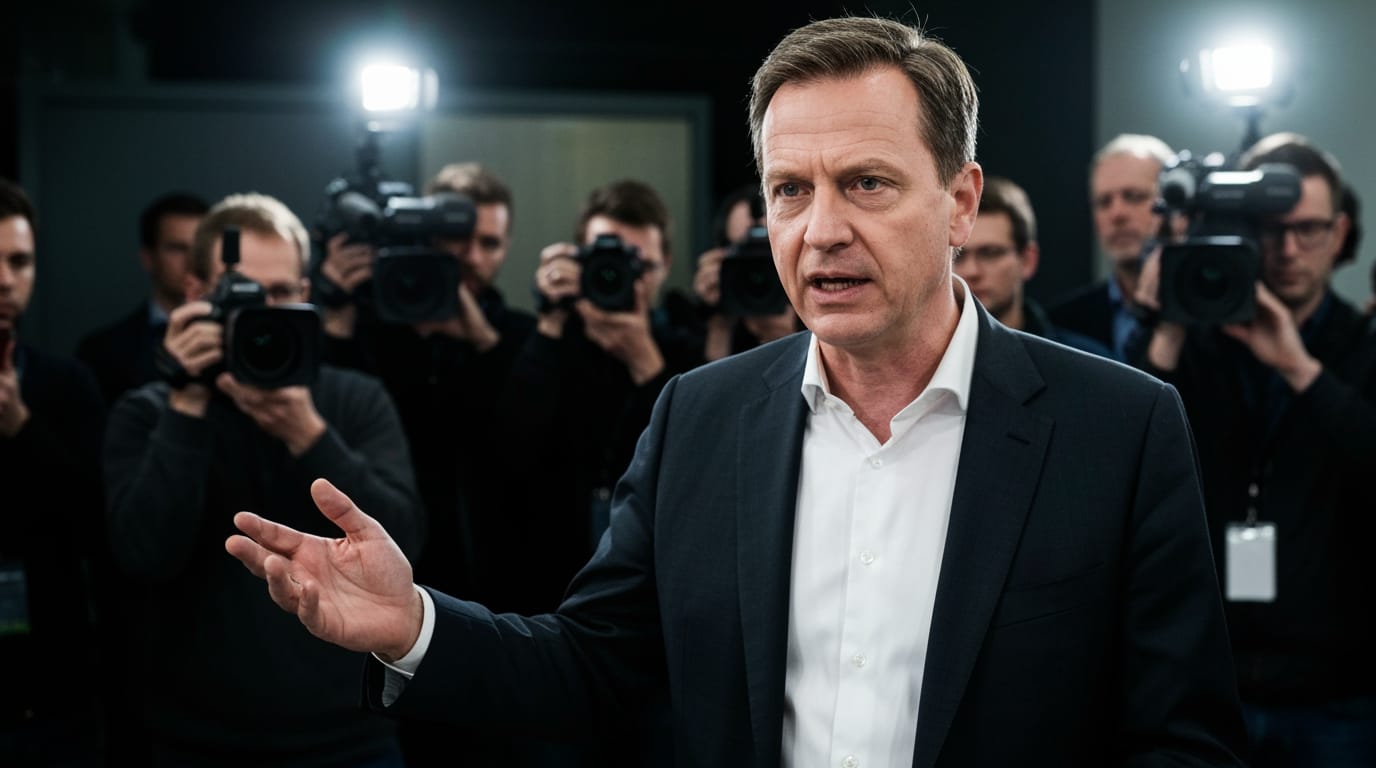
BERLIN – Chancellor Friedrich Merz today sought to mitigate the political fallout from his Christian Democratic Union's (CDU) narrow defeat in a pivotal state election in Baden-Württemberg, framing the outcome as a "bitter result" but underscoring the party's gains and the need for accelerated federal reforms. The election, the first of five crucial state contests this year, has cast a shadow over Merz's ten-month-old federal government and highlighted the mounting economic and political pressures facing Germany. The Greens secured a surprise victory in the southwestern industrial heartland, leaving the CDU in a delicate position as the nation grapples with a stagnant economy and the surging popularity of the far-right Alternative for Germany (AfD).
A Narrow Loss in a Critical State
The highly anticipated election in Baden-Württemberg, a wealthy state renowned for its automotive industry giants such as Mercedes-Benz and Porsche, concluded yesterday, March 9, 2026, with the Greens emerging victorious. Preliminary results indicated the Greens garnered approximately 30.2% of the vote, narrowly outperforming Merz's CDU, which secured around 29.7%. While the CDU saw an increase in its vote share compared to five years prior, it fell short of reclaiming the Minister-President's office, which has been held by the Greens for over a decade. The election also witnessed a significant surge for the far-right AfD, which nearly doubled its support to 18.8%, reflecting a broader trend of populist gains observed in last year's national election. Conversely, the Social Democratic Party (SPD), a junior partner in Merz's federal coalition, experienced a substantial loss, with its support plummeting to an embarrassing 5.5%. This outcome signals a challenging political landscape for the established centrist parties as Germany navigates a year packed with electoral tests.
Chancellor's Calculated Calm
In his post-election remarks, Chancellor Merz adopted a measured tone, acknowledging the setback while simultaneously emphasizing aspects that could be interpreted as progress for the CDU. He conceded the "wafer-thin defeat" was a "bitter result" for his party but highlighted the CDU's overall gains in the state and the fact that it secured an equal number of seats in the state legislature as the victorious Greens. This framing aligns with Merz's established public persona, often characterized by a confident and at times overconfident projection of certainty. Rather than dwelling on the loss, Merz swiftly redirected focus to the federal government's agenda, stating the need for more substantial reforms to steer Germany out of its difficult economic situation. His emphasis on economic revitalization comes amidst a period of stagnant growth, elevated unemployment, and internal divisions within his coalition regarding social welfare reforms. Merz, who assumed the chancellorship on May 6, 2025, campaigned heavily in Baden-Württemberg, making the outcome a direct reflection of public sentiment towards his leadership and his party's national standing.
Economic Headwinds and the Far-Right Surge
The Baden-Württemberg election results are inextricably linked to Germany's current economic climate and the country's evolving political dynamics. Germany, Europe's largest economy, has been struggling with weak growth, with GDP increasing by only about 0.2% in 2025 and forecasts for 2026 ranging from 0.5% to 1.0%. This economic stagnation has narrowed policy options for Merz's government and intensified the urgency of structural reforms. Simultaneously, the far-right AfD continues its ascendant trajectory, posing a significant challenge to traditional parties. The party's strong performance in Baden-Württemberg, nearly doubling its previous result, underscores its increasing appeal, particularly in a year where several eastern German states—where the AfD is particularly strong—will also hold elections. The CDU's firm stance against cooperating with the AfD, often referred to as the "firewall," faces its most serious test as the far-right party gains ground, potentially complicating coalition formations at the state level. Merz, during his campaign for chancellor, had pledged to curb the rise of the far-right, a promise that appears increasingly difficult to fulfill given recent electoral trends.
Implications for the Federal Coalition and Future Tests
The outcome in Baden-Württemberg carries significant implications for the stability and reform agenda of Chancellor Merz's CDU-led federal coalition, which also includes the SPD. With a "super election year" underway, featuring state elections in Rhineland-Palatinate later this month, followed by Berlin, Saxony-Anhalt, and Mecklenburg-Vorpommern in September, these regional contests serve as crucial barometers for the federal government's popularity and the effectiveness of its policies. A string of disappointing results could weaken Merz's position within his own party and in the Bundesrat, the upper chamber of parliament, where state governments have a say in major legislation. Conversely, stronger CDU showings in subsequent elections would bolster his authority and signal public support for his government's program. The Baden-Württemberg results also offer a glimpse into potential future coalition dynamics. The viability of centrist cooperation between the CDU and the Greens in the state, despite the Greens' victory, might offer a model for future alliances, especially as the SPD struggles to maintain its profile. However, the continued rise of the AfD ensures that coalition negotiations at both state and federal levels will remain complex and challenging throughout the year.
An Unsettled Political Horizon
As Germany navigates this period of economic uncertainty and political fragmentation, Chancellor Merz's leadership faces a rigorous examination. His attempt to downplay the Baden-Württemberg defeat as a call for renewed federal reform efforts highlights the pressure on his government to deliver tangible improvements for citizens. With multiple state elections on the horizon and the persistent challenge posed by the AfD, the coming months will be decisive for Merz's chancellorship and the broader direction of German politics. The nation watches as its leaders contend with internal divisions, economic stagnation, and a shifting electoral landscape, all while attempting to maintain stability in a crucial European power.


