US Strike on Iranian Warship Ignites Geopolitical Firestorm, Puts India's Neutrality to the Ultimate Test
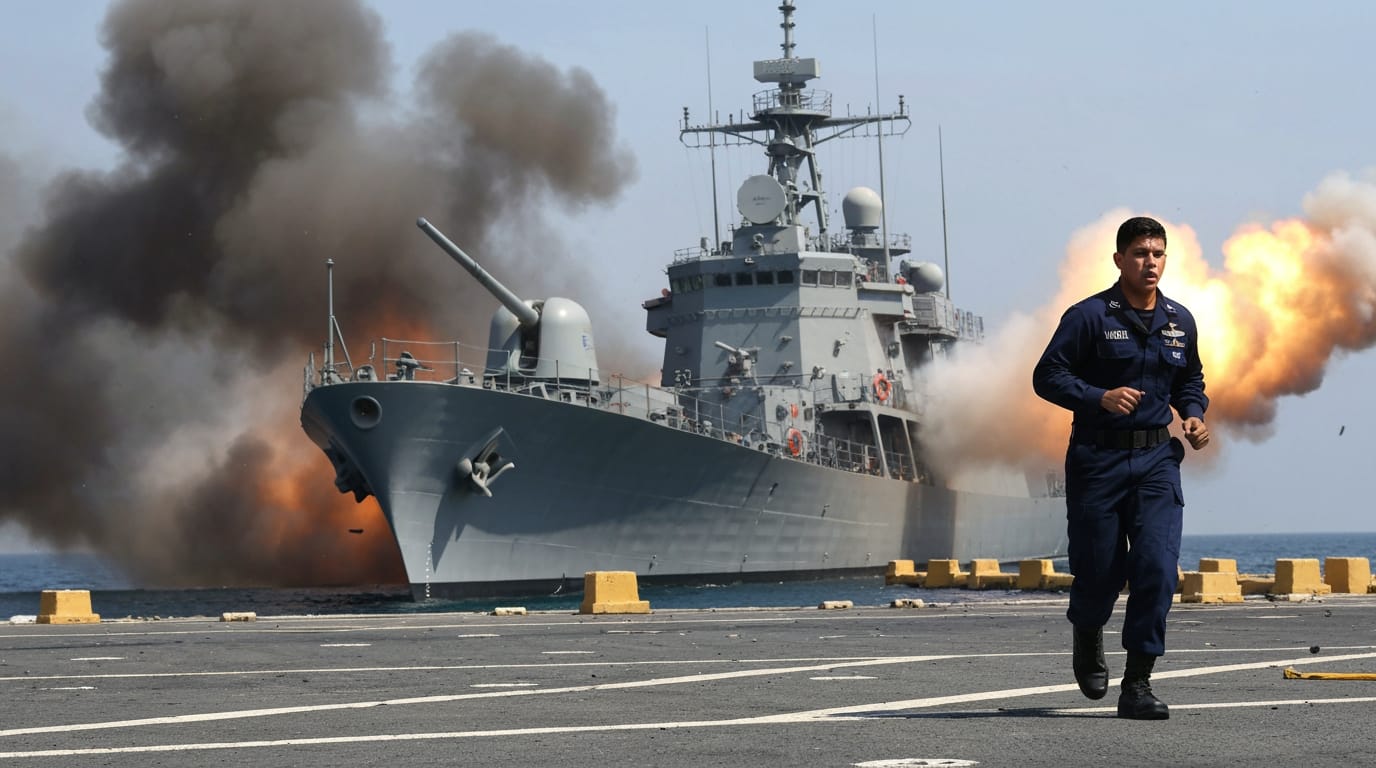
NEW DELHI – A United States submarine's torpedo strike on the Iranian frigate IRIS Dena in international waters off Sri Lanka has sent shockwaves across the Indian Ocean, triggering a profound geopolitical crisis and forcing India's meticulously crafted foreign policy of "strategic autonomy" into an uncomfortable spotlight. The March 4 attack, which claimed the lives of at least 87 Iranian sailors, occurred as the Dena was returning from India's biennial Milan naval exercise, transforming a goodwill visit into a flashpoint that exposes the perilous tightrope New Delhi walks between its deepening ties with the West and its historical relationships in the Middle East.
The brazen US action, part of a broader US-Israeli military campaign against Iran initiated on February 28, has not only escalated tensions in an already volatile region but also directly challenged India's carefully cultivated image as a net security provider in its own maritime backyard. New Delhi's muted and delayed response to the incident has drawn sharp criticism domestically and raised questions about the real-world implications of its non-aligned principles in an increasingly polarized global landscape.
A Guest Under Attack: The Immediate Fallout
The sinking of the IRIS Dena, approximately 44 nautical miles off Sri Lanka's southern coast, represents a dramatic escalation in the ongoing conflict between the US, Israel, and Iran. US Defense Secretary Pete Hegseth confirmed the strike, characterizing it as a decisive move by the Trump administration to expand its war against Tehran. The Dena was reportedly unarmed, adhering to the rules of the Milan exercise which prohibit ammunition on participating vessels. This detail has intensified Iran's outrage, with Tehran noting that the frigate was a "guest of India's navy" returning from an invitation-only drill.
India's initial response was marked by a conspicuous silence, with the Indian Navy issuing a formal statement more than 24 hours after the attack. The Navy acknowledged receiving distress signals and dispatching resources for rescue, but stated that the Sri Lankan Navy had already taken the lead in salvage operations. Notably, neither the Indian government nor its naval forces offered even a mild condemnation of the US action, a stance that has been widely interpreted as tacit approval or, at minimum, a reluctance to antagonize a key strategic partner.
India's Neutrality Under Scrutiny
The incident has triggered an intense debate within India regarding the efficacy and integrity of its foreign policy. Traditionally, India has championed non-alignment, a principle that has evolved into "strategic autonomy" – the ability to pursue its interests independently of major power blocs. However, critics argue that the Dena incident lays bare a growing alignment with the US and Israel, potentially at the expense of India's long-standing relationships with countries like Iran.
Indian Prime Minister Narendra Modi's recent visit to Israel, preceding the US-Israeli strikes, and the comprehensive trade agreements forged with Tel Aviv, are cited by some as evidence of this tilt. Opposition leaders, including Rahul Gandhi and Mallikarjun Kharge, have vociferously condemned the government's perceived inaction, labeling it a "strategic embarrassment" that undermines India's core national interests and its foreign policy legacy. Former Indian Foreign Secretary Kanwal Sibal highlighted the irony, stating the Iranian ship would not have been in harm's way had it not been invited to the Indian naval exercise.
The attack in the Indian Ocean, often considered India's sphere of influence, has led to calls from retired naval chiefs like Admiral Arun Prakash for New Delhi to convey its "deep concern and displeasure" to Washington for bringing maritime warfare to India's doorstep. The incident profoundly impacts India's aspirations to be a "net security provider" in the region, exposing the limitations of its power when confronted with the actions of a global superpower.
Economic and Geopolitical Ripple Effects
Beyond the immediate diplomatic and reputational challenges, the escalating US-Iran conflict, and its spillover into the Indian Ocean, carries significant economic and geopolitical implications for India. The Middle East remains a crucial source of energy for India, and any prolonged instability or disruption to trade routes could severely impact its energy security and overall economic stability. Analysts warn of potential oil price spikes, supply shortages, and a broader economic slowdown that could affect manufacturing, aviation, and other critical sectors.
Furthermore, India's balancing act extends to its relationships with Gulf states, where millions of Indian expatriates reside and contribute significantly to the Indian economy through remittances. Alienating Iran or appearing too closely aligned with the US and Israel could strain these vital relationships. While India has sought to diversify its international partnerships, its historical ties and significant economic interests in the Middle East cannot be easily dismissed. The ongoing conflict places immense pressure on India to protect its citizens and economic interests amidst heightened regional volatility.
Navigating a Precarious Future
India's dilemma is multifaceted. While it maintains close strategic and economic ties with the US and Israel, its historical non-aligned stance and continued, albeit diminished, engagement with Iran, such as allowing another Iranian vessel, IRIS Lavan, to dock in Kochi as a "humane gesture," demonstrate a desire to retain some degree of balance. However, the US strike on the IRIS Dena has made that balancing act significantly more precarious.
The incident forces India to confront whether its "strategic autonomy" is truly independent or increasingly constrained by its deepening alignment with Western powers. The global community will closely watch New Delhi's subsequent actions and statements, as they will undoubtedly shape its standing on the international stage and its influence in the Indo-Pacific region. As the conflict intensifies, India's ability to navigate these treacherous geopolitical waters without compromising its national interests or its diplomatic credibility will be the ultimate test of its foreign policy.


