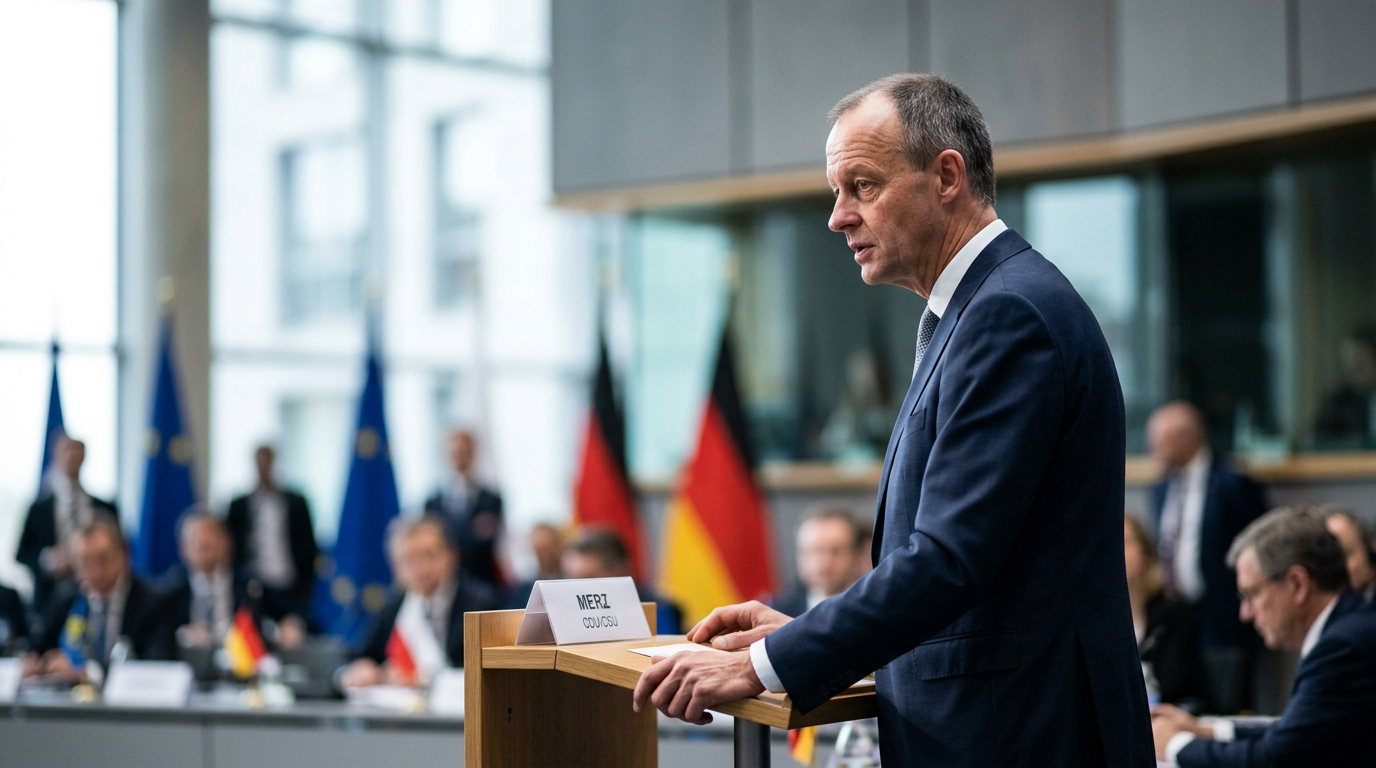
Chancellor Merz Honors Germany's Defenders, Underscoring National Security Imperatives
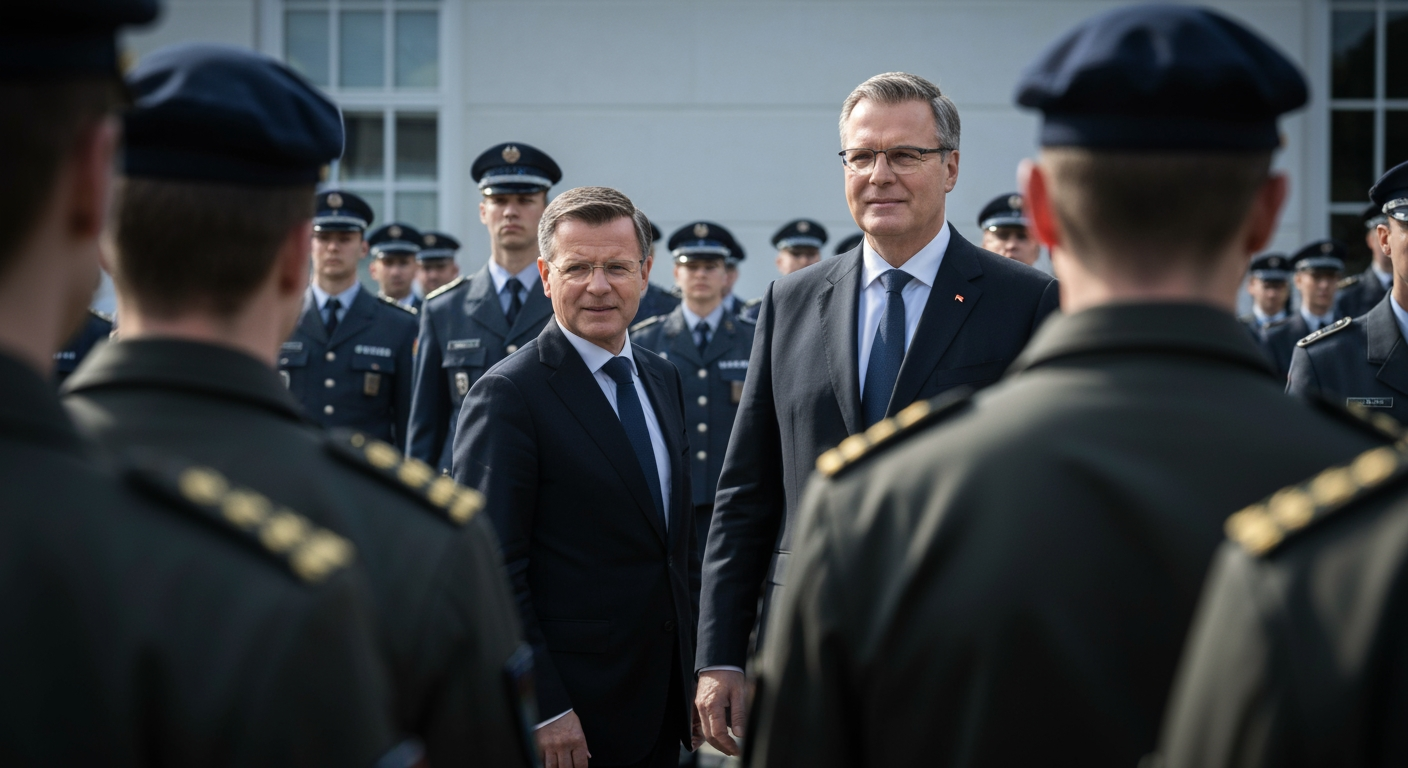
Potsdam, Germany – In a significant demonstration of national resolve and appreciation, Chancellor Friedrich Merz visited the Bundeswehr's Operational Command in Potsdam on June 28, 2025, using the occasion of Bundeswehr Day to extend heartfelt gratitude to Germany's soldiers and federal police. The Chancellor's visit, which included an address to personnel and a tour of the strategic command center, underscored his administration's unwavering commitment to strengthening the nation's security apparatus amidst a complex and evolving global landscape. This public acknowledgment aimed to recognize the dedication, loyalty, and sacrifices of those who serve, reinforcing the pivotal role they play in safeguarding Germany's freedom and democratic order.
Acknowledging the Frontline of Defense
Chancellor Merz's presence at the Operational Command in Schwielowsee, near Potsdam, served as a powerful gesture of solidarity and appreciation for Germany's uniformed services. Addressing a diverse assembly of military and federal police personnel, the Chancellor articulated the nation's profound debt to their service. He specifically thanked "Soldatinnen und Soldaten" (soldiers) and those from institutions like the "Bundespolizei" (Federal Police) and the Foreign Office, highlighting their collective efforts in maintaining both internal and external security. Merz emphasized the importance of recognizing the value of their work and their unwavering loyalty to Germany and its fundamental democratic principles. His visit on Bundeswehr Day, an annual event where the armed forces engage with the public, strategically amplified this message, aiming to foster greater public understanding and appreciation for their critical roles.
Reshaping Germany's Security Posture
The Chancellor's engagement with security forces comes at a time of fundamental re-evaluation of Germany's defense and security policies. Under Merz's chancellorship, Germany has embarked on a robust program to significantly expand the Bundeswehr, both in terms of materiel and personnel. The annual military budget is projected to increase substantially, with ambitious targets set to reach approximately 3.5% of GDP for defense spending and an additional 1.5% for civil defense and related infrastructure by 2029. This surge in investment is driven by a clear directive to make the Bundeswehr the strongest conventional army in the European Union.
Furthermore, the government has announced plans to boost active Bundeswehr personnel to 260,000, a significant increase from 2025 figures. While prioritizing voluntary recruitment, Merz has left the door open for the potential reintroduction of compulsory military service if voluntary efforts prove insufficient, signaling a comprehensive approach to securing national defense capabilities. This strategic shift underscores a broader recognition within Berlin that Germany must assume greater responsibility for its own security and contribute more substantially to collective defense alliances.
Navigating Geopolitical Complexities
The heightened emphasis on security is a direct response to a rapidly changing and increasingly volatile geopolitical landscape. Ongoing international conflicts, particularly the war in Ukraine, have underscored the fragility of peace and the imperative for robust defense capabilities. Merz has repeatedly stressed that Germany and Europe "must now very quickly make very big efforts" to strengthen their defense capabilities in light of increasing threats. This includes a renewed commitment to NATO, with Merz asserting that Germany will play a leading role within the alliance and fulfill its responsibilities in collective defense.
Domestically, the role of federal police and other security agencies has also gained prominence in addressing various threats. Events such as the car-ramming attack in Magdeburg, which tragically claimed lives and injured many, have highlighted the constant vigilance required to ensure public safety and combat acts of violence. These incidents serve as stark reminders of the multifaceted challenges faced by internal security forces, ranging from terrorism to organized crime.
Germany's Evolving Role on the World Stage
Beyond domestic and European borders, Germany's commitment to security extends to active participation in international deterrence efforts. A prime example is the deployment of the 45th Armored Brigade "Lietuva" to Lithuania, marking Germany's first permanent overseas military unit since World War II. This strategic deployment, aimed at deterring potential aggression in the Baltics, symbolizes Germany's readiness to bolster NATO's eastern flank and contribute to collective security. Chancellor Merz, alongside Defense Minister Boris Pistorius, inaugurated this brigade, emphasizing the importance of NATO unity and collective defense against external threats.
The Chancellor's foreign policy pronouncements also signal a push for Europe to achieve greater strategic independence, especially in light of shifting international alliances and a potential reassessment of transatlantic security guarantees. Merz advocates for Europe to rebuild its economic and defense strength, asserting that its security can no longer be taken for granted. This vision positions Germany as a key player in fostering a more self-reliant and united European defense architecture.
A Unified Front for Future Security
Chancellor Merz's active engagement with Germany's soldiers and police, epitomized by his Bundeswehr Day visit, sends a clear message: the protection of the nation and its democratic values is paramount. His administration's concerted efforts to invest in, expand, and strategically deploy its security forces reflect a profound understanding of contemporary threats and Germany's evolving responsibilities. By publicly honoring these dedicated men and women, Merz aims to galvanize national unity behind a robust security agenda, ensuring that Germany remains capable of defending itself, supporting its allies, and contributing to a more stable and secure international order. The message is one of preparedness, gratitude, and a steadfast commitment to those who stand ready to protect the peace and freedom of the Federal Republic.
Related Articles

Ratko Mladić, "Butcher of Bosnia" and Convicted War Criminal, Dies at 84
THE HAGUE, Netherlands – Ratko Mladić, the former Bosnian Serb military commander known as the "Butcher of Bosnia" and convicted of genocide, war crimes, and crimes against humanity, has died at the age of 84. Serbian...

Long-Awaited 9/11 Mastermind Trial Set for 2028, Decades After Attacks
GUANTANAMO BAY, Cuba – Nearly a quarter-century after the devastating terror attacks of September 11, 2001, a military judge has finally set a trial date for Khalid Sheikh Mohammed, the alleged mastermind behind the...