Chile's President-Elect Ignites Storm with Pinochet Lawyers in Key Cabinet Roles
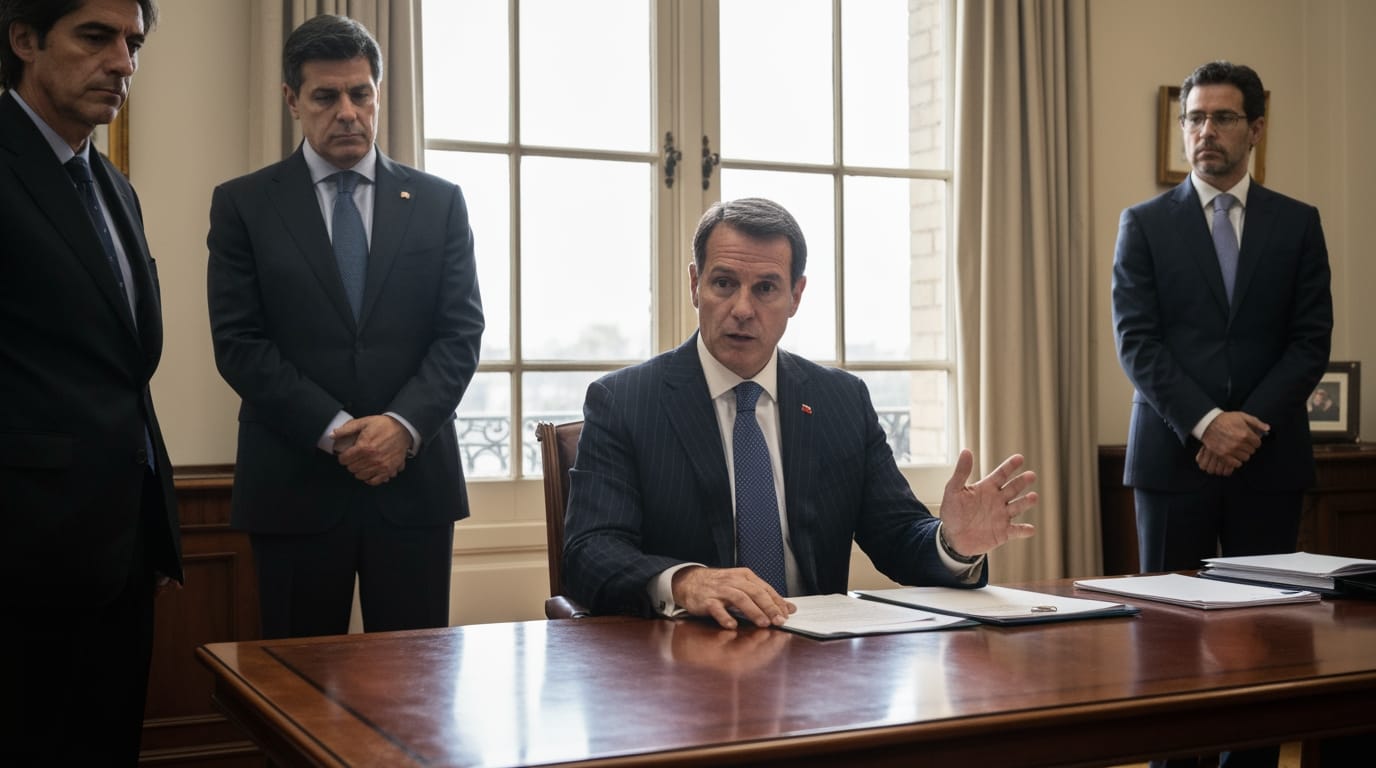
Santiago, Chile – President-elect José Antonio Kast has sparked a potent national debate and drawn sharp criticism by nominating two former lawyers of dictator Augusto Pinochet to critical ministerial positions in his incoming administration. The controversial appointments of Fernando Barros as Defense Minister and Fernando Rabat as Minister of Justice and Human Rights have reopened deep historical wounds in a nation still grappling with the brutal legacy of the Pinochet regime, setting a contentious tone for Kast's presidency even before his inauguration.
Kast, a self-proclaimed admirer of the former dictator, secured a landslide victory last December on a platform emphasizing anti-crime and anti-immigrant sentiments, tapping into widespread public concern over security. His win marks the return of a far-right head of state to Chile for the first time since Pinochet's exit in 1990. However, his initial cabinet selections signal a potential ideological reorientation that promises to challenge the country's delicate post-dictatorship political consensus and reignite long-simmering divisions over human rights and national memory.
Appointments Revisit Pinochet's Divisive Past
The selections of Fernando Barros, 68, and Fernando Rabat, 53, have cast a long shadow over Kast's cabinet unveiling. Both men served on the legal team that defended Augusto Pinochet against various charges following his 1973-1990 dictatorship. Barros notably led Pinochet's defense when the former strongman was detained in London in 1998, facing extradition requests from Spanish courts seeking to try him for crimes against humanity. Rabat, on the other hand, represented Pinochet in a high-profile case involving the embezzlement of public funds. Pinochet died in 2006 at the age of 91, never having been convicted on any of the charges against him.
Kast, who is set to be sworn in on March 11, defended his cabinet choices, stating that his team was "not the result of quotas, calculations or pressure. It is the result of a deep conviction and a common vocation: to always put Chile first." This stance, however, has done little to assuage the concerns of critics who view the appointments as a direct affront to the victims of the dictatorship and a dangerous normalization of Pinochet's authoritarian past. The symbolic weight of placing individuals with such direct ties to Pinochet in ministries responsible for defense and, particularly, human rights, has intensified the controversy.
The Enduring Scars of a Brutal Dictatorship
The Pinochet dictatorship, which lasted from 1973 to 1990, remains one of the darkest chapters in Chile's history. It was a period marked by systematic human rights abuses, political repression, and severe restrictions on civil liberties. During Pinochet's rule, more than 3,200 people were killed or disappeared, and tens of thousands more were tortured or imprisoned. The regime's brutality left "deep scars on the South American nation" that continue to shape its political discourse and societal fabric.
Despite the passage of decades, the legacy of Pinochet continues to be a highly sensitive and divisive issue in Chile. While some on the right credit his economic policies with laying the foundation for Chile's later prosperity, the vast majority of Chileans condemn the human rights violations committed under his rule. The wounds of those who suffered, and the ongoing quest for truth and justice, mean that any perceived rehabilitation of figures associated with the dictatorship inevitably triggers strong public and political reactions.
A Pattern of Contention: Historical Ties in Chilean Politics
While Kast's recent appointments have garnered significant attention due to their direct nature and the portfolios assigned, the presence of figures with ties to the Pinochet era in Chilean governments is not entirely unprecedented. Chile's transition to democracy in the 1990s was a complex process, and the influence of the dictatorship on the nation's political and institutional landscape lingered. As one political analyst noted, Chile never fully achieved a "clean cut" with the policies or personnel of the dictatorship, with many members of the regime subsequently becoming politicians within right-wing parties.
Even centrist-right administrations have faced scrutiny over cabinet choices. For instance, former President Sebastián Piñera, who served two non-consecutive terms (2010-2014 and 2018-2022), also appointed ministers with past connections to the Pinochet regime. His interior minister, Andrés Chadwick, was a vocal supporter of Pinochet during the dictatorship, although he later expressed "deep repentance" for his support after acknowledging the severe human rights violations. Hernán Larraín, Piñera's justice minister, also had a history of supporting the regime. Furthermore, in 2021, Piñera appointed Patricio Melero, a former official in the Pinochet dictatorship, as Minister of Labor. Piñera himself, while not a direct supporter of the coup, opposed Pinochet's arrest in London, arguing it was an attack on Chile's sovereignty. These instances underscore the enduring presence and influence of individuals and ideologies linked to the Pinochet era within Chile's political establishment.
A Nation Poised Between Past and Future
The cabinet selections by President-elect Kast underscore the profound ideological fault lines that persist within Chilean society. As Kast prepares to take office, his choices have not only ignited debates about the human rights legacy of Pinochet but also raised questions about the direction his administration intends to take regarding governance and national reconciliation.
His government will face the immediate challenge of navigating these historical tensions while simultaneously addressing the pressing issues of security and economic stability that propelled him to power. The appointments suggest a firm commitment to a particular ideological vision, one that appears willing to confront, rather than appease, the sensitivities surrounding Chile's past. How this approach will ultimately shape Kast's presidency, and its impact on the nation's democratic institutions and social cohesion, remains a critical question as Chile steps into a new political era. The path forward for a nation still reconciling with its history promises to be complex and, at times, deeply contentious.


