China Ascendant: How Beijing Became the Economic Anchor of Isolated Russia
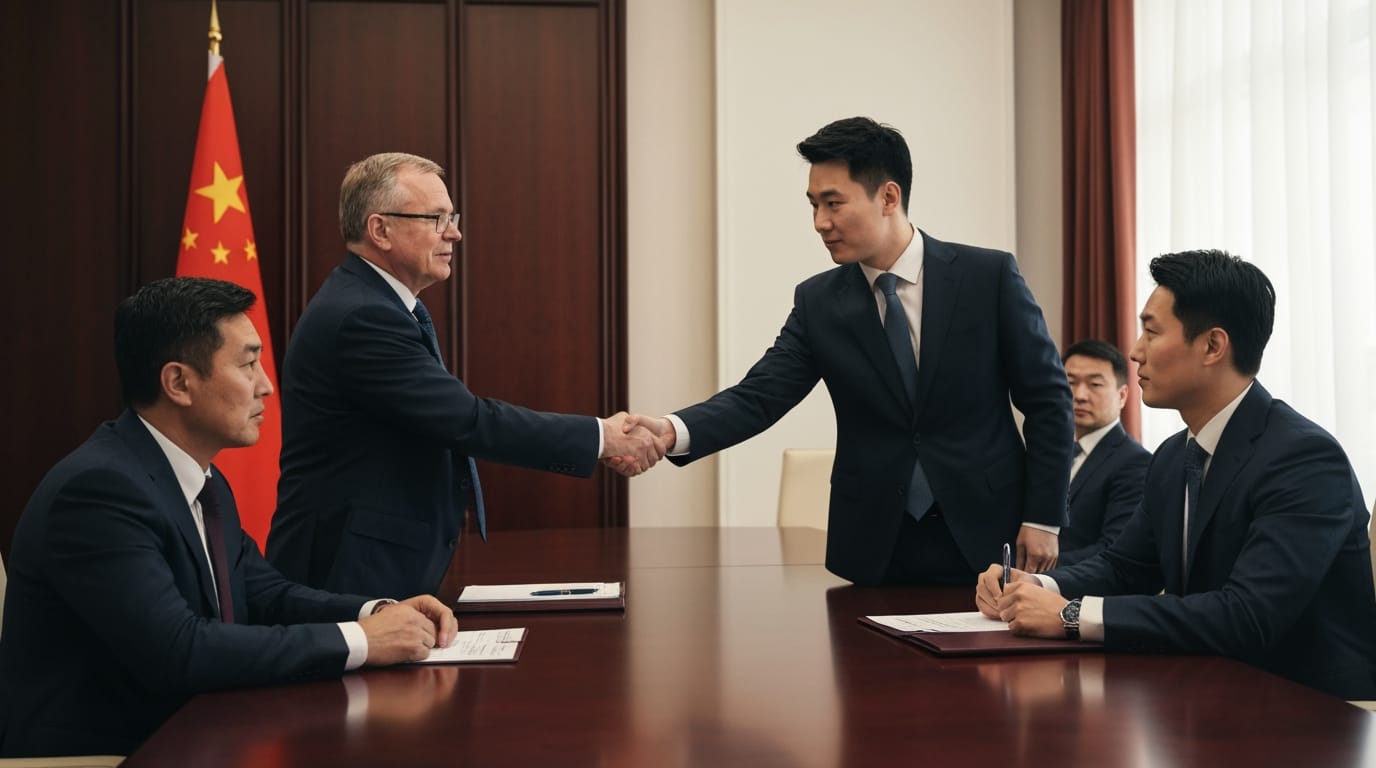
The geopolitical landscape has dramatically reshaped, placing China in an undeniable position of economic mastery over Russia. Driven by the unprecedented Western sanctions imposed following its full-scale invasion of Ukraine in 2022, Russia's economy has undergone a rapid and profound reorientation, irrevocably pivoting eastward and cementing Beijing's role as its indispensable lifeline. This shift, years in the making, has accelerated into a dependency that fundamentally alters the global balance of power, transforming Russia into an economic junior partner reliant on China for trade, finance, and technology.
The Unavoidable Pivot to the East
Russia's "pivot to the East" was a strategic initiative conceived over a decade ago, initially aimed at diversifying its economic ties beyond Europe and leveraging Asia's burgeoning markets. However, the annexation of Crimea in 2014 and, more critically, the 2022 invasion of Ukraine, catapulted this strategic ambition into an urgent economic imperative. Western nations responded with an expansive regime of sanctions, severing Russia's access to major global financial systems, advanced technologies, and its traditional European energy markets. Overnight, Moscow found itself isolated, with its economic infrastructure vulnerable to collapse. In this new reality, China emerged as Russia's singular, indispensable economic partner, an "irreplaceable trading partner" providing critical support and a necessary counterweight to Western pressure. This growing alliance is underpinned by shared geopolitical perspectives and a mutual desire to challenge the U.S.-led international order.
Trade Imbalance: Russia's Raw Materials for China's Manufactured Goods
The economic partnership between China and Russia has seen an exponential surge in trade volumes since 2022, albeit characterized by a stark asymmetry. Bilateral trade reached record highs, climbing to $190 billion in 2022, $240.11 billion in 2023, and a staggering $244.8 billion in 2024. This growth, while significant, masks a foundational imbalance: Russia primarily exports raw materials and energy, while China supplies an increasing array of manufactured goods and technology.
Energy resources, particularly oil, natural gas, and coal, now dominate Russia's exports to China, constituting approximately 75% of the total post-2022, up from 60-65% before the invasion. China has become the largest single importer of Russian energy, effectively replacing a significant portion of the European market. However, this critical revenue stream comes at a cost: Russia is often compelled to sell its energy at discounted prices to its primary buyer.
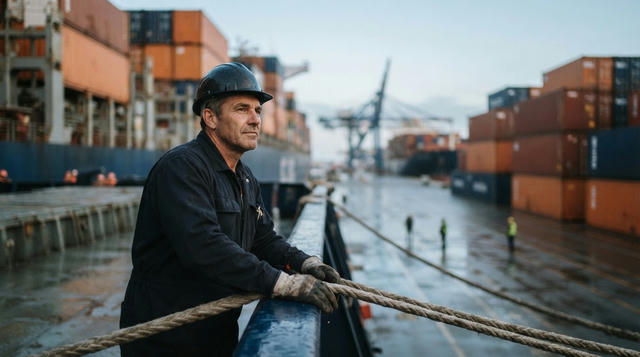
Conversely, China has become the leading source for a wide range of goods previously supplied by Western companies. Chinese manufacturers have filled the void left by exiting Western firms, now serving as Russia's main supplier for electronics, vehicles, machinery, metals, and plastics. Notably, Chinese car exports to Russia witnessed an astonishing 971% increase between 2021 and 2024, demonstrating Beijing's rapid market capture. Overall, China's share of Russia's foreign trade has expanded dramatically, now accounting for about 30% of Russia's exports and 35% of its imports, compared to 16% and 30% respectively before the conflict. This dynamic entrenches a lopsided dependency, where Russia trades its raw commodities for China's higher value-added industrial and consumer products.
The Yuan's Ascendancy and Technological Lifeline
The financial and technological spheres further illustrate Russia's growing reliance on China. Western sanctions effectively cut Russia off from the dollar and euro-dominated international financial systems, prompting an unprecedented "yuanization" of its economy. The Chinese yuan has rapidly emerged as the dominant foreign currency in Russia. By 2023, it surpassed the U.S. dollar to become the most popular currency on the Moscow Exchange. The yuan's proportion of transactions on the Moscow Exchange skyrocketed from a mere 3% in 2022 to 54% by May 2024, and following further U.S. sanctions on the Moscow Exchange in summer 2024, yuan transactions reached an extraordinary 99.8% of all foreign currency trading.
Russian central bank figures highlight this shift: the yuan's share in Russia's exports surged from 0.4% to 34.5% within two years, while its share in imports rose from 4.3% to 36.4% during the same period. By December 2024, nearly 90% of all Russia-China transactions were settled in yuan and rubles. Russian banks now hold more yuan ($68.7 billion) than U.S. dollars ($64.7 billion), and the Chinese UnionPay card system has become a vital alternative to Visa and Mastercard, which ceased operations in Russia. Beijing has also facilitated this transition through currency swap agreements and increased yuan circulation within the Russian economy.
In technology, China has become Russia's primary supplier, offsetting the impact of Western export controls. Chinese companies have stepped in to provide a wide array of commercial technology imports, including electronics, machinery, and vehicles. Exports of Chinese integrated circuits, crucial for various industries, have "skyrocketed," partially filling the gap created by the withdrawal of Western semiconductor suppliers. Huawei, for instance, significantly expanded its operations and research and development in Russia, including the development of 5G technology, effectively mitigating Russia's technological isolation. Furthermore, there is growing cooperation in dual-use technologies, such as drone components and semiconductors, some of which are integrated into Russian military production.
An Asymmetric Alliance: Strategic Implications and Future Outlook
While the deepened partnership offers Russia an economic lifeline, it comes with significant strategic implications and an inherent power imbalance. Russia's increasing dependence carries substantial risks, as China cannot fully compensate for the loss of all Western goods, particularly in sophisticated intermediate and investment goods. Beijing now holds considerable leverage over Moscow, dictating terms and securing favorable deals, such as discounted energy prices, due to Russia's severely limited alternatives. Despite the booming trade, Chinese direct investment in Russia remains relatively low compared to the scale of the economic exchange, underscoring Beijing's cautious approach to deeper financial integration and its preference for transactional benefits.
The relationship is pragmatic for both sides. Russia gains crucial markets, investment, and technological support to weather Western sanctions, while China secures energy supplies and a strategic partner to challenge American global dominance. However, this "no-limits" partnership is not without its boundaries. Western pressure and the threat of secondary sanctions have begun to show some impact on China's engagement, leading to a slowdown in trade growth in 2024 and even a decline in certain Chinese exports to Russia in early 2024. Some Chinese financial institutions, wary of U.S. sanctions, have also become more cautious in processing transactions with Russian entities.
Ultimately, Russia's rapid economic reorientation has transformed its standing on the global stage. The "pivot to the East" has led to a profound and deepening dependence on China, turning Russia into a raw material appendage to China's industrial engine. This strategic alignment, while ensuring Russia's economic survival in the face of Western isolation, positions Beijing as the new, undeniable master of Russia's economic destiny, with long-term implications for Moscow's sovereignty and its future trajectory in a multipolar world.