German Chemical Industry Navigates Tumultuous Waters Amidst Unprecedented Headwinds
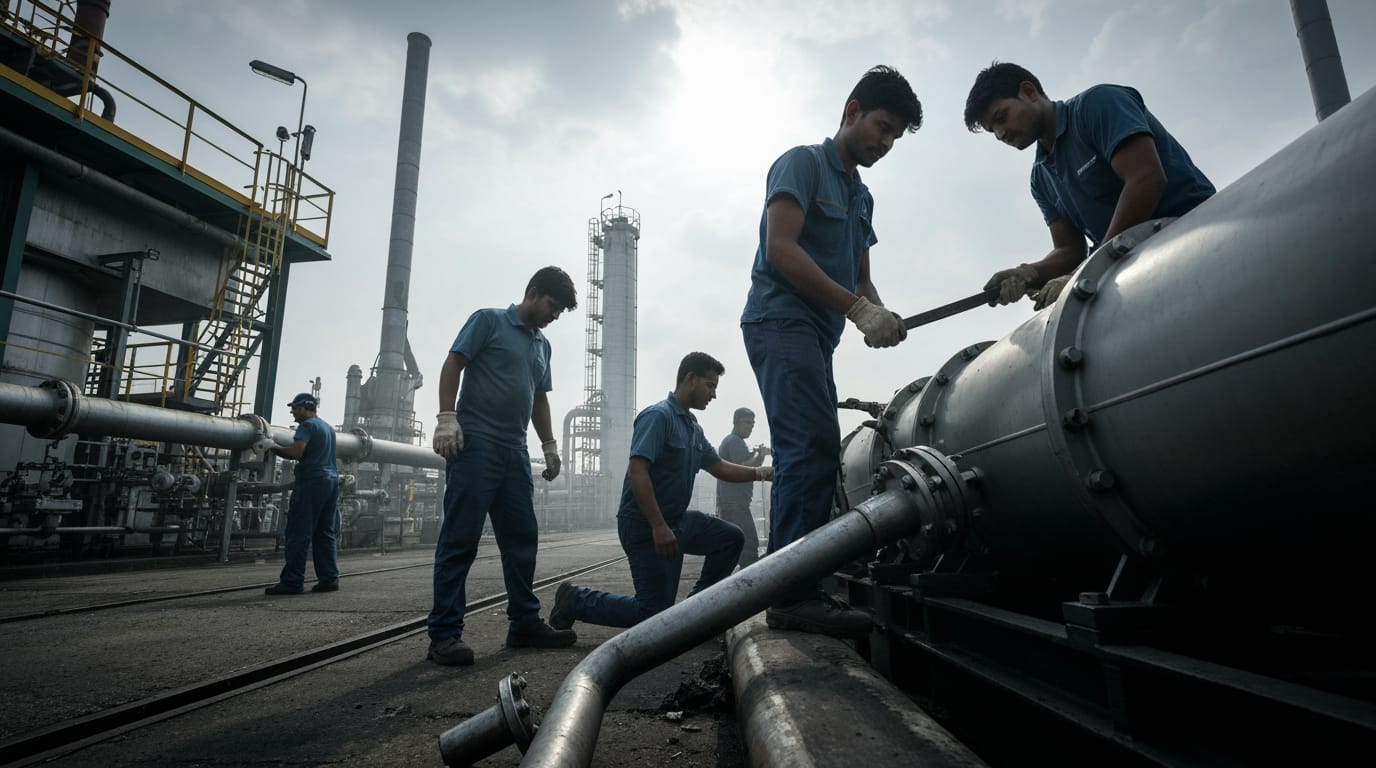
Frankfurt, Germany – Germany's chemical industry, a historical powerhouse and a cornerstone of the nation's economy, finds itself at a critical juncture, facing a severe downturn driven by soaring energy costs, intensifying global competition, and burdensome regulations. Production has plummeted to a three-decade low, investments have sharply declined, and thousands of jobs have been lost, painting a grim picture for a sector once synonymous with innovation and stability. Yet, amidst these formidable challenges, the industry is not capitulating; it is undertaking a profound transformation, seeking resilience through strategic restructuring, a renewed focus on innovation, and a pivot towards sustainable practices, signaling that while currently "down," it is far from "out."
A Deep Plunge: Production and Profitability in Decline
The statistics underscore the depth of the crisis gripping the German chemical sector. Overall chemical production, excluding pharmaceuticals, saw a steep decline of approximately 21% by 2025 compared to 2021 levels, with a 3.3% year-on-year drop in 2025 alone. This translates to production levels reminiscent of those seen in 1995, representing a significant regression for the industrial giant. The broader energy-intensive industrial sectors, encompassing chemicals, have experienced a 15.2% fall in production since February 2022, a sharper decline than the 9.5% recorded across the industrial sector as a whole.
The downturn has also impacted capacity utilization, which averaged between a mere 70% and 72.5% in 2025, significantly below healthy levels. Financial performance has suffered commensurately, with profits shrinking by 12% compared to 2018, and investments plummeting by an alarming 90%. Sales across the board are reportedly "in the red," with both domestic and international sales experiencing notable contractions. Domestic sales slipped by 2.3% to €18.9 billion in the fourth quarter of 2025, while international business, despite a slight quarterly recovery, remained 2.7% below the previous year's level. The human cost of this contraction is also evident, with energy-intensive industries losing approximately 53,200 jobs since February 2022, marking a 6.3% decrease in employment within these critical sectors.
The Unyielding Pressure: Energy, Competition, and Regulation
The primary culprit behind the industry's woes is the "acute squeeze" from escalating energy prices, particularly natural gas, which is not only a vital energy source but also a crucial raw material for many chemical processes. The chemical industry stands as the largest energy consumer within German industry, accounting for 27.9% of total industrial energy consumption in 2024, with natural gas comprising 26.3% of its energy mix. Geopolitical tensions, particularly those impacting natural gas supplies, have sent operational costs soaring, creating a severe competitive disadvantage when compared to regions like China, where firms benefit from significantly lower CO2 emissions costs.
Compounding the energy crisis is fierce global competition, particularly from rapidly expanding chemical sectors in China and the Middle East. These regions often boast lower labor costs, more flexible regulatory frameworks, and readily available, cheaper feedstocks. China, for instance, accounted for 45.7% of global chemical turnover in 2024, with its production surging by 26.6% compared to 2021, while Germany's production simultaneously declined by nearly 19%. This shift in the global supply-demand balance for basic chemicals has significantly weakened Germany's position.
Adding to the industry's burdens are stringent and complex regulatory frameworks, including "onerous European regulations" and "overly complex bureaucracy". Restrictions on certain substances, such as perfluoroalkyl and polyfluoroalkyl substances (PFAS), have even led to plant closures and the relocation of production facilities. Furthermore, ongoing geopolitical conflicts introduce significant supply chain risks, raising concerns about potential shortages of essential raw materials like ammonia, phosphate, helium, and sulfur.
Strategic Shifts: Innovation, Efficiency, and Global Realignment
In response to these multifaceted pressures, the German chemical industry is actively pursuing a multi-pronged strategy focused on innovation, efficiency, and global realignment. A key pillar of this response is the accelerated adoption of green chemistry and energy-efficient technologies, aiming to reduce dependence on fossil fuels and mitigate operational costs. The industry consistently demonstrates its commitment to research and development, investing billions annually (approximately €5.6 billion in 2023 and €5.5 billion in 2022), leading to Germany holding 9.4% of global chemical patents. This innovative drive is increasingly focused on sustainable solutions, including green hydrogen, chemical recycling, biofuels, and sustainable polymers. Digitalization and automation are also being leveraged to enhance production efficiency and streamline operations.
Companies are also reassessing their plant locations and investment strategies. There is a discernible shift away from volume-oriented production of basic chemicals towards higher-margin, technology-driven specialty chemicals. Major players like BASF are making substantial investments abroad, such as the new Zhanjiang petrochemical complex in China, reflecting a strategy to operate closer to growth markets and optimize cost structures. This trend also includes an increasing focus on re-regionalization, prioritizing resilience over pure efficiency in supply chains, a direct consequence of recent global disruptions.
While the industry acknowledges government efforts to provide relief, such as temporary subsidies for energy prices, there is a strong consensus that these measures are merely "temporary fixes" and insufficient to address structural disadvantages. Industry leaders are vocal in their calls for comprehensive structural reforms, including lower overall power system costs, synchronized expansion of renewable energy infrastructure, and consistently competitive electricity prices to ensure long-term viability.
Charting a Course for the Future
The German chemical industry currently stands at a crucial crossroads, with experts suggesting that decisions made within the next three to five years will largely determine its future relevance on the global stage. The challenges are undeniable and severe, characterized by a persistent downturn and the erosion of competitiveness. However, the crisis is also being framed as a significant opportunity to fundamentally reposition the industry as a pioneer in sustainability. The robust focus on green chemistry and innovative technologies could yield global advantages, especially in increasingly regulated markets.
The path forward requires a delicate balance: transforming ecological goals into economic successes through competitive energy prices, accelerated approval processes, and clear strategic priorities. While a swift recovery remains uncertain, the industry's proactive measures, its deep-rooted innovative capacity, and a clear vision for a more sustainable future suggest that despite its current struggles, Germany's chemical industry possesses the inherent strengths to navigate these turbulent times and ultimately redefine its global leadership.