China Forges Ahead, Demonstrating Resilience in Face of Renewed U.S. Pressure
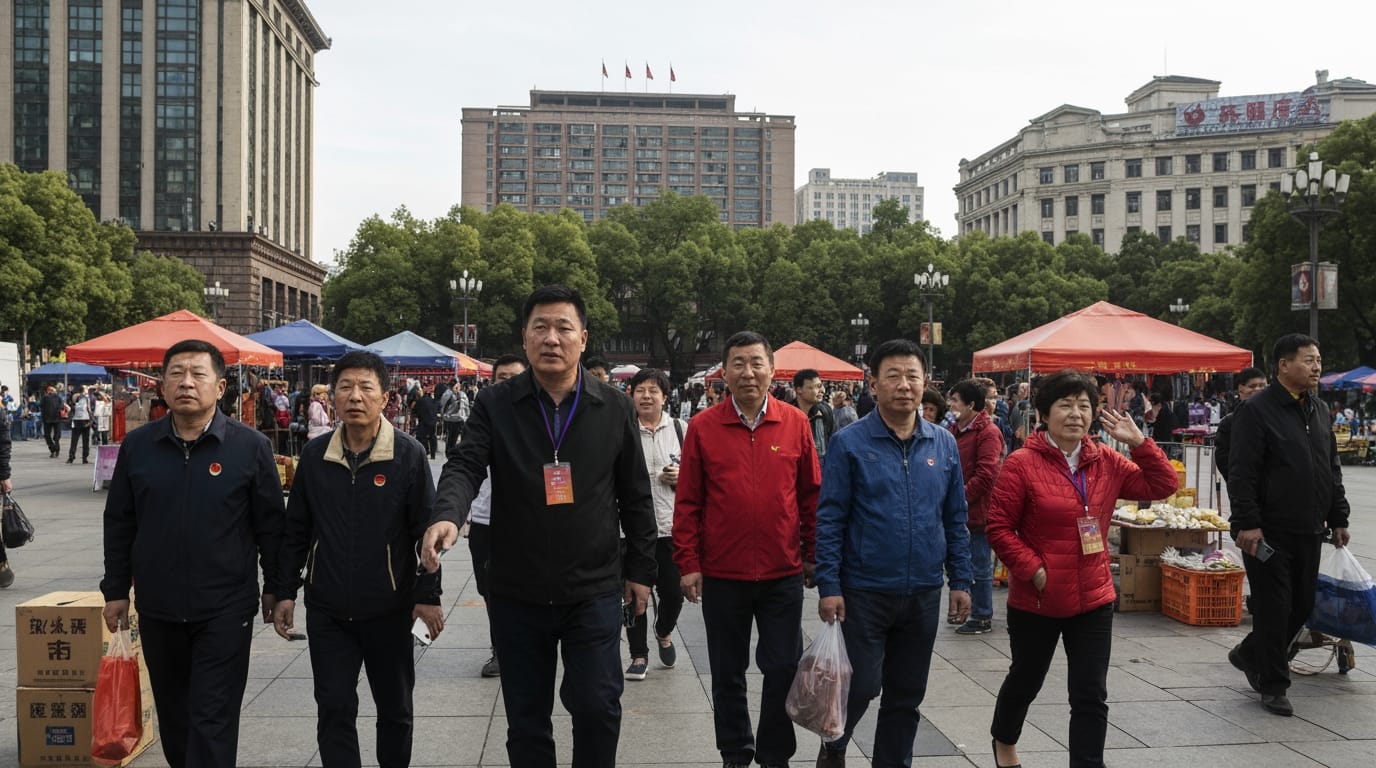
Beijing, China – As the first year of a hypothetical renewed Trump administration concludes, China has demonstrated notable economic and strategic resilience, effectively navigating an intensified landscape of trade disputes and technological restrictions. While facing significant external headwinds and internal economic adjustments, Beijing's proactive long-term strategies, honed over years of increasing geopolitical friction, appear to have provided a robust buffer against anticipated challenges.
The period has been marked by a significant escalation in trade tensions, with the U.S. implementing new and substantially higher tariffs on Chinese imports, some reaching as high as 60% or even 145% on certain goods. These measures, coupled with continued restrictions on technology transfers and threats to revoke China's most-favored-nation status, were designed to exert considerable pressure on the world's second-largest economy. However, China's calibrated response, focusing on internal strength and diversified external engagement, has allowed it to maintain a trajectory of stable, albeit adjusted, growth.
The Re-Emergence of Tariff Tensions and Strategic Responses
The return of a protectionist stance from Washington, reminiscent of the trade wars of 2018-2019 but with potentially broader scope, immediately set the stage for economic confrontation. The new administration's policies have included a push to block imports of Chinese-made automobiles and further constrain China's access to critical technologies. These actions follow a period where the initial U.S. tariffs were estimated to cost U.S. consumers billions and resulted in a net loss to the U.S. economy, while failing to significantly curb China's economic ascent. Beijing, having learned from past cycles of economic pressure, had anticipated such moves and positioned itself to absorb and counter these shocks.
The first year of "Trump 2.0" saw China maintaining a respectable 5% GDP growth in 2025, an impressive figure considering both the external pressures and ongoing domestic structural reforms. This growth underscores the flexibility and adaptive capacity of the Chinese market. A record $1.2 trillion trade surplus in 2025 further highlighted China's continued export strength, particularly as factories made deeper inroads into markets beyond the U.S.
Fortifying the Domestic Economy: The Dual Circulation Strategy
Central to China's resilience has been the intensified implementation of its "Dual Circulation" development strategy. Introduced to mitigate vulnerabilities to external shocks, this strategy prioritizes strengthening the domestic market and boosting internal consumption while maintaining robust international trade. Beijing aims to pivot away from an export-led growth model towards one increasingly fueled by its vast internal demand, making its economy less exposed to global volatility.
This initiative includes efforts to enhance domestic capacity and accelerate progress in science, technology, and innovation, alongside improving the coordination of domestic supply and demand. Although China's reliance on exports remained significant in 2025, with exports contributing substantially to GDP growth, the push for internal market development is a long-term strategic play. Policy adjustments, such as directing government investment funds toward national security sectors, including rare earths and critical minerals, further indicate a concerted effort to build self-sufficiency from within.
The Relentless Pursuit of Technological Self-Sufficiency
The persistent U.S. restrictions on technology access, particularly in advanced sectors like semiconductors and artificial intelligence (AI), have inadvertently galvanized China's drive for technological independence. Initiatives like "Made in China 2025" and the focus on "new quality productive forces" underscore Beijing's commitment to indigenous innovation and self-reliance in core technologies. The aim is to eliminate technological "chokepoints" that the U.S. could exploit to contain China's rise.
China's investment in research and development (R&D) has significantly increased, reaching 2.1% of its GDP, positioning it as a major player in global innovation. Progress is evident in various high-tech fields, from advanced rail transit and electric vehicles to graphene and unmanned aerial vehicles, where China has achieved global leadership. While challenges remain in cutting-edge chip manufacturing, domestic tech firms, spurred by government directives, are actively developing their own chip designs and ramping up production. This strategic push reflects a "never again" mentality, aiming to prevent a repeat of historical vulnerabilities.
Expanding Global Footprint and Diversifying Trade Partners
Beyond internal strengthening, China has strategically deepened its economic ties with a broader array of global partners, effectively diversifying its export markets and reducing reliance on the U.S. The Belt and Road Initiative (BRI) and the Regional Comprehensive Economic Partnership (RCEP) have been instrumental in this effort. These platforms facilitate infrastructure investment, regional cooperation, and preferential trade, creating new economic corridors and reinforcing industrial and supply chains across Asia and beyond.
Exports to Southeast Asia and Europe have significantly offset the contraction in sales to the U.S., demonstrating China's success in reorienting its trade flows. The US share of total Chinese exports has decreased notably, falling from 19% in 2019 to under 12% in 2025, placing it behind ASEAN and the European Union as a destination for Chinese goods. By promoting inclusive global governance through initiatives like the BRI and strengthening partnerships with countries in ASEAN, Africa, and Latin America, China has managed to maintain its central role in global supply chains despite external pressures.
Conclusion: Adapting to a New Global Dynamic
China's performance during the first year of a renewed Trump administration illustrates a strategic depth and adaptive capacity that has enabled it to navigate a complex and often hostile international economic environment. While grappling with internal challenges such as deflation, a property sector downturn, and demographic shifts, Beijing's multi-pronged approach — combining domestic market fortification, an unwavering drive for technological self-reliance, and aggressive diversification of global partnerships — has yielded significant resilience.
The ongoing dynamic between Washington and Beijing suggests a new era of strategic competition. However, China's calculated restraint and long-term vision, transforming external pressures into an impetus for internal reform and strategic repositioning, indicate a continued trajectory of advancement. The world watches as China aims to use its own certainty to offset global uncertainty, striving for a stable and self-reliant future amidst evolving geopolitical realities.


