China Praises Nations for Blocking Taiwan President's Flight, Escalating Diplomatic Tensions
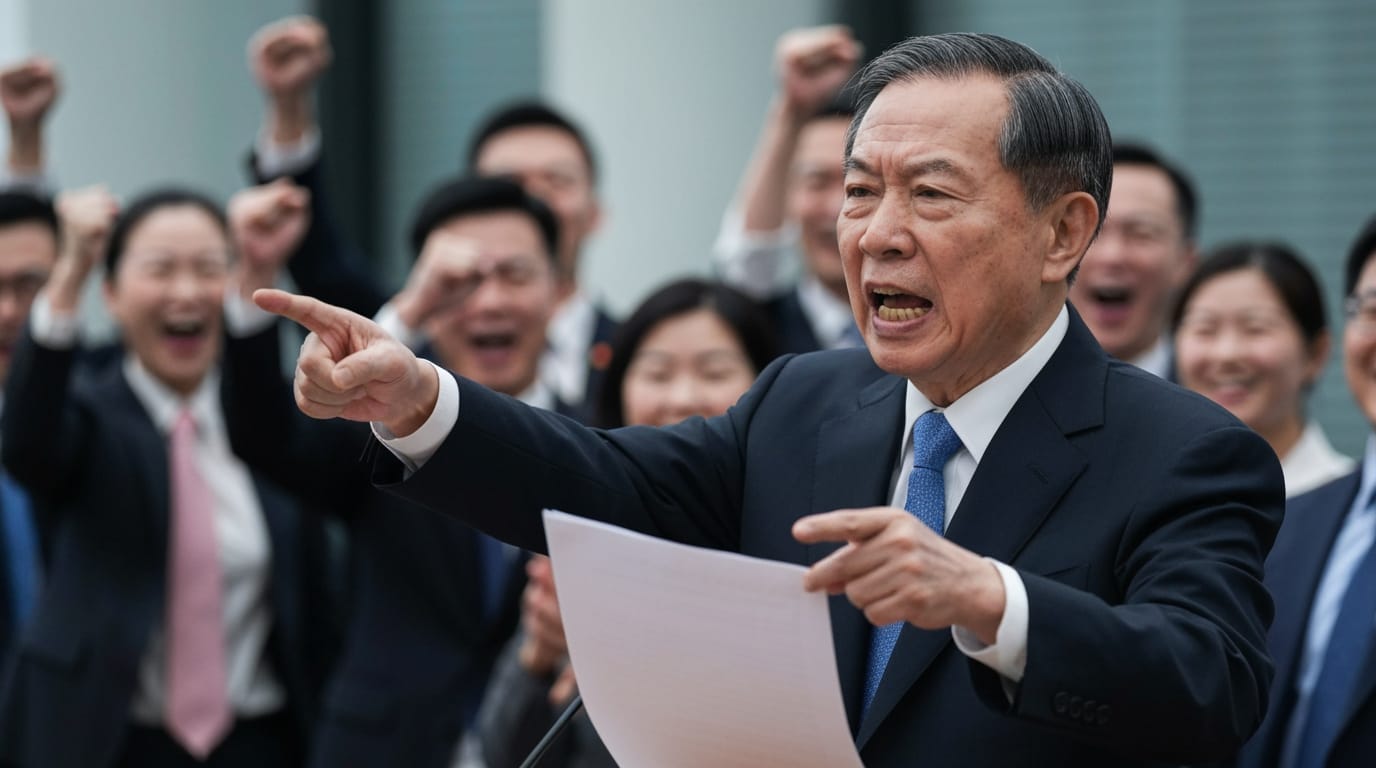
Beijing Hails Adherence to "One China" Principle After African Nations Revoke Overflight Permissions for President Lai Ching-te's Diplomatic Trip
Taipei, Taiwan – A planned diplomatic visit by Taiwan's President Lai Ching-te to Eswatini, one of the island nation's few remaining diplomatic allies, was abruptly canceled this week after three African countries revoked previously granted overflight permissions for his aircraft. The People's Republic of China (PRC) subsequently lauded the actions of Seychelles, Mauritius, and Madagascar, asserting that their decisions underscored global adherence to Beijing's "One China" principle. This incident marks a significant escalation in Beijing's campaign to diplomatically isolate Taiwan, compelling a sitting Taiwanese president to cancel an international trip due to denied airspace access for the first time.
The Canceled Journey and Unprecedented Airspace Denial
President Lai Ching-te had been scheduled to embark on a trip to Eswatini, the small southern African kingdom and Taiwan's sole African diplomatic partner, to partake in celebrations marking King Mswati III's 40th accession anniversary. However, the journey was called off after Seychelles, Mauritius, and Madagascar unexpectedly withdrew permission for the presidential aircraft to traverse their airspace. Taiwan's presidential office and officials accused Beijing of exerting "intense pressure," including potential economic coercion, on these nations to revoke the clearances. The sudden nature of these revocations, reportedly occurring without prior warning or clear explanation from the three countries, left the trip logistically impossible. This event represents a novel tactic in Beijing's strategy, as Taiwanese presidents typically encounter no issues in overflying countries with which Taipei does not maintain formal diplomatic relations.
Beijing's Stance and the "One China" Principle
China's response to the flight cancellations was one of explicit approval. A spokesperson for Beijing's Taiwan Affairs Office publicly praised Seychelles, Mauritius, and Madagascar for their "position and practice" in upholding the "One China" principle. This principle asserts that there is only one sovereign state under the name China, with the PRC as its sole legitimate government, and that Taiwan is an inseparable part of China. Beijing consistently frames Taiwan as a core sovereignty issue and a non-negotiable "red line" in its foreign policy.
While denying Taipei's allegations of economic coercion, the Chinese spokesperson, Zhang Han, reiterated Beijing's view that the "One China" principle constitutes a fundamental norm of international relations and enjoys broad international consensus. During a regular news conference in Beijing, Zhang quoted ancient Chinese philosopher Mencius, stating that "a just cause enjoys abundant support, while an unjust cause finds little support," underscoring China's belief in the righteousness of its stance. China's foreign ministry further reinforced this position, declaring that there is "no longer a so-called Republic of China president in the world anymore," referring to Taiwan by its formal name, and asserting that anyone adopting such a "false title" acts against history. This rhetoric highlights Beijing's consistent efforts to undermine the legitimacy of Taiwan's democratically elected government and its international presence.
Taipei's Condemnation and Accusations of Coercion
Taipei vehemently condemned the actions leading to the cancellation of President Lai's trip, directly attributing the revoked overflight permissions to pressure from Beijing. Taiwan's presidential office and officials accused China of using its considerable economic and diplomatic leverage to compel the African nations into denying airspace access. Presidential Secretary-General Pan Men-an stated that such coercion is "unprecedented" and represents blatant interference in the internal affairs of other countries, disrupting the regional status quo.
Taiwanese authorities emphasized that the Republic of China (Taiwan's official name) is a sovereign state with an undeniable right to engage with the global community. President Lai Ching-te, in a social media post, criticized China's "suppressive actions" as a demonstration of the threat authoritarian states pose to international order, peace, and stability. He affirmed that no amount of threat or suppression could alter Taiwan's resolve to interact with the world or diminish its capacity to contribute internationally. Taiwan views these maneuvers as part of a broader strategy by Beijing to expand its diplomatic isolation efforts beyond formal recognition, extending to logistical support and global mobility.
International Reactions and Geopolitical Implications
The incident quickly garnered international attention, particularly from the United States. US lawmakers, including members of the House Committee on Foreign Affairs and the House Select Committee on Strategic Competition between the United States and the Chinese Communist Party, strongly condemned China's efforts. They characterized Beijing's actions as "economic pressure aimed at isolating a democratic partner" and not diplomacy, asserting solidarity with Taiwan against what they deemed "blatant coercion." Some US senators linked the incident to broader concerns about Chinese influence in Africa and the implications for global freedoms under a potential Chinese-controlled international order.
The denial of airspace rights and China's subsequent praise underscore the intensifying geopolitical competition surrounding Taiwan. Eswatini, as one of Taiwan's few remaining diplomatic allies, holds significant symbolic importance, and any disruption to such high-level visits represents a blow to Taiwan's already constrained international space. The incident highlights China's expanding diplomatic pressure tactics, influencing even countries without formal ties to Taiwan to align with its "One China" policy. This strategy aims to diminish Taiwan's international visibility and further solidify Beijing's claim over the self-governing island.
A Continuous Struggle for International Space
The cancellation of President Lai Ching-te's trip to Eswatini, prompted by the revoked overflight permissions and subsequent commendation from Beijing, vividly illustrates the ongoing and complex struggle for Taiwan's international recognition. China's celebratory response to the actions of Seychelles, Mauritius, and Madagascar reinforces its unwavering commitment to the "One China" principle and its determination to restrict Taiwan's global engagement. Conversely, Taiwan's strong condemnation and accusations of coercion highlight its persistent efforts to assert its sovereignty and maintain its right to participate on the world stage.
This incident underscores the diplomatic challenges faced by Taiwan and the potent influence Beijing wields in international affairs, particularly with nations susceptible to economic and political pressure. As cross-strait tensions continue to evolve, the global community observes how such actions impact international norms, the principles of sovereign travel, and the future trajectory of Taiwan's relationship with the rest of the world. The episode serves as a stark reminder of the delicate balance of power in the Indo-Pacific and the persistent diplomatic maneuvers that define the struggle for Taiwan's international space.


