International Criminal Court Affirms Jurisdiction Over Duterte: A Landmark Ruling in the Pursuit of Justice
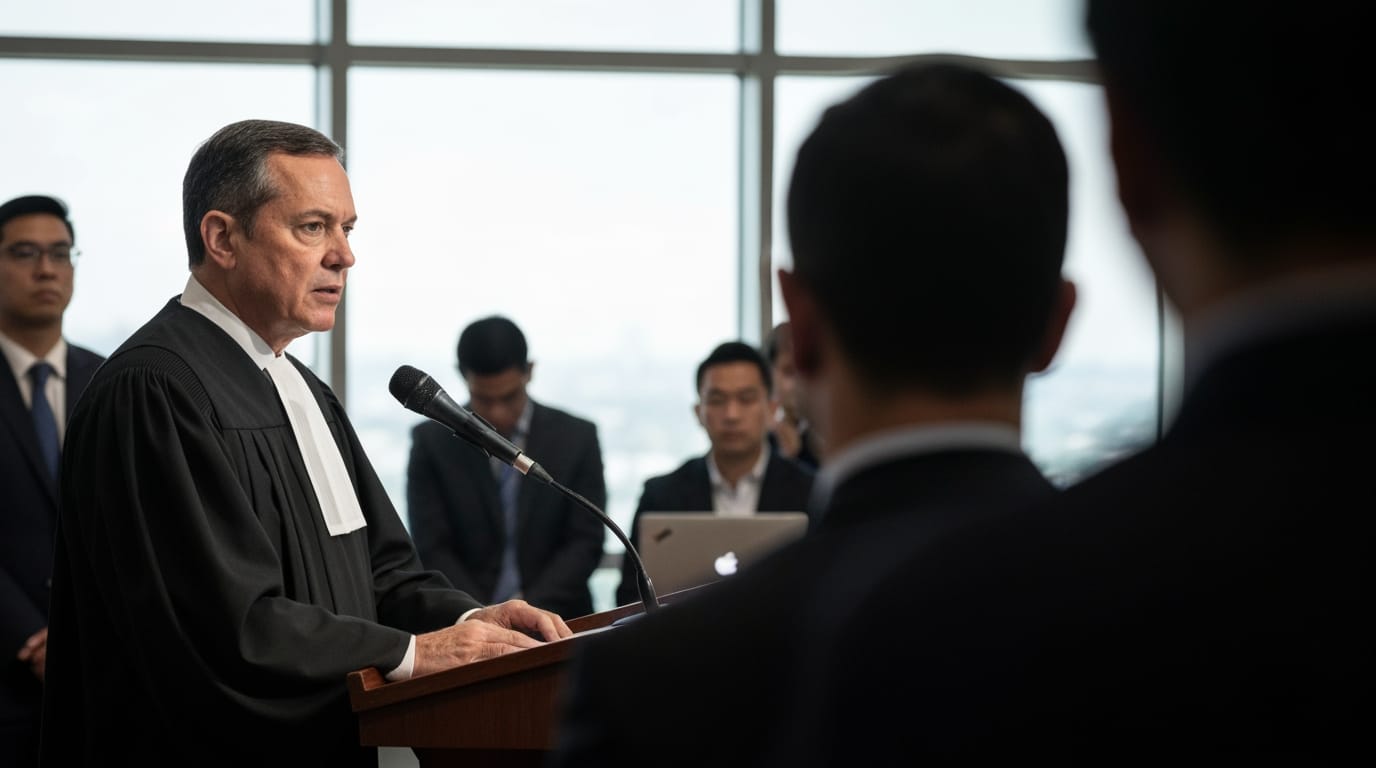
THE HAGUE – In a pivotal decision that underscores the global reach of international justice, the International Criminal Court (ICC) Appeals Chamber has decisively affirmed its jurisdiction over former Philippine President Rodrigo Duterte, rejecting his defense's plea to nullify the court's authority. This landmark ruling, issued on Wednesday, April 22, 2026, paves the way for the prosecution of Duterte on charges of crimes against humanity linked to his controversial "war on drugs." The court also denied his request for release from detention, citing concerns about flight risk and potential witness intimidation. The pronouncements from The Hague mark a significant moment for accountability, particularly for the thousands of victims and their families who have long sought justice for alleged atrocities committed during Duterte's tenure.
The Appeals Chamber's ruling on jurisdiction closes a protracted legal battle over the ICC's right to investigate and prosecute the former head of state. Prosecutors have accused Duterte of three counts of crimes against humanity, stemming from his alleged involvement in numerous killings. These charges encompass 19 murders committed between 2013 and 2016 while he served as mayor of Davao City, 14 deaths of "high-value targets" between 2016 and 2017 during his presidency, and 43 killings during "clearance operations" from 2016 to 2018. The charge sheet specifically refers to 76 murders, although prosecutors contend the actual scale of victimization during the charged period was significantly greater. Human rights groups estimate the death toll from the "war on drugs" to be well over 6,000, with some suggesting a much higher figure. These figures highlight the immense human cost at the heart of the ICC's investigation.
The Genesis of Scrutiny: Duterte's "War on Drugs"
Rodrigo Duterte launched his aggressive anti-narcotics campaign shortly after assuming the presidency in June 2016, promising to eradicate illegal drugs within months. His "war on drugs" was characterized by a heavy-handed approach that, according to critics and international bodies, resulted in widespread extrajudicial killings. Duterte himself often used fiery rhetoric, openly threatening drug suspects with death and encouraging law enforcement to use lethal force if confronted. He once claimed to have hired a death squad during his time as mayor of Davao City, a statement that drew considerable alarm.
International concern quickly mounted, leading to preliminary examinations by the ICC Prosecutor Fatou Bensouda in February 2018. In response, the Philippine government, under Duterte's leadership, announced its intention to withdraw from the Rome Statute, the treaty establishing the ICC, in March 2018. The withdrawal officially took effect one year later, in March 2019. However, the ICC maintains jurisdiction over alleged crimes committed while the Philippines was a State Party to the Statute, specifically from November 1, 2011, until March 16, 2019. This legal provision is crucial, as it ensures that a state cannot evade accountability by simply withdrawing from the court.
A Protracted Legal Battle for Jurisdiction
Following the preliminary examination, the ICC Pre-Trial Chamber I authorized a formal investigation into the situation in the Philippines in September 2021. The Philippine government subsequently requested a deferral, arguing that domestic mechanisms were already investigating the drug war killings. However, the ICC Prosecutor, Karim Khan, concluded that these domestic efforts did not mirror the scope or depth of the ICC's probe. Consequently, the Chamber authorized the resumption of the investigation in January 2023, finding that local initiatives were insufficient to achieve tangible justice.
Duterte's arrest in March 2025 by Philippine authorities, acting on an ICC warrant, marked a dramatic turn. He was subsequently transferred to the ICC's detention unit at Scheveningen Prison in The Hague. During his initial appearance via video link, reports described him as confused and exhausted, leading his defense team to request his release on medical grounds, citing his advanced age (80-81) and alleged cognitive impairment. These requests were consistently rejected by the ICC judges, who determined that Duterte posed a flight risk and could interfere with the legal process or intimidate potential witnesses if released. They noted his "necessary political contacts" and "network of support" within the Philippines as factors that could facilitate his absconding or influencing witnesses.
Implications for International Law and Accountability
The Appeals Chamber's confirmation of jurisdiction on April 22, 2026, signifies a robust assertion of the ICC's mandate to prosecute those responsible for the most heinous international crimes, regardless of their former position. This decision reinforces the principle that no individual, not even a former head of state, is above the law when it comes to crimes against humanity.
The case has been closely watched by human rights organizations and victim groups globally, who view it as a critical test of the ICC's ability to deliver justice. Representatives for victims of the "war on drugs" have consistently expressed hope that the ICC would uphold its jurisdiction, fulfilling a role that they believe the Philippine domestic system failed to perform. They see the court as possessing the necessary resources and impartiality to examine the charges thoroughly.
Moving Forward: The Path to Trial
With jurisdiction now firmly established, the case against Duterte will proceed to trial. Pre-trial hearings began in February 2026 to determine if there is sufficient evidence to move forward. The prosecution's allegations suggest a systematic pattern of violence and murder, with Duterte allegedly designing and disseminating a policy to "neutralize" alleged criminals. This involved allegedly inducting hitmen and providing them with logistical support, including firearms, ammunition, and safe houses, during his time as mayor. After becoming president, he is accused of appointing individuals from Davao City to national positions to continue this policy nationwide, establishing a network of perpetrators including law enforcement officers, non-police assets, and hitmen.
The legal proceedings are expected to be complex and lengthy, marked by ongoing debates surrounding Duterte's fitness to stand trial due to his reported cognitive impairment. Despite these challenges, the ICC's unwavering stance on jurisdiction and detention signals its commitment to ensuring accountability for alleged crimes committed during the Philippine "war on drugs." The unfolding trial will undoubtedly be a closely scrutinized event, shaping perceptions of international criminal justice for years to come and offering a measure of hope to those who have suffered.


