South Korean Arrested Amidst Yasukuni Spring Festival, Reigniting Historical Tensions
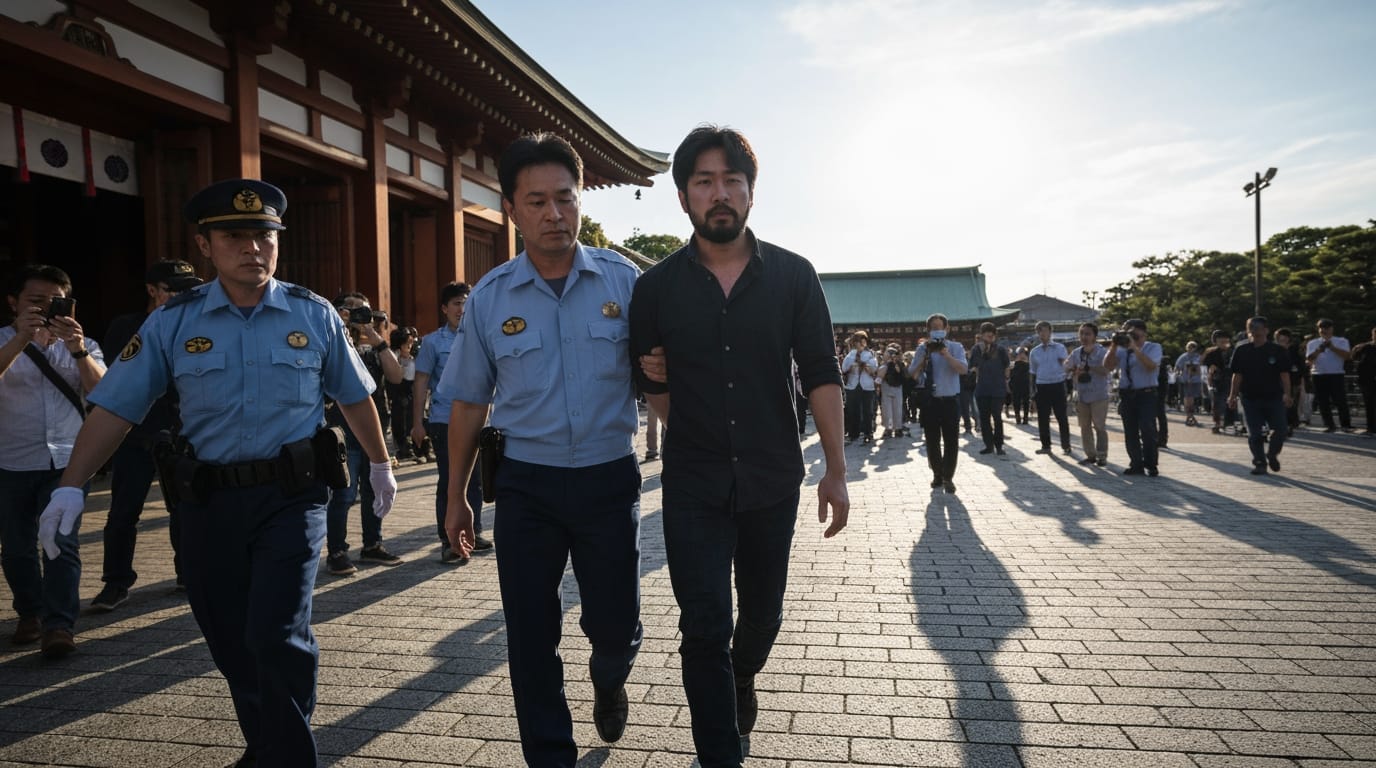
TOKYO – A South Korean national was arrested Wednesday outside Tokyo’s controversial Yasukuni Shrine, after attempting to unfurl protest banners during its annual spring festival. The incident, occurring amidst renewed offerings and visits by Japanese political figures, immediately reignited long-standing historical grievances between Japan and its neighbors, particularly South Korea.
Japanese police apprehended the man, identified only by his surname Park, in his 60s, on suspicion of obstruction of business. Park, who reportedly entered Japan on Monday from South Korea, was stopped by shrine officials as he tried to display banners at approximately 11 a.m. The banners bore messages asserting "Dokdo is our territory" and demanding "Stop visits to Yasukuni Shrine, which enshrines war criminals." Authorities stated that Park intended to hang these protest materials in front of a vehicle carrying an imperial envoy, who visits the shrine during the spring and autumn rites to present offerings on behalf of the emperor. Upon his arrest, Park reportedly told police that he "did what he set out to do."
Yasukuni Shrine: A Lingering Point of Contention
The Yasukuni Shrine, whose name means "Peaceful Country Shrine," was established in 1869 by Emperor Meiji to commemorate those who died in service of Japan, initially from the Boshin War. It enshrines the spirits of approximately 2.5 million Japanese war dead. However, it remains a profound source of contention, particularly with South Korea and China, due to the enshrinement of 14 convicted Class-A World War II war criminals, who were secretly added to the list in 1978.
For many in East Asia, including the victims of Japanese aggression during World War II, the shrine is not merely a memorial but a symbol of Japan's past militarism and a glorification of its wartime deeds. Official visits or offerings by Japanese politicians to Yasukuni are consistently met with strong condemnation, seen as a lack of remorse for Japan's imperial past and a failure to acknowledge the suffering inflicted during its colonial rule and wartime atrocities. The shrine's adjacent Yushukan museum also contributes to the controversy, with critics arguing its portrayal of history downplays or omits Japanese wartime atrocities.
Diplomatic Aftershocks and Deep-Seated Grievances
The arrest of the South Korean national unfolded against a backdrop of heightened sensitivities surrounding the shrine's spring festival. Just a day prior, on Tuesday, April 21, Japanese Prime Minister Sanae Takaichi sent a ritual offering to Yasukuni Shrine, a move that immediately drew criticism from both Seoul and Beijing. South Korea's Foreign Ministry expressed "deep disappointment and regret" over the offering, urging Japanese leaders to "squarely face history" and demonstrate "humble reflection and sincere remorse" for Japan's imperial past. Furthermore, on the very day of the arrest, a group of more than 100 right-wing Japanese lawmakers, including a Cabinet minister, visited the shrine in person to pay their respects.
This incident underscores the fragility of relations between Japan and South Korea, which, despite periods of cooperation, are frequently hampered by historical disputes and territorial claims. The reference to "Dokdo is our territory" on one of the protest banners highlights another persistent point of friction: the Takeshima/Dokdo islets, which are claimed by both nations. These ongoing disagreements over history and territory continue to cast a shadow over diplomatic efforts to forge a more future-oriented relationship between the two key U.S. allies in Northeast Asia.
A Cycle of Resentment and Protest
Incidents at Yasukuni Shrine have become a recurring feature in the complex narrative of Japan's relationship with its neighbors. Whether through official visits, ritual offerings, or protests, the shrine consistently serves as a flashpoint, illustrating the profound differences in how historical events are perceived and remembered across the region. Each new development at Yasukuni tends to trigger a predictable cycle of Japanese actions, followed by condemnation from South Korea and China, perpetuating a diplomatic stalemate on these sensitive issues.
The arrest of Park at Yasukuni Shrine during its spring festival serves as a stark reminder that the wounds of history in Northeast Asia remain unhealed. Despite recent efforts to improve bilateral ties in the 2020s, the shrine continues to be a potent symbol that, when activated by political gestures or public demonstrations, quickly unravels diplomatic progress and brings deep-seated resentments back to the forefront. The path towards full reconciliation and a truly "peaceful country" for all in the region remains fraught with the challenges of confronting and acknowledging a shared, yet bitterly contested, past.


