UK and France Seal Landmark Three-Year Pact to Stem English Channel Crossings
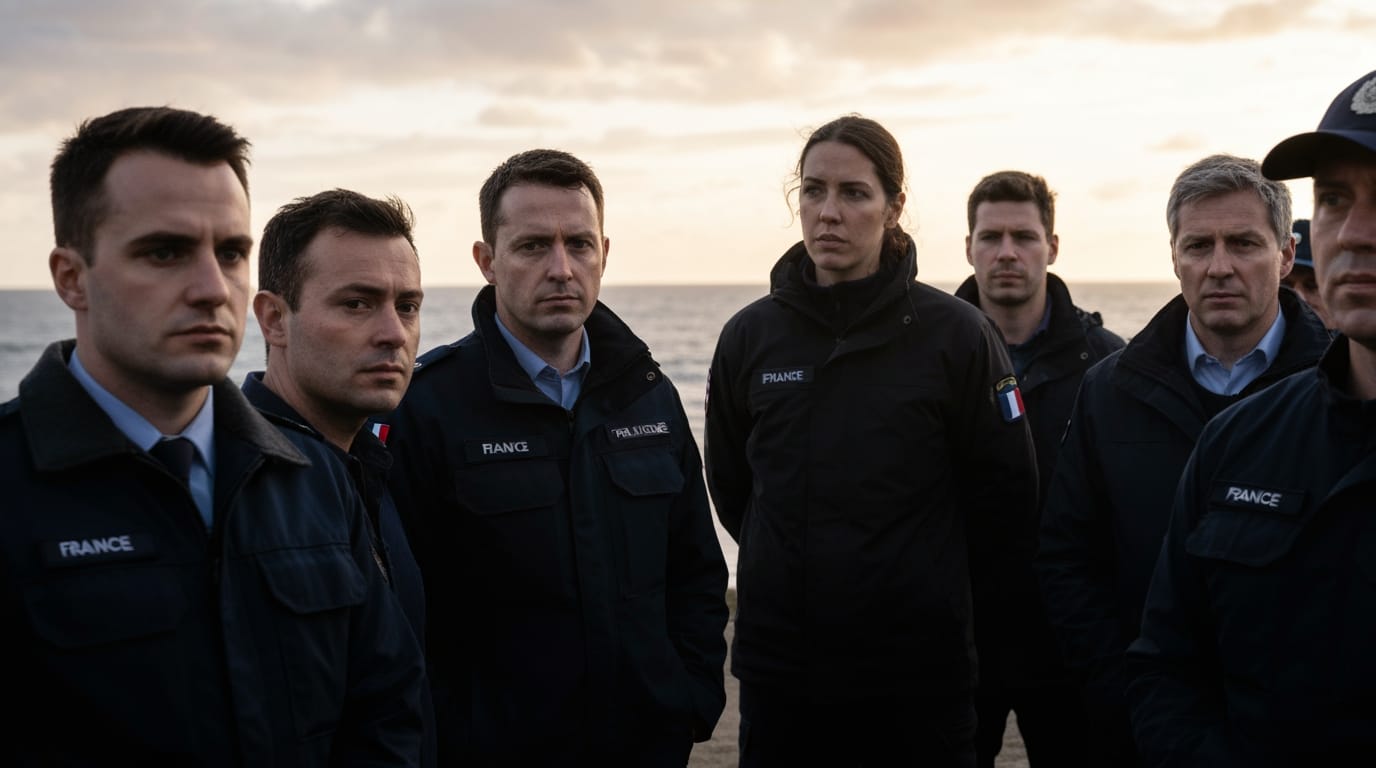
In a concerted effort to curb the perilous surge in illegal English Channel crossings, the United Kingdom and France have formally solidified a new three-year agreement, committing substantial resources and enhanced cooperation. The deal, unveiled on April 22, 2026, represents a significant diplomatic and operational undertaking by both nations to disrupt human smuggling networks and deter migrants from undertaking dangerous journeys in small boats. British Home Secretary Shabana Mahmood and French Interior Minister Laurent Nunez are scheduled to provide further details, emphasizing a renewed strategic partnership following months of intricate negotiations.
A New Blueprint for Cross-Channel Enforcement
Under the terms of the renewed agreement, the United Kingdom has pledged a financial contribution of up to 766 million euros (approximately £660 million) over the next three years to bolster French efforts. This substantial funding package includes a core contribution of 580 million euros, marking an increase of 40 million euros compared to the previous treaty. Critically, nearly a quarter of the total funding, approximately 186 million euros (around £160 million), is contingent upon measurable results, to be assessed annually. If the agreed-upon French measures do not yield "sufficient results," this conditional funding will be reallocated to alternative actions.
In return for this investment, France has committed to a substantial expansion of its law enforcement presence along its northern coastline, vowing to increase the number of officers dedicated to combating irregular migration by more than half, aiming for a total of 1,400 officers by 2029. This build-up includes a projected 40% surge in overall personnel, bringing the immediate count from 750 to 1,100 enforcement, intelligence, and military officers. A notable addition to the French strategy is the establishment of five new police units, including a 50-strong riot squad, specifically trained in crowd control tactics. These units will be equipped to "contain and disperse" individuals attempting to board small boats, with UK funding potentially contributing to the provision of batons, shields, and tear gas. Furthermore, France plans to deploy advanced surveillance technology, including drones, helicopters, and sophisticated digital resources, to enhance prevention capabilities and specifically target "taxi boats" used by smugglers. A significant portion of these intensified resources is slated for deployment from the start of the summer season, traditionally the peak period for small boat crossings.
The Evolving Crisis in the Channel
The latest agreement emerges against a backdrop of persistently high and increasingly dangerous Channel crossings. In 2025, British authorities recorded 41,472 people reaching the UK irregularly in small boats, marking the second-highest annual figure since large-scale crossings began in 2018. This upward trend has been accompanied by tragic loss of life, with at least 29 migrants dying in the Channel in 2025 alone, and 36 recorded as dead or missing in the same year.
The issue of irregular migration across the English Channel has been a consistent point of contention and cooperation between the UK and France for decades, evolving from earlier agreements addressing security around the Channel Tunnel and ferry terminals. Since 2019, the focus has predominantly shifted to small boat crossings, which became the predominant method of irregular arrival in the UK by 2020. Previous efforts include the Sandhurst Treaty, first signed in 2018 and extended in 2023, which established the framework for UK financial contributions to French border security. In July 2025, a pilot "one-in, one-out" scheme was introduced, aiming to deter crossings by allowing the UK to return small boat arrivals to France, while facilitating a legal route for an equivalent number of asylum seekers to enter the UK from France. As of early February 2026, 305 individuals had been returned to France under this pilot, with 367 entering the UK via the legal route.
Operational Strategy and Growing Scrutiny
The practical implementation of this new, comprehensive strategy presents considerable challenges. The deployment of increased personnel and advanced technology aims to significantly disrupt the operations of criminal gangs who profit from the desperation of migrants. French officials report considerable success in combating these networks, noting approximately 480 smugglers were arrested in 2025. They also cite a halving of arrivals to the UK in early 2026 compared to the same period last year, suggesting some measures are already showing an impact.
However, past cooperation has not been without its difficulties. A 2024 report by France's Court of Accounts criticized the UK for insufficient coordination and for providing "out-of-date information" regarding intelligence sharing, a claim the UK Home Office disputes. The effectiveness of solely focusing on policing the Channel has also been questioned by campaigners, who argue for an expansion of safe and legal routes for asylum seekers. The inclusion of a dedicated riot squad in the new deal has drawn sharp criticism from humanitarian organizations. Sile Reynolds, head of asylum advocacy at Freedom from Torture, described the plans as a "deeply alarming" escalation, warning of the "brutalisation" of vulnerable individuals. Such groups contend that funding tactics like crowd control risks subjecting men, women, and children to further state violence, many of whom have already endured persecution.
Political Imperatives and Broader Perspectives
For the UK government, led by Prime Minister Keir Starmer, tackling illegal Channel crossings is a significant political imperative. Starmer faces considerable pressure to demonstrate control over the nation's borders, particularly amidst ongoing political scrutiny. Both Starmer and Home Secretary Mahmood have hailed the agreement as a "landmark deal" that will "restore order and control" and put smugglers behind bars.
The deal signifies a renewed commitment from both nations to address a complex issue that carries both humanitarian and political weight. While the UK emphasizes the need for robust enforcement to deter dangerous crossings and dismantle criminal enterprises, France seeks to manage its border responsibilities while receiving financial support. The conditional nature of a portion of the UK's funding underscores the British government's insistence on tangible results, aiming to ensure that taxpayer money is effectively utilized. This comprehensive three-year strategy represents the latest iteration in a long series of Anglo-French collaborations, striving to find a lasting solution to the humanitarian crisis and security challenges posed by irregular migration across one of the world's busiest shipping lanes.
The success of this new agreement will hinge not only on the scale of resources deployed but also on the efficacy of joint intelligence sharing, the ability to adapt to evolving smuggling tactics, and the ongoing dialogue between the two nations regarding both enforcement and humanitarian considerations. The stakes remain high for thousands of individuals seeking refuge and for the political stability of both the United Kingdom and France.