Nepal's Home Minister Resigns Amid Financial Scrutiny, Jolting Anti-Corruption Drive
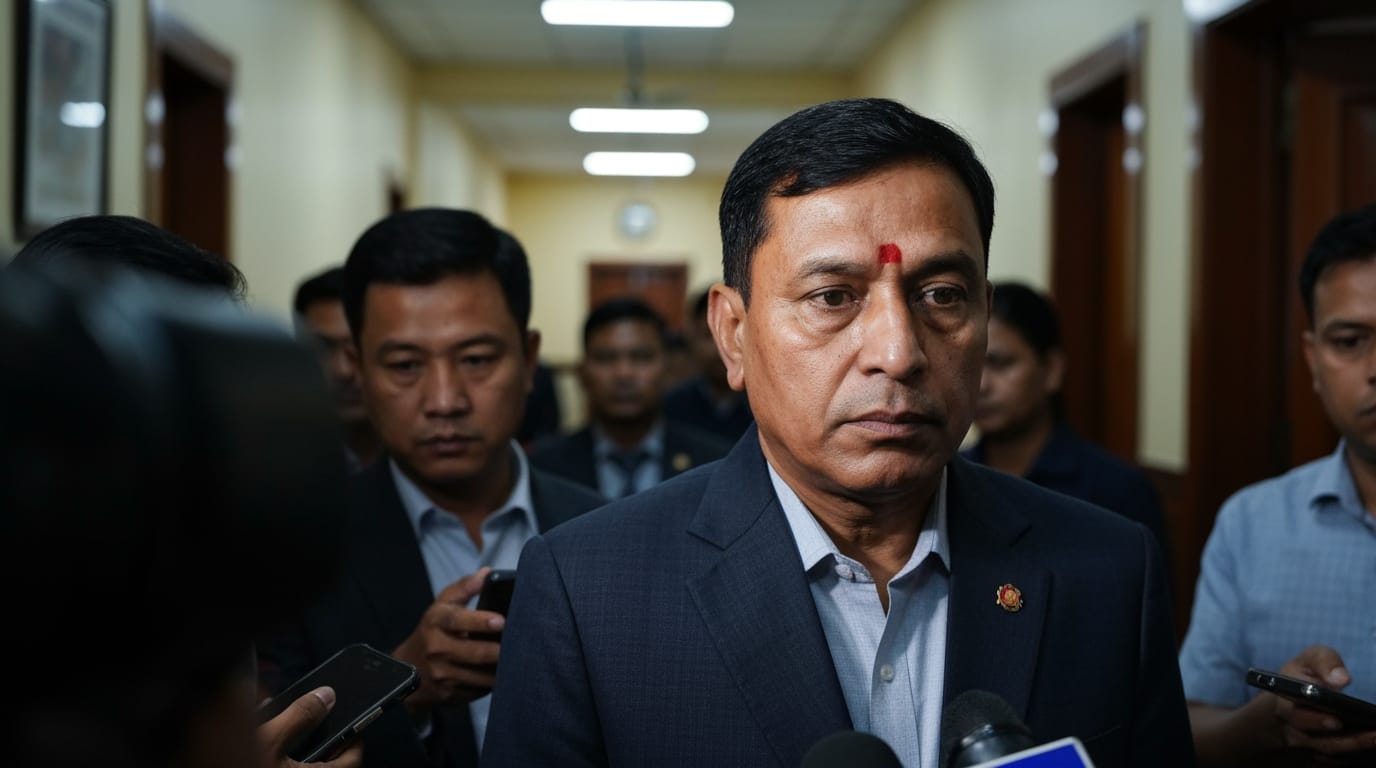
Kathmandu, Nepal – Nepal's newly appointed Home Minister, Sudan Gurung, a prominent figure elected on a stringent anti-corruption platform, announced his resignation on Wednesday, April 22, amidst a burgeoning financial investigation into his personal assets and alleged links with a businessman facing money laundering charges. Gurung, 38, who had served in the crucial ministerial role for less than a month, cited the need for a "fair investigation" and upheld "morality" and "public trust" as his guiding principles in stepping down. His abrupt departure sends ripples through Nepal's nascent government, reigniting concerns about accountability and the persistent challenge of graft in the Himalayan nation's political landscape.
Short Tenure, Swift Downfall: Gurung's Resignation Unfolds
Home Minister Sudan Gurung's resignation, effective Wednesday, April 22, was confirmed by Prime Minister Balendra Shah's press advisor, Dipa Dahal, who stated that the Prime Minister would temporarily oversee the Home Ministry until a new appointment is made. Gurung, a key leader of the Gen Z protests that led to the toppling of the previous Nepali government in September, ascended to power with the Rastriya Swatantra Party (RSP), which secured a landslide victory in the March elections. His tenure began on March 27, and he quickly made headlines by initiating arrests of former prime minister K.P. Sharma Oli and former home minister Ramesh Lekhak for their alleged involvement in a deadly crackdown on protesters. However, his aggressive stance against corruption was quickly overshadowed by allegations concerning his own financial dealings, leading to public and internal party pressure. Gurung is the second minister to resign from the new government, following the dismissal of the Labour Minister over code of conduct issues just weeks prior.
Allegations and the Irony of an Anti-Corruption Champion
The core of the investigation revolves around Gurung's financial investments and assets, particularly his reported links to Deepak Bhatta, a businessman currently under investigation for alleged money laundering. Reports indicated that Gurung held investments and shares in companies associated with Bhatta, including Star Micro Insurance and Liberty Micro Insurance. While Gurung maintained that his investments were properly declared and that any discrepancies were issues of classification rather than concealment, critics swiftly pointed out the apparent conflict of interest and the stark contrast with his electoral promises. On April 20, just two days before his resignation, Gurung publicly dismissed the allegations as "rumours," emphasizing that "accusations and truth are not the same thing" and that "decisions should be based on evidence, not emotion." He further argued that the investigation into Bhatta fell under the Department of Money Laundering Investigation, an agency not within the Home Ministry's direct purview, thereby asserting no interference. Gurung declared over Rs 20 million in stock market-related investments, asserting that his public disclosures demonstrated transparency. However, some of his shares were reportedly purchased after the Gen Z movement and were not listed in his initial public asset declaration submitted on April 12.
Gurung's rise to power was deeply intertwined with the public's desire for a crackdown on corruption. He was a prominent voice in the September Gen Z protests, which gathered momentum due to widespread grievances over corruption and a struggling economy. His promises of transparency and good governance resonated strongly with voters, especially the youth, propelling the Rastriya Swatantra Party to a significant electoral victory. The current investigation, therefore, strikes at the very foundation of his political mandate and the aspirations of those who supported him.
Political Fallout and the RSP's Stance
The allegations against Gurung placed immense pressure on the Rastriya Swatantra Party (RSP), which campaigned on a platform of clean politics and accountability. Within the party, leaders began demanding a fair and transparent investigation, highlighting the challenge for the RSP to uphold its core principles. The party had previously acted swiftly to dismiss the Labour Minister for misusing his position to facilitate his wife's appointment to a health board, demonstrating a commitment to internal discipline. However, the allegations against Gurung, deemed more serious by some lawmakers, tested the party's consistency and resolve. While the issue was not formally discussed at a recent Central Committee meeting, internal consultations were underway, with many believing an investigation was unavoidable given the public nature of the questions raised. Gurung's resignation is a direct consequence of this internal and external pressure, aiming to protect the party's image and allow for an unhindered investigation.
Nepal's Enduring Struggle Against Corruption
Gurung's resignation underscores the persistent and pervasive issue of corruption in Nepal, a nation that currently ranks 109th out of 180 countries on Transparency International's Corruption Perceptions Index. The current government, under Prime Minister Balendra Shah, has taken steps to address this systemic problem. Earlier this month, a five-member commission led by a former Supreme Court judge was formed to investigate the assets of politicians and officials, a move part of the government's broader 100-point reform agenda aimed at tackling corruption.
Recent years have seen other high-profile cases involving corruption allegations against political figures. Notably, former Deputy Prime Minister Rabi Lamichhane, also from the Rastriya Swatantra Party, faced significant legal challenges related to his citizenship status and allegations of cooperative fraud. While Lamichhane's issues were primarily citizenship-related that led to his removal from office in January 2023, he later re-acquired Nepali citizenship and was re-elected. However, he continues to face multiple fraud and organized crime charges related to cooperative funds, with charge sheets filed in various district courts alleging misappropriation of significant sums. These instances highlight a recurring pattern of high-ranking officials being entangled in legal battles, often after promising to clean up the political system. Another significant case involved the "fake Bhutanese refugee scam," where the District Government Attorney's Office filed cases against 30 individuals, including former Deputy Prime Minister Top Bahadur Rayamajhi and former Home Minister Bal Krishna Khand, on charges of fraud, forgery, organized crime, and treason. These cases, alongside Gurung's situation, illustrate the deep-seated nature of corruption within Nepal's political and financial systems.
A Test of Trust and Accountability
Sudan Gurung's resignation is more than just a personnel change; it represents a critical juncture for Nepal's young government and its commitment to transparency. For a minister who rode a wave of anti-corruption sentiment into office, his swift exit under a cloud of financial scrutiny poses a significant challenge to public trust. The unfolding investigation will be closely watched, not only as a test of Gurung's individual accountability but also as a barometer for the RSP's resolve to uphold its founding principles. As Nepal continues its struggle against systemic corruption, the outcome of this investigation and the government's response will undoubtedly shape the public's perception of its leaders and the future trajectory of its fight for clean governance.


