China's Ascendant Space Ambitions Reshape Global Celestial Competition
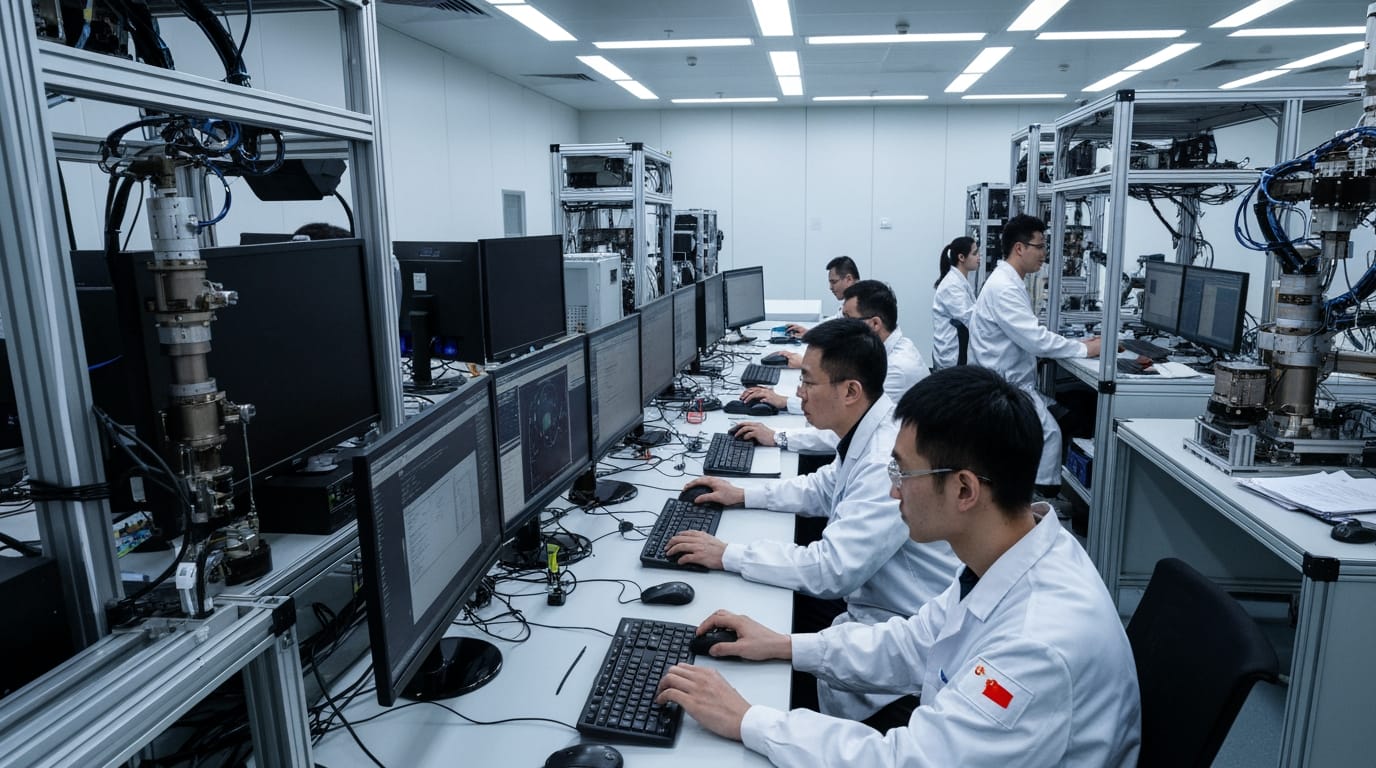
The global space race, once defined by a Cold War binary, has dramatically evolved, entering an era profoundly shaped by China's rapid technological ascent. Beijing's multi-faceted space program, driven by a blend of national rejuvenation, economic ambition, and strategic objectives, is fundamentally altering the geopolitical and technological landscape beyond Earth's atmosphere. What began as a symbolic endeavor has matured into a comprehensive national strategy, positioning China as a formidable competitor to established space powers and ushering in a new chapter of celestial exploration and rivalry.
The New Space Powerhouse Emerges
China's space initiatives have transformed at an unprecedented pace over the past two decades. The nation's investment in its space sector surged from C$3 billion in 2022 to C$19.5 billion in 2023, reflecting a clear commitment to becoming a leading space power by 2050. This investment has yielded substantial results, with China setting a new national record of 93 space launches in 2025 alone. This accelerated development is not merely about prestige; it is a strategic drive to secure economic influence, bolster military capabilities, and assert technological leadership on a global scale.
A cornerstone of China's manned space program is its Tiangong space station. Composed of three modules—Tianhe, Wentian, and Mengtian—launched between April 2021 and October 2022, Tiangong orbits Earth in low-Earth orbit. The station routinely hosts three astronauts for six-month missions, with provisions to support six during crew handovers. Looking ahead, China plans to expand Tiangong with additional modules and deploy Xuntian, a Hubble-class space telescope, which will orbit near the station and dock for maintenance and resupply. This independent and continuously crewed outpost contrasts with the aging International Space Station (ISS), highlighting China's long-term commitment to human presence in space.
Beyond low-Earth orbit, China has demonstrated remarkable prowess in robotic deep space exploration. Its ambitious Chang'e lunar exploration program has achieved several historic milestones. In 2019, the Chang'e-4 mission made history by successfully landing on the far side of the Moon, a feat previously unaccomplished by any nation. This was followed by the Chang'e-5 mission in 2020, which successfully returned lunar samples to Earth, and the Chang'e-6 mission in 2024, which retrieved 1,935.3 grams of samples from the Moon's far side. These missions are paving the way for China's goal of a crewed lunar landing by 2030, a target that includes developing the Mengzhou crewed spacecraft and Lanyue lunar lander.
China has also set its sights on Mars with significant success. The Tianwen-1 mission, launched in 2020, represented a major leap, achieving orbiting, landing, and roving operations with a single launch. In May 2021, the Zhurong rover successfully touched down in Utopia Planitia, a vast Martian plain, making China only the second nation to operate a rover on the Red Planet's surface. The mission has since yielded extensive scientific data, including evidence supporting the hypothesis of past liquid water activity in the landing area. Future plans for Mars include a sample return mission (Tianwen-3) scheduled for 2028 and eventually a human mission to Mars around 2050.
Technological Innovation and Economic Expansion
China's technological advancements extend beyond flagship missions to foundational infrastructure critical for both civilian and military applications. The BeiDou Navigation Satellite System (BDS) stands as a prime example, offering a robust alternative to the U.S.-operated Global Positioning System (GPS). Fully operational globally since 2020, BeiDou employs a multi-layer orbital architecture, including medium Earth orbit (MEO), geostationary orbit (GEO), and inclined geosynchronous orbit (IGSO), which provides advantages in data collection and positioning accuracy. Its market value within China reached $91.9 billion in 2025, with projections to exceed $147 billion by 2030, underscoring its growing economic significance. BeiDou's influence is particularly strong among countries participating in China's Belt and Road Initiative, where its adoption strengthens China's technological and geopolitical ties.
The development of reusable rocket technology is another area where China is making rapid progress. Both state-owned and private aerospace companies are heavily invested in reducing launch costs and increasing efficiency. In July 2026, Chinese private company CAS Space successfully completed a long-duration test of its Kinecore-2 liquid oxygen-kerosene engine, designed for the reusable Kinetica-2 launcher. This follows other milestones, such as LandSpace's Zhuque-3 reusable rocket test in December 2025. Additionally, China has been exploring advanced concepts like electromagnetic rocket launch technology, which could revolutionize space access by offering reusable launch energy. These developments signal a clear intent to compete directly with leading commercial space entities globally.
The burgeoning commercial space sector in China is a critical component of its national strategy. Integrating commercial innovation with scientific research and national goals, China aims to foster a self-sustaining space economy. The sector is projected to be worth over US$900 billion by 2029, driven by demand for satellite communications, remote sensing, and advanced launch services. While operating under tight government oversight, the involvement of private firms is accelerating innovation in areas like satellite manufacturing, propulsion systems, and robotics.
Geopolitical Ripples and Strategic Implications
China's rapid advancements in space are not occurring in a vacuum; they carry significant geopolitical and strategic implications. Beijing views space as a critical domain for national rejuvenation, closely linking its space program to its broader national power strategy. This perspective frames space not merely as a realm for scientific exploration but as an arena for projecting economic influence, enhancing military capabilities, and securing geopolitical advantage.
Concerns persist among international observers regarding the dual-use nature of many Chinese space technologies, which can serve both civilian and military purposes. China's development of advanced reconnaissance satellites, robust navigation systems like BeiDou, and its interest in technologies with potential anti-satellite capabilities raise questions about the future balance of power in space. The rapid expansion of China's space architecture, coupled with a relative lack of transparency, has generated unease among some nations, particularly the United States, which has historically held a significant advantage in military space capabilities.
Despite these concerns, China is also pursuing international cooperation, albeit selectively. The International Lunar Research Station (ILRS), a joint initiative with Russia, aims to establish long-term infrastructure at the lunar south pole by 2031, with a target of full operational capability by 2050. This initiative includes participation from several other countries, creating a parallel framework to the U.S.-led Artemis Accords and potentially leading to a bifurcation of international lunar exploration efforts. China's willingness to engage in such collaborations while simultaneously pushing for technological independence highlights its nuanced approach to global space governance.
The Future Frontier
The trajectory of China's space program suggests a future where competition in space intensifies across multiple dimensions. From sustained human presence in orbit and on the Moon to ambitious deep space missions and the commercialization of space, China is poised to remain a central figure in shaping humanity's cosmic endeavors. The country's plans for Jupiter system exploration and even interstellar probes illustrate a long-term vision that extends far beyond immediate terrestrial concerns.
As China continues to integrate its space capabilities into its national strategy, the global space race is evolving from a mere contest of technological prowess into a complex interplay of diplomacy, economics, and national security. The implications of China's tech rise are profound, challenging existing paradigms and necessitating a re-evaluation of international cooperation and competition in the final frontier. The coming decades will likely see an increasingly crowded and contested space environment, driven in no small part by China's relentless pursuit of celestial supremacy.


