West African Cocoa Farmers Face Ruin as Prices Plummet, Threatening Livelihoods and Fueling Crisis
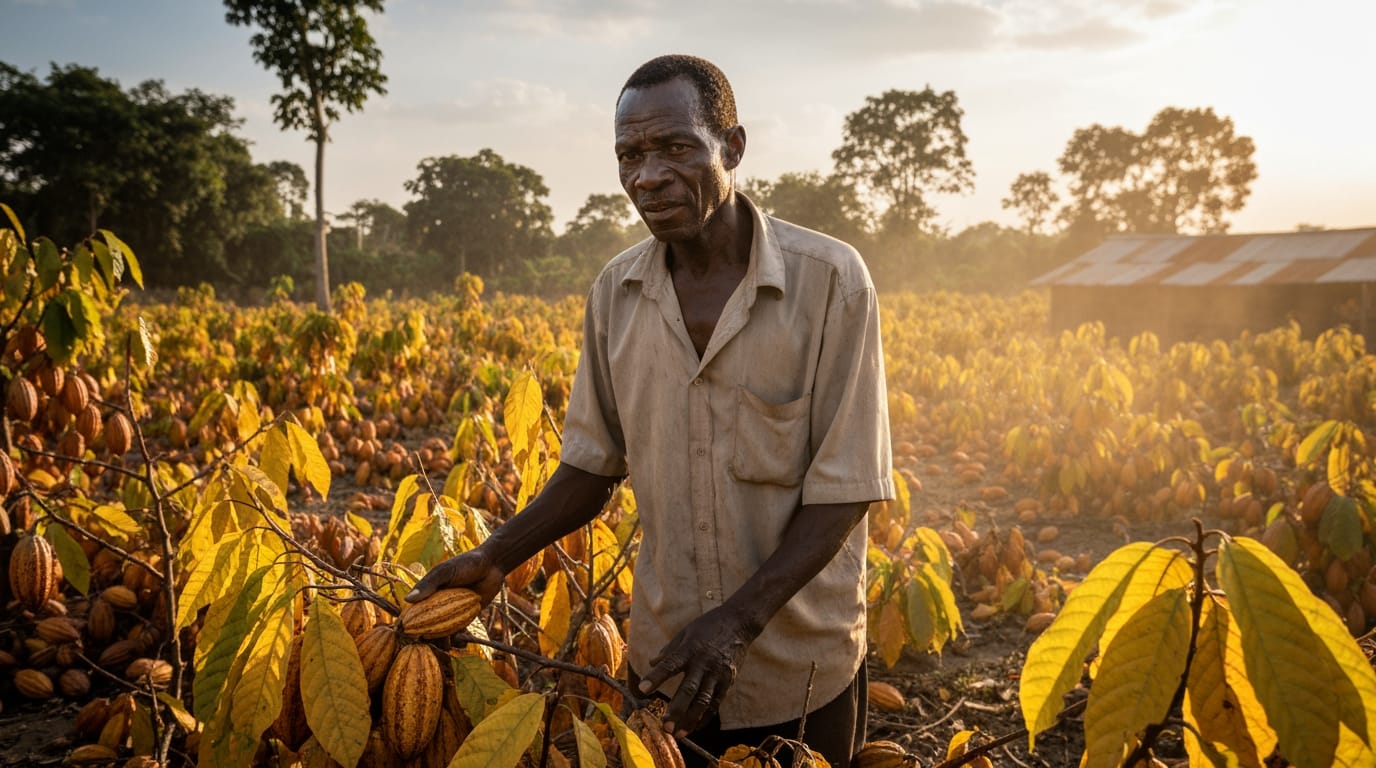
Abidjan, Côte d'Ivoire – A dramatic and sustained plunge in global cocoa prices has unleashed a deepening crisis across West Africa, pushing millions of smallholder farmers to the brink of economic collapse. What was once a promising surge in commodity values has quickly reversed, leaving behind rotting harvests, unpaid debts, and widespread despair in countries heavily reliant on cocoa for their national economies and the livelihoods of their citizens. The current downturn underscores the chronic vulnerabilities of an industry characterized by volatile markets and an imbalanced value chain, with far-reaching social and environmental implications.
The Sharp Descent: From Boom to Bust
Just over a year ago, the global cocoa market experienced a significant surge, with prices briefly soaring past $10,000 per metric ton in 2024, igniting hopes for West African farmers who had long toiled in poverty. This spike was largely attributed to poor harvests and mounting supply concerns, raising expectations that those who cultivate the world's chocolate might finally receive their due. However, that optimism proved short-lived. The market has since cooled dramatically, with prices plummeting by as much as 50% in a year, settling around $4,000 to $5,000 per tonne by late 2025 and early 2026, and even lower in some regions.
This sharp reversal is the result of a confluence of factors. Good supply levels have coincided with the chocolate sector developing non-cocoa alternatives, particularly in response to previously high prices. Adverse weather conditions, including heavy rains between 2023 and 2024, caused plant rot and significantly reduced yields in key producing nations like Côte d'Ivoire and Ghana, initially driving prices up. However, a subsequent shift towards expectations of better harvests, coupled with logistical challenges, a global macroeconomic slowdown, and a noticeable decline in demand for conventional cocoa—especially in Europe—have contributed to the steep fall. Oversupply and speculative trading are also cited as significant contributors to the current price volatility. Adding to the complexity, the delayed implementation of the European Union's deforestation regulation (EUDR) has also played a role in market uncertainty.
A Livelihood in Jeopardy: Farmers Face Unprecedented Hardship
For the millions of smallholder farmers in West Africa, the cocoa price crash is not merely an abstract market correction; it is a direct threat to their survival. Côte d'Ivoire and Ghana together produce approximately two-thirds of the world's cocoa, making their farmers acutely vulnerable to global price fluctuations. In these countries, governments typically set fixed farmgate prices at the start of each season, aiming to provide stability. While this system can shield farmers from the downsides of market volatility, it also prevents them from fully benefiting when global prices are high. Crucially, when international prices fall below these fixed government rates, global traders often cease purchasing beans from the region, leading to a mounting stockpile of unsold cocoa.
The consequences are devastating. Farmers are struggling to find buyers for their harvests, with large quantities of beans left to rot in warehouses or on trees. Payments to farmers for their already delivered crops have been delayed for months, plunging families into severe financial distress. To mitigate losses and encourage sales, both the Ivorian and Ghanaian governments have been compelled to drastically slash their fixed farmgate prices, with Côte d'Ivoire reducing its price by more than half for 2026 and Ghana cutting its price by 28%. This leaves farmers with razor-thin profit margins, often below the cost of production, making it impossible to cover basic necessities, send children to school, or invest in their farms. Many cocoa farmers already earn less than a dollar a day, with female farmers sometimes making as little as 30 cents, even before the current crash. The crisis now imperils rural economies and the fundamental stability of families across the region.
The Vicious Cycle: Child Labor and Environmental Degradation
The economic hardship imposed by plummeting cocoa prices exacerbates two deeply entrenched problems within the West African cocoa industry: child labor and deforestation. With incomes insufficient to cover their needs, many farmers are left with little choice but to rely on their children for labor to maintain their farms and ensure their families' survival. An estimated 1.5 million to 2.1 million children in Côte d'Ivoire and Ghana are involved in hazardous work on cocoa plantations, engaging in tasks such as carrying heavy loads, applying pesticides, and using sharp tools. This practice traps children in a cycle of poverty, denying them education and exposing them to dangerous conditions.
Furthermore, low cocoa prices drive deforestation. Unable to invest in sustainable farming practices or improve the productivity of their aging, often diseased trees, farmers are compelled to clear new sections of forest to expand their plantations and increase yields. This has led to extensive rainforest loss in Côte d'Ivoire and Ghana, with Côte d'Ivoire losing 2.4 million hectares of forest to cocoa plantations between 2000 and 2019 alone. This environmental destruction contributes to biodiversity loss and accelerates climate change, which, in turn, makes cocoa crops more vulnerable to unpredictable weather patterns and diseases.
A Broken System: Structural Flaws and the Quest for Fair Trade
The current crisis highlights profound structural imbalances within the global cocoa trade. While the chocolate industry generates tens of billions of dollars annually, the farmers at the foundation of this value chain receive only a tiny fraction of the profits. The market is largely controlled by a few dominant corporations and trading houses, leaving individual farmers with minimal bargaining power. This system, which has persisted for decades, ensures that farmers remain deeply vulnerable to global market movements they have no influence over.
Efforts to address these systemic issues include initiatives like Fairtrade, which aims to empower cocoa cooperatives and provide a financial safety net through a minimum price and premium when market prices fall. These programs support investments in better tools, sustainable practices, and community development. However, the scale of the current crisis demonstrates that such initiatives, while vital, are not yet sufficient to counteract the pervasive forces of an unstable market. Many experts argue that a fundamental change in pricing mechanisms is needed, advocating for market prices that consistently exceed $3,000-$4,000 per tonne to enable farmers to earn a living income, invest in sustainable practices, and move away from harmful coping mechanisms like child labor and deforestation. The EU's deforestation regulation, though its implementation has been delayed, also presents a potential opportunity to reshape market dynamics by demanding deforestation-free supply chains and potentially incentivizing more sustainable farming practices.
Looking Ahead: The Urgency of Systemic Change
The cocoa price crash in West Africa serves as a stark reminder of the interconnectedness of global markets, environmental sustainability, and human rights. The immediate priority is to support the millions of farmers facing dire economic hardship, preventing further humanitarian and ecological damage. Beyond emergency measures, however, the crisis underscores the urgent need for systemic reforms within the global cocoa industry.
Sustainable solutions involve not only ensuring fair and stable prices for farmers but also promoting crop diversification and agroforestry, which can boost farmer incomes and build resilience against climate change. Greater transparency throughout the supply chain and stricter enforcement of regulations against child labor and deforestation are also critical. Ultimately, the long-term health of the chocolate industry, and the well-being of the communities that sustain it, hinges on a collective commitment from governments, corporations, and consumers to create a more equitable and sustainable cocoa economy. Without such fundamental shifts, the current price crash will likely be another tragic chapter in the ongoing struggle of West African cocoa farmers.


