China's BYD Accelerates Past Tesla, Crowned World's Top EV Seller
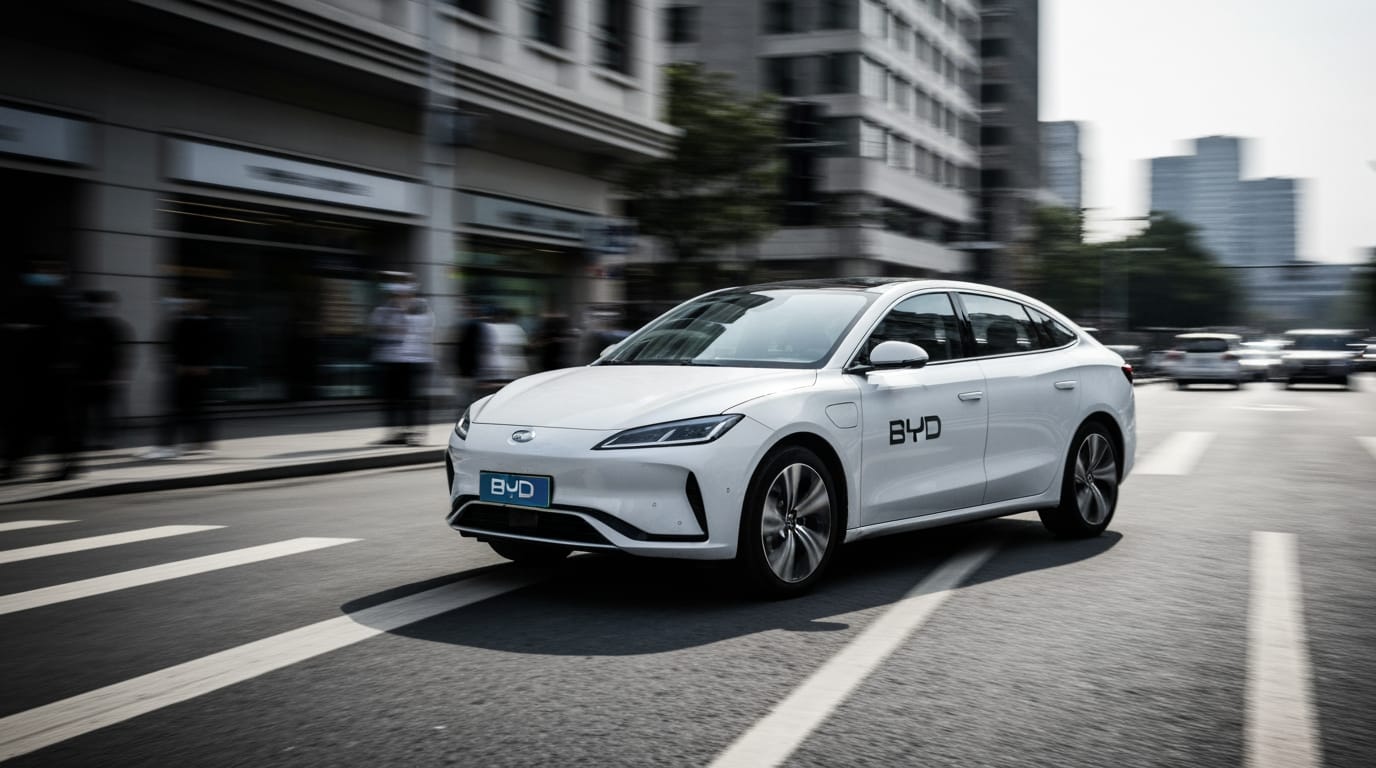
In a significant realignment of the global electric vehicle (EV) market, China's BYD has decisively surpassed American EV pioneer Tesla, first in quarterly battery electric vehicle (BEV) sales at the close of 2023, and then solidifying its leadership as the world's largest overall EV seller for the full year 2025. This transition marks a pivotal moment, signaling the growing influence of Chinese manufacturers and a diversifying landscape in the race for automotive electrification. The shift underscores contrasting business strategies, market approaches, and the evolving demands of a rapidly expanding global consumer base.
A New Global Leader Emerges
The initial indicator of this market reordering emerged in the fourth quarter of 2023, when BYD sold approximately 525,409 battery electric vehicles, eclipsing Tesla's deliveries of 484,500 BEVs during the same period. This marked the first time BYD had overtaken Tesla in quarterly BEV sales. While Tesla managed to retain its lead in total BEV sales for the entire year 2023 with 1.81 million units delivered, compared to BYD's 1.57 million BEVs, BYD's broader portfolio, which includes plug-in hybrid electric vehicles (PHEVs), already saw it ranked as the #1 in global EV sales for 2023 with over 3 million units combined.
The momentum continued, with BYD reportedly surpassing Tesla in annual EV sales for the full year 2025. BYD delivered 4.6 million New Energy Vehicles (NEVs), a category encompassing both BEVs and PHEVs, reflecting a 7.7% increase from 2024. Of these, over 2.25 million were fully electric cars. In contrast, Tesla's estimated deliveries for 2025 hover around 1.6 to 1.66 million units, marking a second consecutive year of sales decline for the American automaker. This solidifies BYD's position as the leading global EV manufacturer, showcasing a fundamental shift from Tesla's decade-long dominance.
The Architecture of BYD's Ascendancy
BYD's rapid ascent is largely attributed to a meticulously crafted strategy centered on vertical integration, diverse product offerings, and competitive pricing. The company manufactures a substantial majority of its vehicle components in-house, including batteries, semiconductors, electric motors, and power electronics. This integrated approach reduces manufacturing costs, bolsters supply chain resilience against external disruptions, and facilitates faster innovation cycles. For instance, BYD's proprietary Blade Battery technology, lauded for its safety and durability, is a direct outcome of this in-house development, exemplified by its ability to withstand extreme conditions like nail punctures without thermal runaway.
Beyond manufacturing prowess, BYD's market strategy distinguishes itself through a broad product portfolio that includes both pure BEVs and a significant number of PHEVs. This hybrid offering expands its appeal to a wider range of consumers, particularly in markets where charging infrastructure is still developing or where hybrid options are favored for their flexibility. The company’s models are notably more affordable, with many BYD vehicles selling for substantially less than Tesla's offerings. While the average Tesla model is priced around $45,000 USD, the average BYD-branded model in China sells for approximately $22,000 USD, with some models starting as low as $10,000 USD. This price accessibility, combined with strong brand presence in the massive Chinese domestic market and aggressive global expansion, has been crucial to its sales volume leadership. BYD's overseas sales surged to 1.05 million units in 2025, demonstrating its growing international footprint.
Tesla's Enduring Drive Amidst Shifting Tides
Despite being overtaken in sales volume, Tesla remains a dominant force in the EV industry, particularly in the premium BEV segment. The company's strategy continues to focus on pure battery electric vehicles and advanced technological innovation, including significant investments in artificial intelligence for autonomous driving capabilities and cutting-edge energy storage solutions. Tesla's profitability metrics have remained robust, with its automotive division generating substantial revenue and gross profits. The company’s emphasis on direct-to-consumer sales and a strong brand following, often compared to iconic tech companies, contributes to its unique market position.
However, Tesla has faced a period of slower year-over-year growth and increased competition. Its vehicle lineup, primarily comprising the Model 3 and Model Y, has been described as aging compared to the influx of new models from rivals. Recent price adjustments implemented by Tesla aim to stimulate demand and maintain competitiveness. Additionally, factors such as the expiration of federal tax credits in some markets and potential negative perceptions stemming from CEO Elon Musk's political involvement have contributed to sales challenges. Tesla's market share in the U.S. EV market, while still leading, dipped below 50% for the first time in Q2 2024, reflecting the intensifying competitive environment.
Reshaping the Global Automotive Landscape
The shift in leadership from Tesla to BYD signifies a profound transformation of the global automotive industry. It highlights the growing prowess of Chinese automakers, which are rapidly challenging established Western players and are projected to capture a substantial portion of the global auto market in the coming years. Analysts forecast that Chinese carmakers could secure about one-third of the global auto market by 2030, with a significant portion of their profits generated overseas.
This intensified competition is leading to an industry-wide acceleration of innovation and, notably, price wars, particularly in China. The sheer volume and affordability of Chinese-made EVs are exerting downward pressure on prices globally, prompting other manufacturers to reassess their cost structures and product strategies. European markets, for instance, have seen a record increase in the market share of Chinese EV brands, indicating a significant international expansion beyond BYD's home turf. The growing competition also means manufacturers are increasingly looking to global markets to offset slowing domestic growth in certain regions.
Conclusion
BYD's ascendancy to the forefront of the global EV market is more than a mere change in sales rankings; it represents a fundamental shift in the electric mobility paradigm. The company's vertically integrated model, diverse and affordable product range, and aggressive global expansion have proven highly effective in capturing a significant share of the rapidly expanding EV market. While Tesla continues to drive innovation in premium BEVs and autonomous technology, its singular focus and evolving market dynamics have created an opening for competitors like BYD to seize the volume leadership. This evolving landscape promises continued innovation, heightened competition, and a more diverse array of electric vehicles for consumers worldwide, firmly establishing the electric era as a truly global phenomenon with new powerhouses emerging.