China's Latest Missile Test Heightens Pacific Nuclear Deterrence Concerns
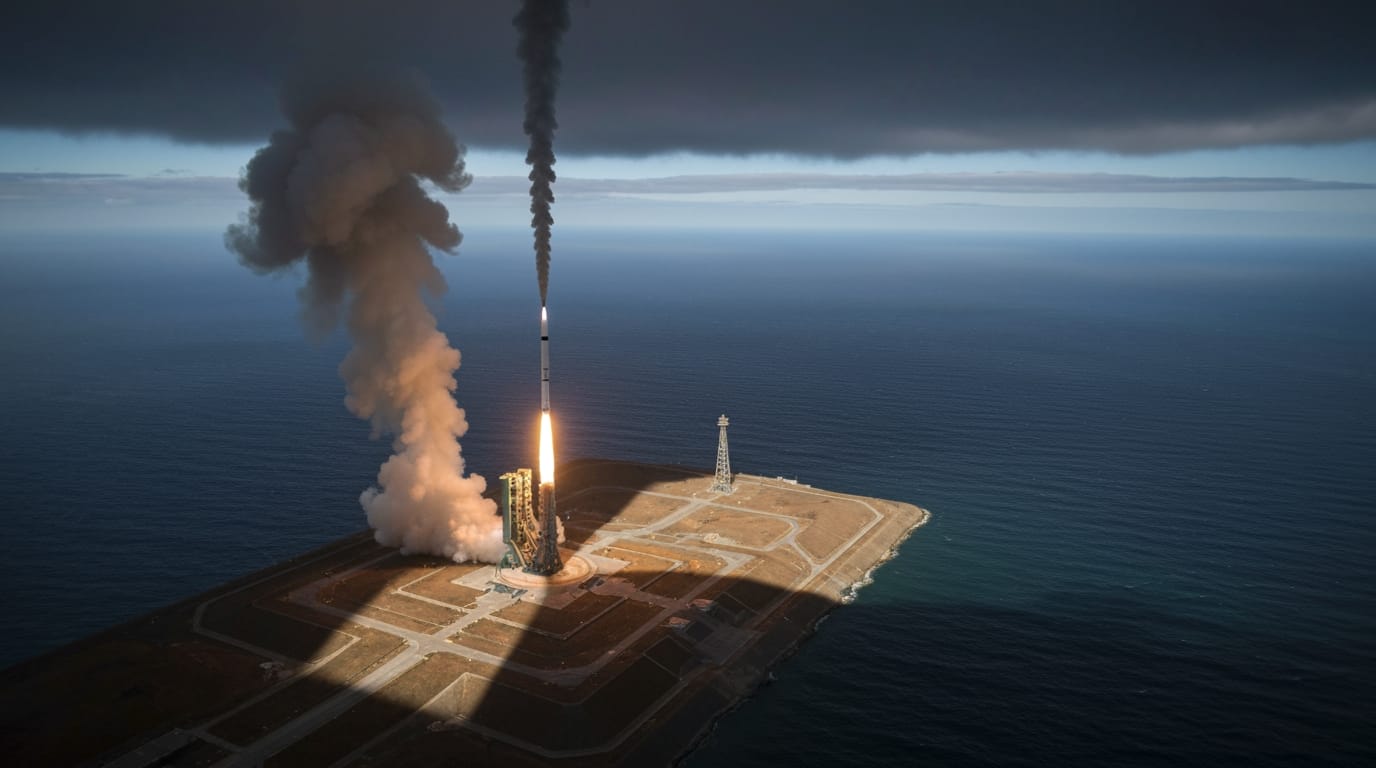
A recent long-range ballistic missile test by China in the South Pacific has ignited widespread international concern, signaling Beijing's accelerating efforts to bolster its nuclear deterrence capabilities and reshape the strategic landscape of the Indo-Pacific region. The submarine-launched missile, carrying a dummy warhead, landed in international waters on Monday, July 6, 2026, prompting immediate condemnation from the United States and its allies who view the exercise as a destabilizing act lacking transparency. This event marks a significant demonstration of China's expanding military reach and its assertiveness in a strategically vital area.
The test, which China described as a "routine arrangement" of annual military training not directed against any specific country or target, involved a missile likely to be a JL-2 or the more advanced JL-3. Experts suggest the JL-3 missile boasts a range exceeding 10,000 kilometers, meaning it could potentially reach parts of the continental United States from Chinese coastal waters. While China's state news agency, Xinhua, reported prior notification to "relevant countries," many regional neighbors, including Australia, New Zealand, and Japan, reported receiving insufficient notice, heightening alarm and criticism over Beijing's lack of communication and strategic intent.
This latest launch is not an isolated incident but rather the second publicly acknowledged long-range missile test into the Pacific in less than two years, following an intercontinental ballistic missile (ICBM) test in September 2024. Analysts interpret these tests as a clear signal from Beijing, demonstrating its increasing skill and capability in projecting military power far beyond its immediate coastal zones. The underlying motivation appears to be a desire to reinforce China's nuclear deterrence strategy, asserting its status as a more equal partner with the United States and potentially undermining U.S. military security in the Asia Pacific.
China's missile test forms part of a broader, comprehensive nuclear modernization program. This initiative aims to significantly enhance the survivability, reliability, safety, and penetration capabilities of its relatively smaller nuclear arsenal. The program involves expanding delivery capabilities, increasing the number of ICBMs, and developing new classes of ballistic missile submarines. Reports indicate a robust build-up, with the Pentagon estimating China's nuclear warhead stockpile could grow to more than 1,000 by 2030 and potentially 1,500 by 2035. This expansion is seen as an effort to achieve a fully functioning nuclear triad of land-based missiles, submarine-launched missiles, and air-launched weapons, solidifying its retaliatory strike capabilities. China's nuclear modernization is also perceived as a response to the growing U.S. missile defense program, which Beijing views as a threat to its minimum credible deterrence.
The test has considerable implications for regional stability, particularly in the Pacific, a region traditionally considered nuclear-free under the 1985 Treaty of Rarotonga. China, a signatory to the treaty protocols, has committed not to test nuclear explosive devices within this zone. New Zealand's Foreign Minister, Winston Peters, described the test as an "unwelcome and concerning development," emphasizing that Pacific nations have no interest in their region being used as a missile testing ground. Australian Foreign Minister Penny Wong echoed these sentiments, calling the test "destabilizing to the region" and highlighting China's rapid military buildup and lack of transparency. The Prime Minister of the Solomon Islands, Matthew Wale, conveyed disappointment, stating that such actions are not characteristic of a friendly nation. Japan expressed serious concerns regarding China's increasing military activities, while Taiwan's national security council chief labeled the launch a "provocation" that destabilizes the Indo-Pacific.
Adding to the geopolitical complexities, the missile launch occurred just hours after Australia and Fiji signed a mutual defense agreement, the "Ocean of Peace Alliance." While China officially rejected suggestions of political motivation, the timing has led some analysts to speculate it was a direct retaliatory signal, intended to challenge efforts by Australia to strengthen regional ties that counter Chinese influence. Others suggest that while the test had been planned for some time, China made an active choice to proceed at this particular moment. Regardless of the precise intent behind the timing, the event underscores the intensifying strategic competition in the Indo-Pacific and the growing importance of collective security arrangements among regional partners.
The latest missile test by China serves as a stark reminder of the evolving security dynamics in the Pacific and the challenges facing global arms control. Beijing's sustained push to modernize its nuclear capabilities and its increasingly assertive military posture are generating heightened tensions and prompting a re-evaluation of defense strategies across the Indo-Pacific. The lack of transparency surrounding these tests further exacerbates concerns, underscoring the urgent need for robust diplomacy and clear communication channels to prevent miscalculation and ensure regional stability. As China continues to project its power, the delicate balance of deterrence in the Pacific remains a critical focus for international observation and engagement.