Philippine Democracy Under Scrutiny: Vice President Sara Duterte's Impeachment Trial Ignites Political Firestorm
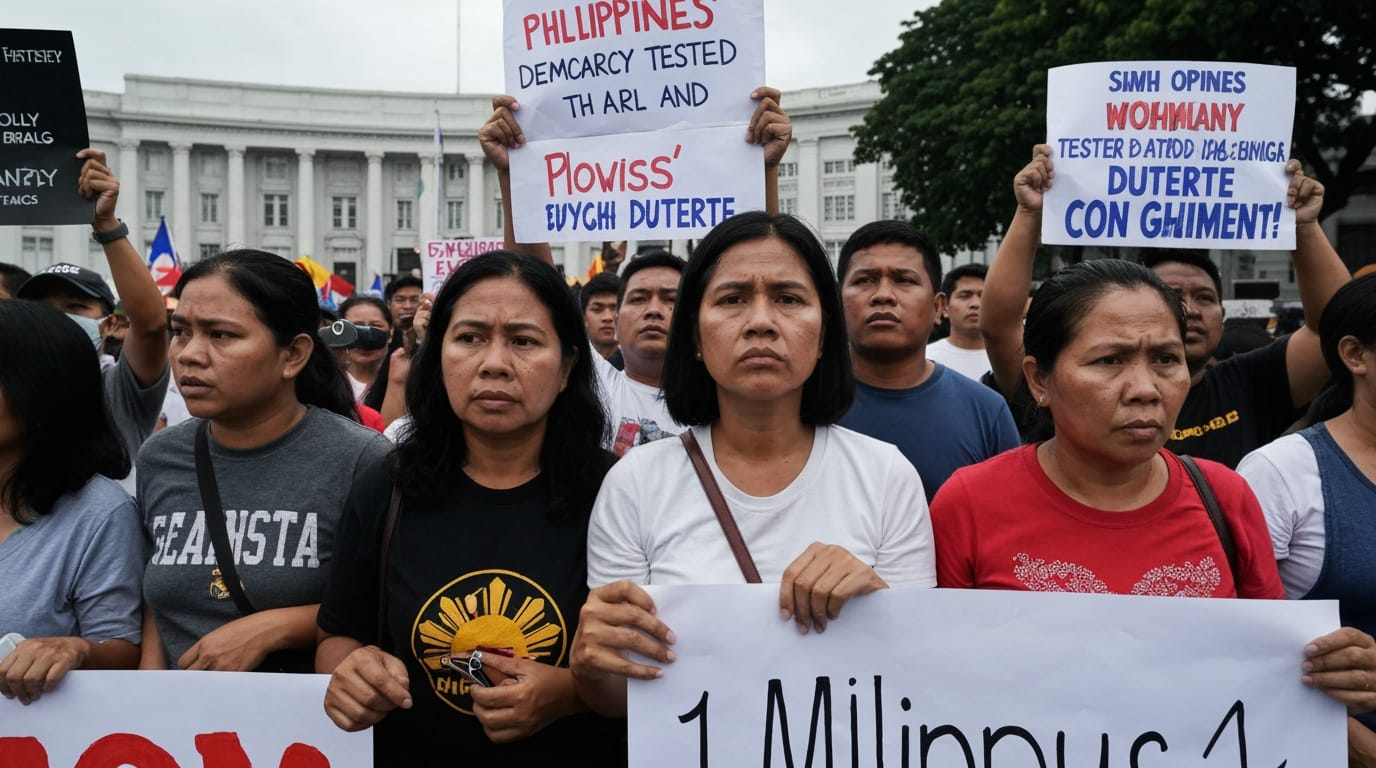
MANILA, Philippines – The democratic foundations of the Philippines are once again facing a rigorous test as Vice President Sara Duterte, daughter of former President Rodrigo Duterte, stands trial before the Senate on multiple impeachment charges. The high-stakes proceedings, which commenced on Monday, July 6, 2026, have laid bare deep political divisions and raised critical questions about accountability, the rule of law, and the nation's political future. This trial is unfolding amidst a tense political climate, highlighting an intensifying feud between the powerful Marcos and Duterte families, and follows a period marked by significant challenges to democratic institutions during her father's presidency.
The Charges Against the Vice President
Vice President Sara Duterte faces four articles of impeachment, primarily alleging misuse of public funds, unexplained wealth, bribery, and even assassination threats against incumbent President Ferdinand Marcos Jr. and his family. The core of the financial accusations centers on the alleged misuse of P612.5 million (approximately USD 10.4 million) in confidential funds from her office and the Department of Education, where she also serves as Secretary. Prosecutors also claim discrepancies in her Statements of Assets, Liabilities, and Net Worth (SALNs) from 2022 to 2024, alongside accusations of bribery and procurement irregularities involving DepEd officials. Perhaps the most sensational charge involves alleged threats made in November 2024 against President Marcos Jr., First Lady Liza Araneta-Marcos, and former House Speaker Martin Romualdez, comments which Duterte has previously stated were misinterpreted.
The House of Representatives, where allies of President Marcos Jr. hold sway, voted to impeach Vice President Duterte in May, marking her second impeachment by the lower house; an earlier attempt last year was blocked by the Supreme Court on a technicality. The Senate, now acting as an impeachment court with 23 senators sworn in as judges, requires a two-thirds vote, or 16 votes, for conviction, which could lead to her removal from office and disqualification from future political contests. Vice President Duterte has not personally attended the initial proceedings, opting to be represented by her legal team, who argue the impeachment is politically motivated rather than evidence-based.
Echoes of a Contentious Past: Rodrigo Duterte's Presidency
The current trial of Sara Duterte inevitably draws parallels to the attempts to impeach her father, former President Rodrigo Duterte, during his six-year term. From 2017 onwards, several impeachment complaints were filed against the elder Duterte, largely initiated by opposition lawmakers. These complaints cited grave allegations, including thousands of deaths in his controversial "war on drugs"—which human rights groups estimated at 7,000 to 9,000, with some estimates going as high as 12,000—as grounds for crimes against humanity. Other charges included alleged corruption, unexplained wealth, betrayal of public trust, and his administration's perceived failure to firmly assert the Philippines' sovereign rights in the disputed South China Sea.
However, all impeachment efforts against President Rodrigo Duterte were ultimately dismissed by the House Justice Committee, which was dominated by his political allies. These dismissals were frequently justified on the grounds of "insufficient substance," a decision that critics argued showcased a compliant legislature and an administration unwilling to be held accountable through constitutional means. The political dynamics were often described as a "numbers game," reflecting the significant power of the presidential office and the loyalty of its congressional supporters. Throughout his presidency, Rodrigo Duterte was accused of challenging democratic values through executive aggrandizement, media censorship, and widespread human rights violations, leading to concerns about democratic backsliding in the Philippines. His "war on drugs" also led to a confrontation with the International Criminal Court (ICC), which initiated a preliminary examination into alleged crimes, prompting the Philippines' withdrawal from the ICC. Coincidentally, former President Rodrigo Duterte was arrested last year on ICC orders and flown to The Hague, where he is scheduled to face trial for alleged crimes against humanity.
A Crucible for Democratic Institutions
These impeachment proceedings, both past and present, serve as a critical crucible for Philippine democracy. The constitutional mechanism of impeachment is designed to hold high-ranking officials accountable, ensuring that power is exercised within legal and ethical boundaries. Yet, its application in the Philippines has often been perceived through a political lens, with outcomes frequently determined by partisan alliances rather than objective legal merits.
The current trial of Vice President Sara Duterte, particularly given the backdrop of her father's legal woes with the ICC and her past political alliance with President Marcos Jr., underscores the fragility of institutional checks and balances. The intense political rivalry between the Marcos and Duterte camps, once allies in a landslide 2022 election victory, has now escalated to a point where impeachment is seen as a "key weapon." Analysts suggest that the trial could have profound implications for the 2028 presidential elections, potentially barring Sara Duterte, currently seen as a frontrunner, from seeking the highest office. The judiciary's independence is also being tested, as both sides seek court intervention, further complicating the democratic landscape.
The Dynastic Divide and Public Sentiment
The political landscape surrounding Sara Duterte's impeachment is heavily influenced by the fracturing of what was once a formidable "Unity" alliance between the Marcos and Duterte families. Cracks began to show shortly after their 2022 victory, with significant rifts emerging over policy decisions and alleged political maneuverings. Vice President Duterte's supporters have vehemently decried the impeachment as "political persecution," arguing it is a calculated move to neutralize her presidential ambitions for 2028. Public opinion remains divided, with concerns that the proceedings are less about accountability and more about dynastic power struggles. While some Filipinos celebrate the prospect of holding even the most powerful officials accountable, others view the impeachment saga as a distraction from pressing issues like poverty and inflation, and fear a return to political chaos.
The outcome of this trial will not only determine Sara Duterte's political fate but will also send a powerful message about the strength and integrity of the Philippines' democratic institutions. It will reveal whether the nation's accountability mechanisms can withstand the intense pressures of political dynasties and partisan interests, or if the process will be seen as merely another chapter in the country's turbulent political history.
Conclusion
The impeachment trial of Vice President Sara Duterte represents a critical juncture for Philippine democracy. It encapsulates a broader narrative of a nation grappling with issues of executive accountability, the integrity of its institutions, and the enduring influence of political dynasties. While the formal proceedings unfold in the Senate, the real trial is also playing out in the court of public opinion, where the perception of justice and fairness will profoundly impact the nation's faith in its democratic system. As the country navigates this politically charged period, the ultimate challenge lies in upholding the principles of good governance and ensuring that the pursuit of accountability genuinely strengthens, rather than weakens, the democratic fabric of the Philippines.


